I am a child of the Dreamtime People
Part of this land, like the gnarled gumtree
I am the river, softly singing
Chanting our songs on my way to the sea
My spirit is the dust-devils
Mirages, that dance on the plain
I’m the snow, the wind and the falling rain
I’m part of the rocks and the red desert earth
Red as the blood that flows in my veins
I am eagle, crow and snake that glides
Through the rainforest that clings to the mountainside
I awakened here when the earth was new
There was emu, wombat, kangaroo
No other man of a different hue
I am this land
And this land is me
I am Australia.
— Hyllus Maris (1933-1986), aboriginal poet
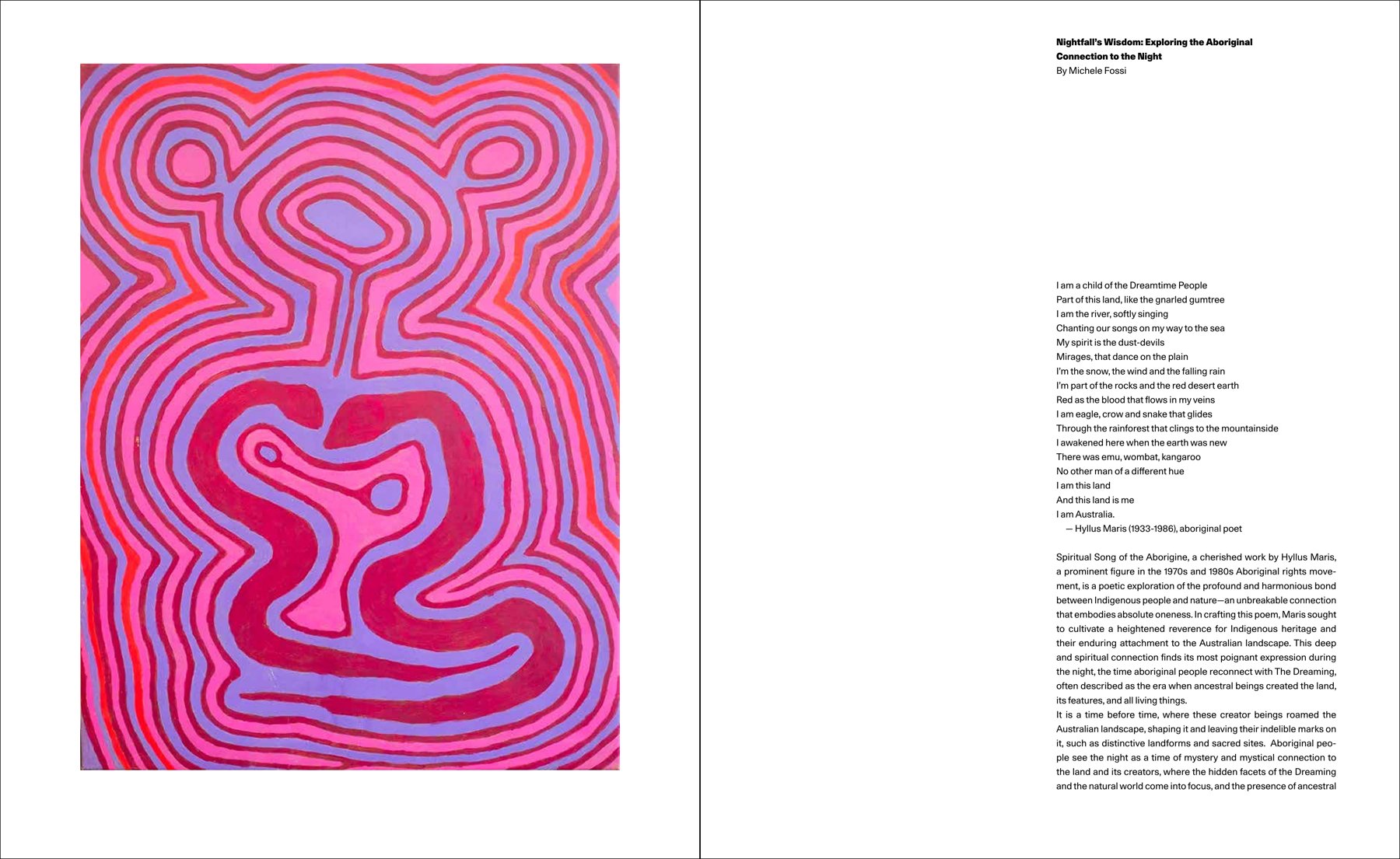
Spiritual Song of the Aborigine, a cherished work by Hyllus Maris, a prominent figure in the 1970s and 1980s Aboriginal rights movement, is a poetic exploration of the profound and harmonious bond between Indigenous people and nature—an unbreakable connection that embodies absolute oneness. In crafting this poem, Maris sought to cultivate a heightened reverence for Indigenous heritage and their enduring attachment to the Australian landscape. This deep and spiritual connection finds its most poignant expression during the night, the time aboriginal people reconnect with The Dreaming, often described as the era when ancestral beings created the land, its features, and all living things.
It is a time before time, where these creator beings roamed the Australian landscape, shaping it and leaving their indelible marks on it, such as distinctive landforms and sacred sites. Aboriginal people see the night as a time of mystery and mystical connection to the land and its creators, where the hidden facets of the Dreaming and the natural world come into focus, and the presence of ancestral spirits becomes more vivid and understandable.
A concept virtually impossible to grasp by a Western mind, in the Dreamtime, past, present, and future are not distinct periods but rather exist in a continuous, timeless state. Ancestral actions from the Dreamtime continue to influence the present and future. Aboriginal people believe that the actions of these ancestral beings have left an enduring imprint on the land and that their spirits persist. Aboriginal people firmly believe that the Dreaming is intricately woven into the very fabric of the landscape, encompassing both the terrestrial realm and the expansive night sky. As an indigenous proverb aptly states, ‘The Dreaming is like the wind. It is all around us, but we can only see it when we open our minds and hearts.”
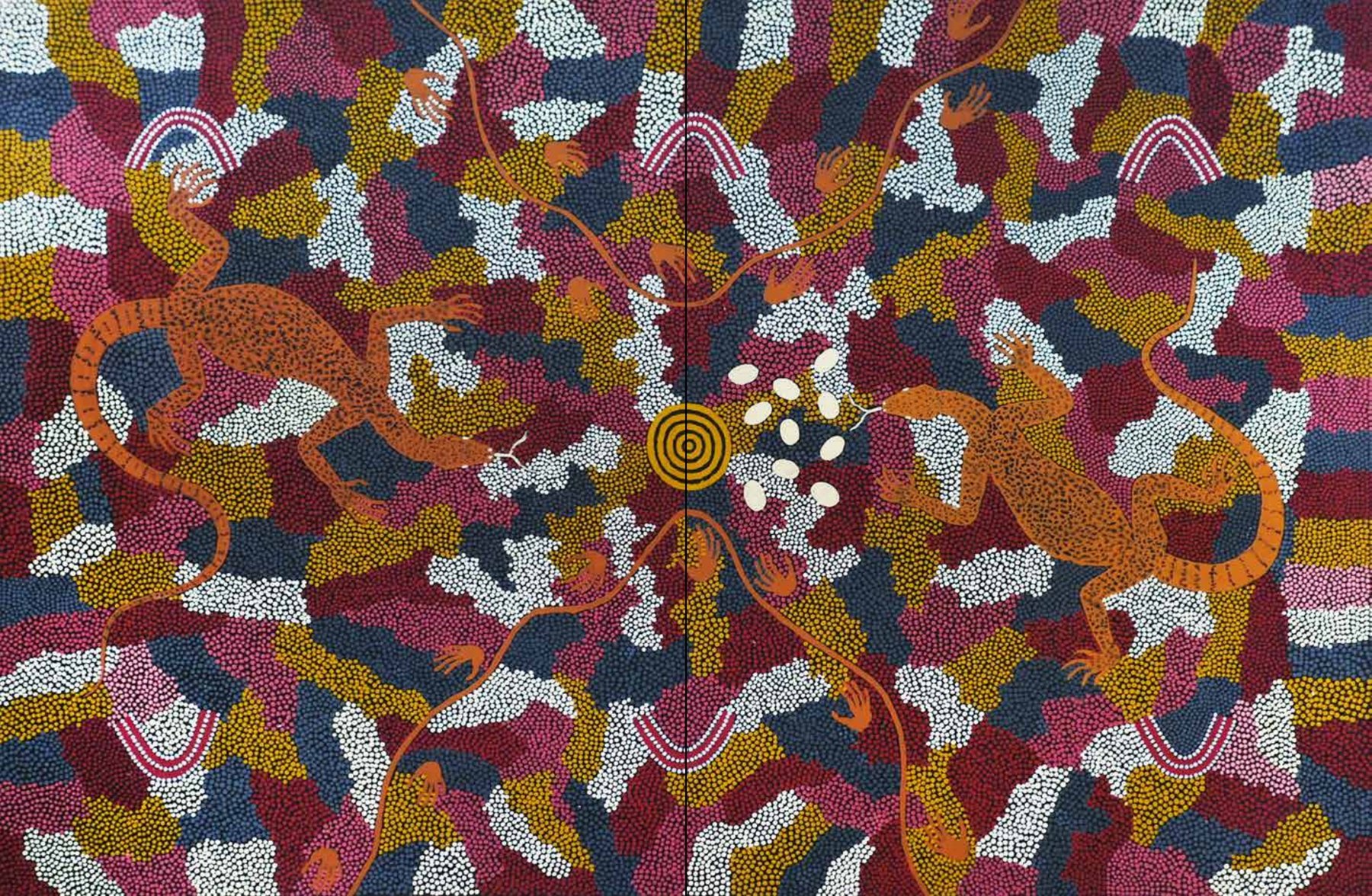
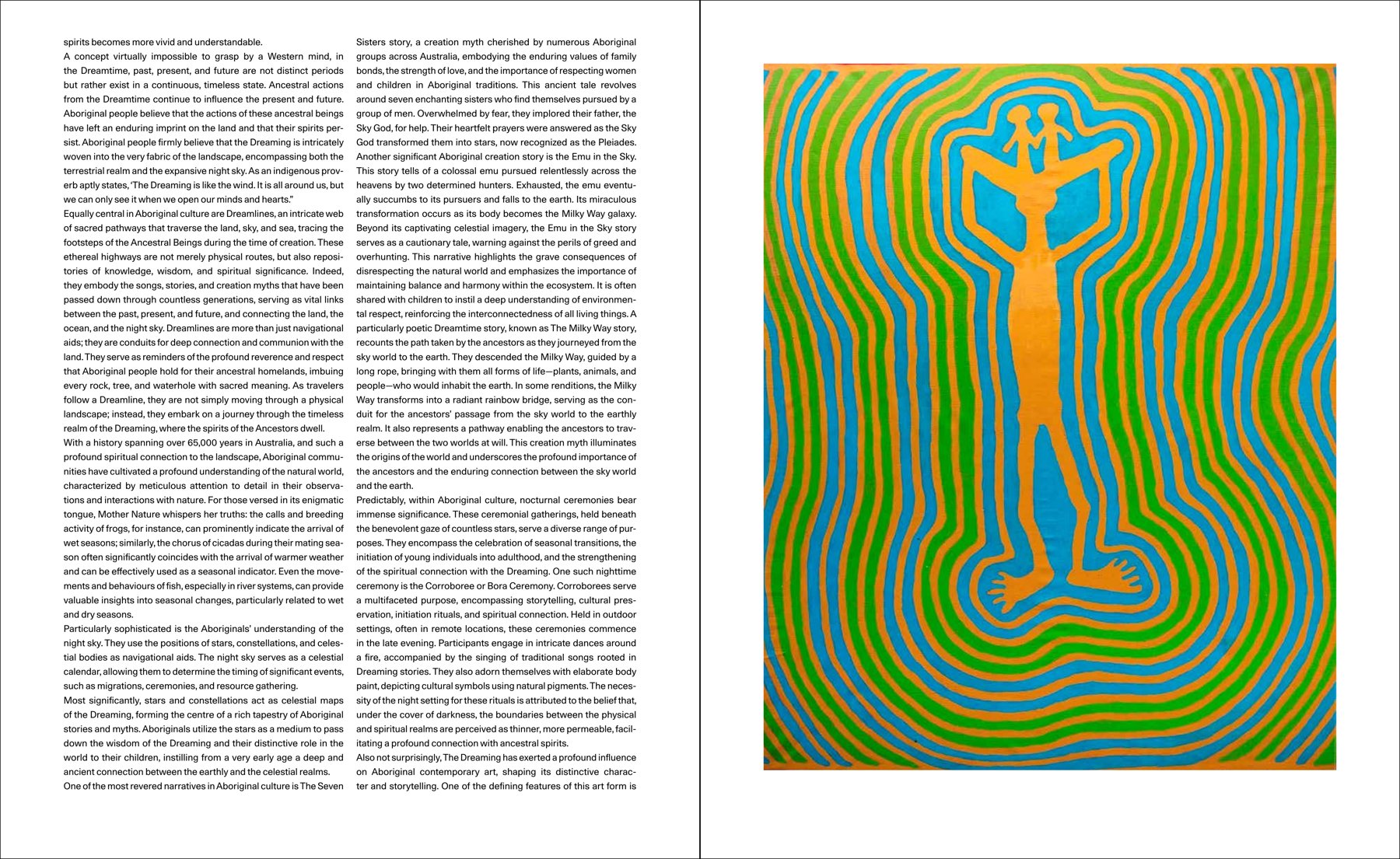
Equally central in Aboriginal culture are Dreamlines, an intricate web of sacred pathways that traverse the land, sky, and sea, tracing the footsteps of the Ancestral Beings during the time of creation. These ethereal highways are not merely physical routes, but also repositories of knowledge, wisdom, and spiritual significance. Indeed, they embody the songs, stories, and creation myths that have been passed down through countless generations, serving as vital links between the past, present, and future, and connecting the land, the ocean, and the night sky. Dreamlines are more than just navigational aids; they are conduits for deep connection and communion with the land. They serve as reminders of the profound reverence and respect that Aboriginal people hold for their ancestral homelands, imbuing every rock, tree, and waterhole with sacred meaning. As travelers follow a Dreamline, they are not simply moving through a physical landscape; instead, they embark on a journey through the timeless realm of the Dreaming, where the spirits of the Ancestors dwell.
With a history spanning over 65,000 years in Australia, and such a profound spiritual connection to the landscape, Aboriginal communities have cultivated a profound understanding of the natural world, characterized by meticulous attention to detail in their observations and interactions with nature. For those versed in its enigmatic tongue, Mother Nature whispers her truths: the calls and breeding activity of frogs, for instance, can prominently indicate the arrival of wet seasons; similarly, the chorus of cicadas during their mating season often significantly coincides with the arrival of warmer weather and can be effectively used as a seasonal indicator. Even the movements and behaviours of fish, especially in river systems, can provide valuable insights into seasonal changes, particularly related to wet and dry seasons.
Particularly sophisticated is the Aboriginals’ understanding of the night sky. They use the positions of stars, constellations, and celestial bodies as navigational aids. The night sky serves as a celestial calendar, allowing them to determine the timing of significant events, such as migrations, ceremonies, and resource gathering.
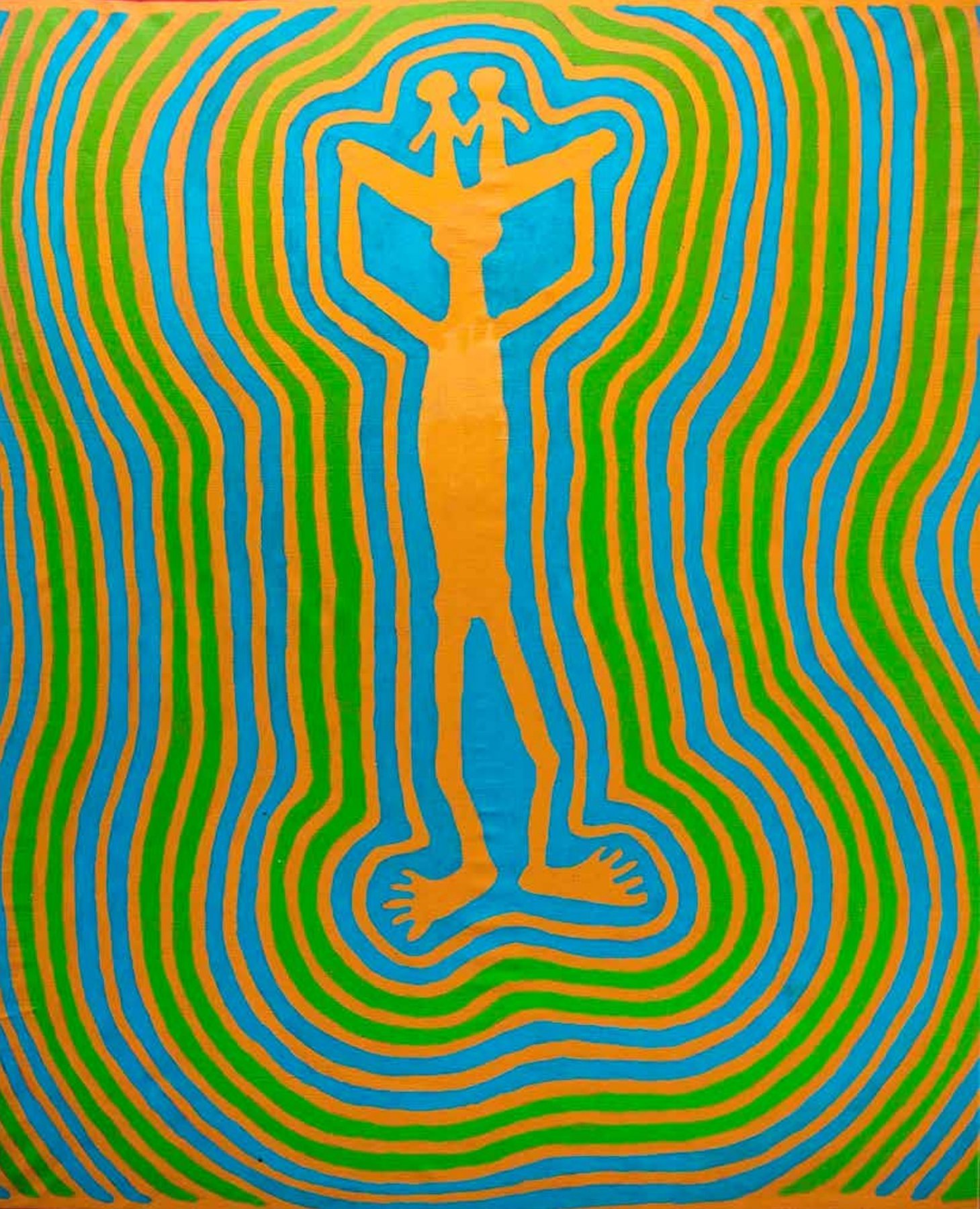
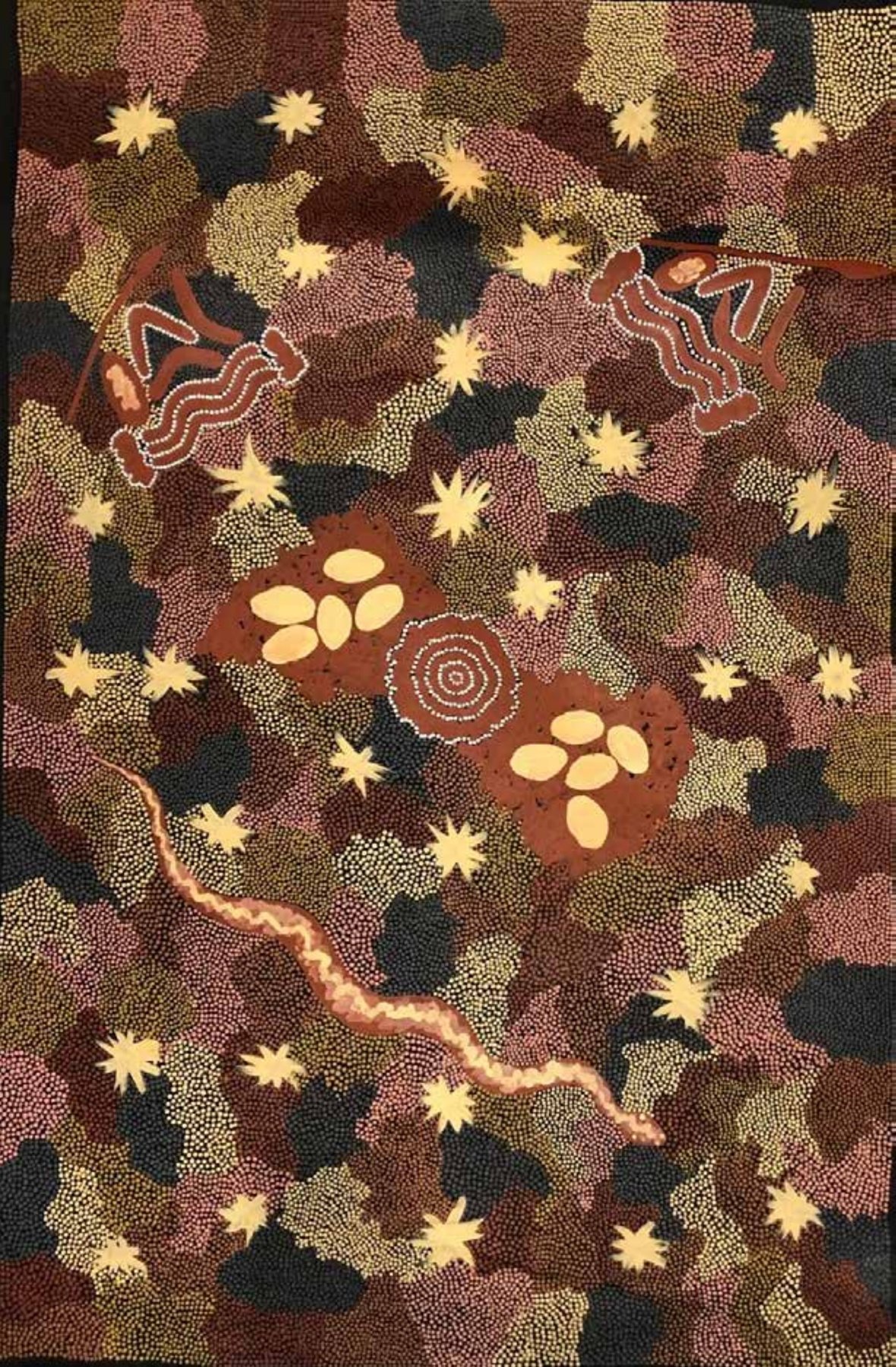
Most significantly, stars and constellations act as celestial maps of the Dreaming, forming the centre of a rich tapestry of Aboriginal stories and myths. Aboriginals utilize the stars as a medium to pass down the wisdom of the Dreaming and their distinctive role in the world to their children, instilling from a very early age a deep and ancient connection between the earthly and the celestial realms.
One of the most revered narratives in Aboriginal culture is The Seven Sisters story, a creation myth cherished by numerous Aboriginal groups across Australia, embodying the enduring values of family bonds, the strength of love, and the importance of respecting women and children in Aboriginal traditions. This ancient tale revolves around seven enchanting sisters who find themselves pursued by a group of men. Overwhelmed by fear, they implored their father, the Sky God, for help. Their heartfelt prayers were answered as the Sky God transformed them into stars, now recognized as the Pleiades.
Another significant Aboriginal creation story is the Emu in the Sky. This story tells of a colossal emu pursued relentlessly across the heavens by two determined hunters. Exhausted, the emu eventually succumbs to its pursuers and falls to the earth. Its miraculous transformation occurs as its body becomes the Milky Way galaxy. Beyond its captivating celestial imagery, the Emu in the Sky story serves as a cautionary tale, warning against the perils of greed and overhunting. This narrative highlights the grave consequences of disrespecting the natural world and emphasizes the importance of maintaining balance and harmony within the ecosystem. It is often shared with children to instil a deep understanding of environmental respect, reinforcing the interconnectedness of all living things. A particularly poetic Dreamtime story, known as The Milky Way story, recounts the path taken by the ancestors as they journeyed from the sky world to the earth. They descended the Milky Way, guided by a long rope, bringing with them all forms of life—plants, animals, and people—who would inhabit the earth. In some renditions, the Milky Way transforms into a radiant rainbow bridge, serving as the conduit for the ancestors’ passage from the sky world to the earthly realm. It also represents a pathway enabling the ancestors to traverse between the two worlds at will. This creation myth illuminates the origins of the world and underscores the profound importance of the ancestors and the enduring connection between the sky world and the earth.
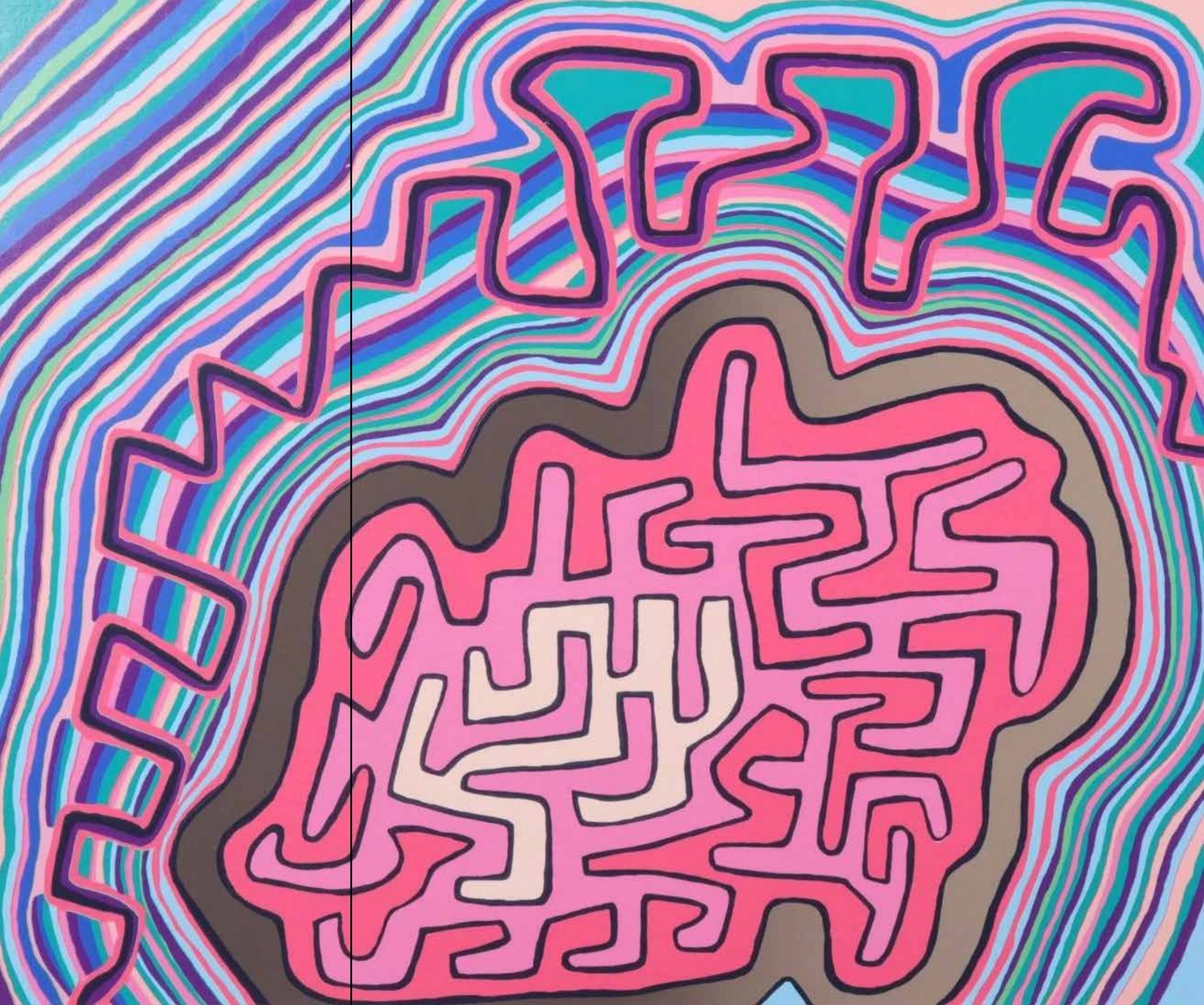
Predictably, within Aboriginal culture, nocturnal ceremonies bear immense significance. These ceremonial gatherings, held beneath the benevolent gaze of countless stars, serve a diverse range of purposes. They encompass the celebration of seasonal transitions, the initiation of young individuals into adulthood, and the strengthening of the spiritual connection with the Dreaming. One such nighttime ceremony is the Corroboree or Bora Ceremony. Corroborees serve a multifaceted purpose, encompassing storytelling, cultural preservation, initiation rituals, and spiritual connection. Held in outdoor settings, often in remote locations, these ceremonies commence in the late evening. Participants engage in intricate dances around a fire, accompanied by the singing of traditional songs rooted in Dreaming stories. They also adorn themselves with elaborate body paint, depicting cultural symbols using natural pigments. The necessity of the night setting for these rituals is attributed to the belief that, under the cover of darkness, the boundaries between the physical and spiritual realms are perceived as thinner, more permeable, facilitating a profound connection with ancestral spirits.
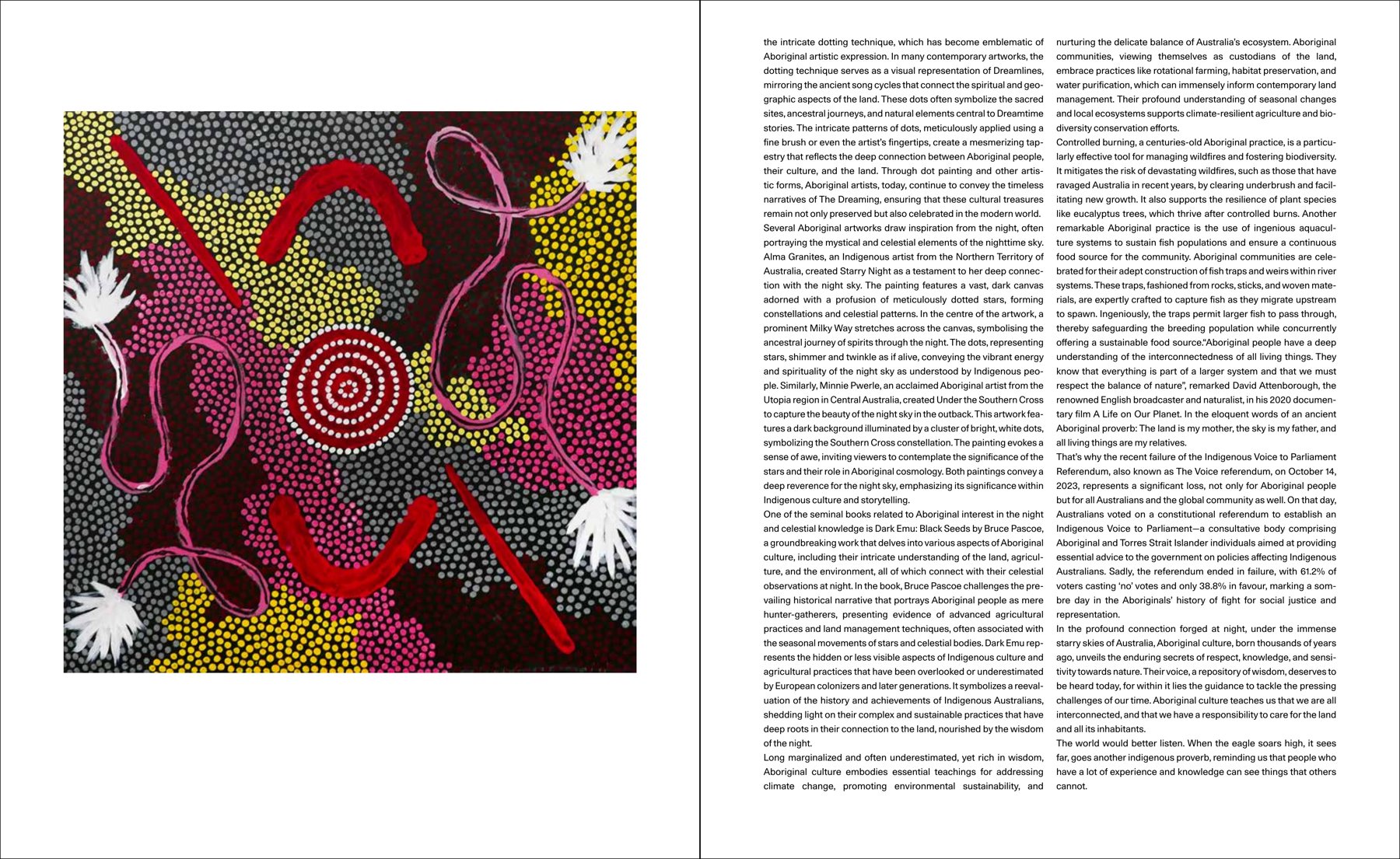
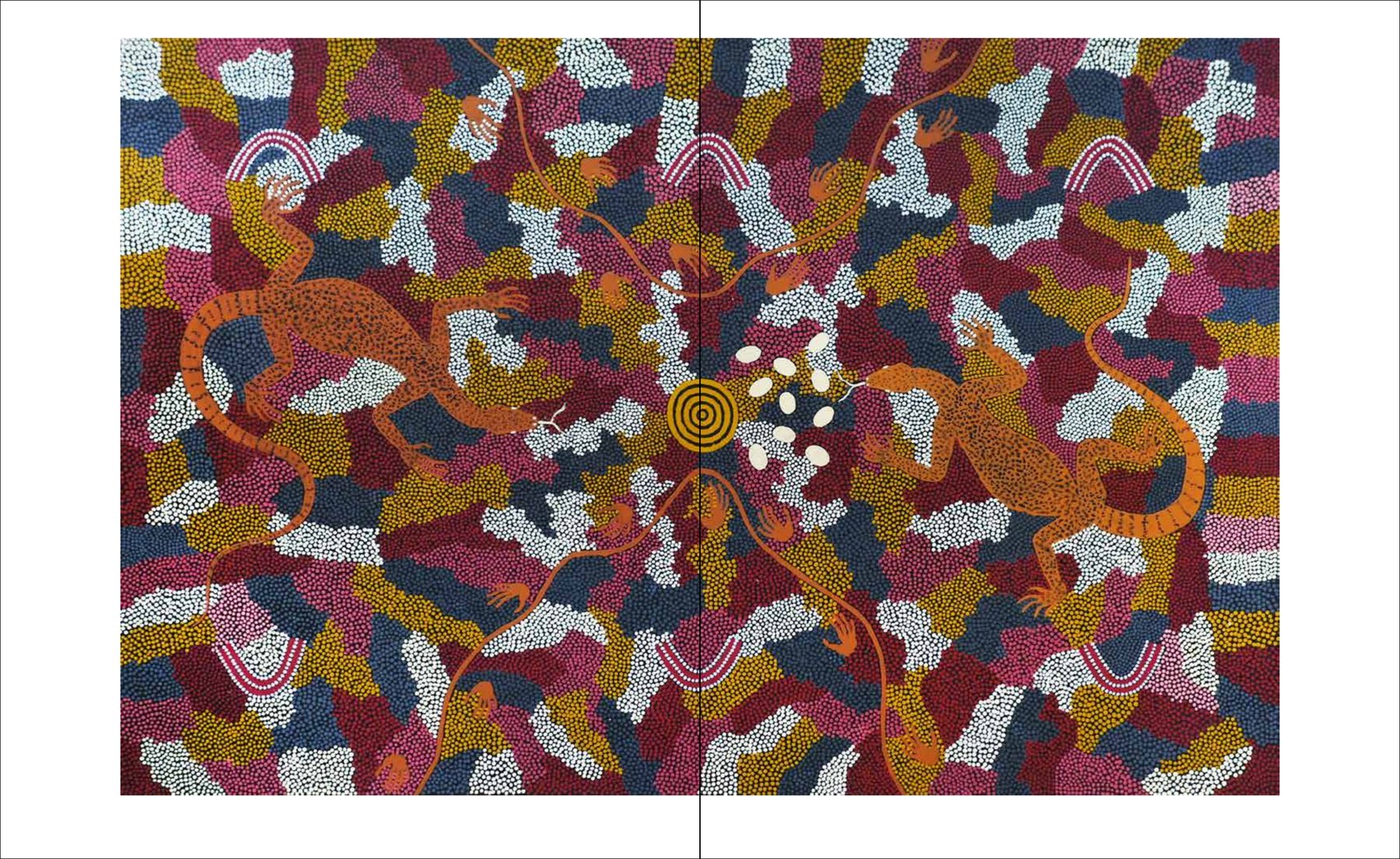
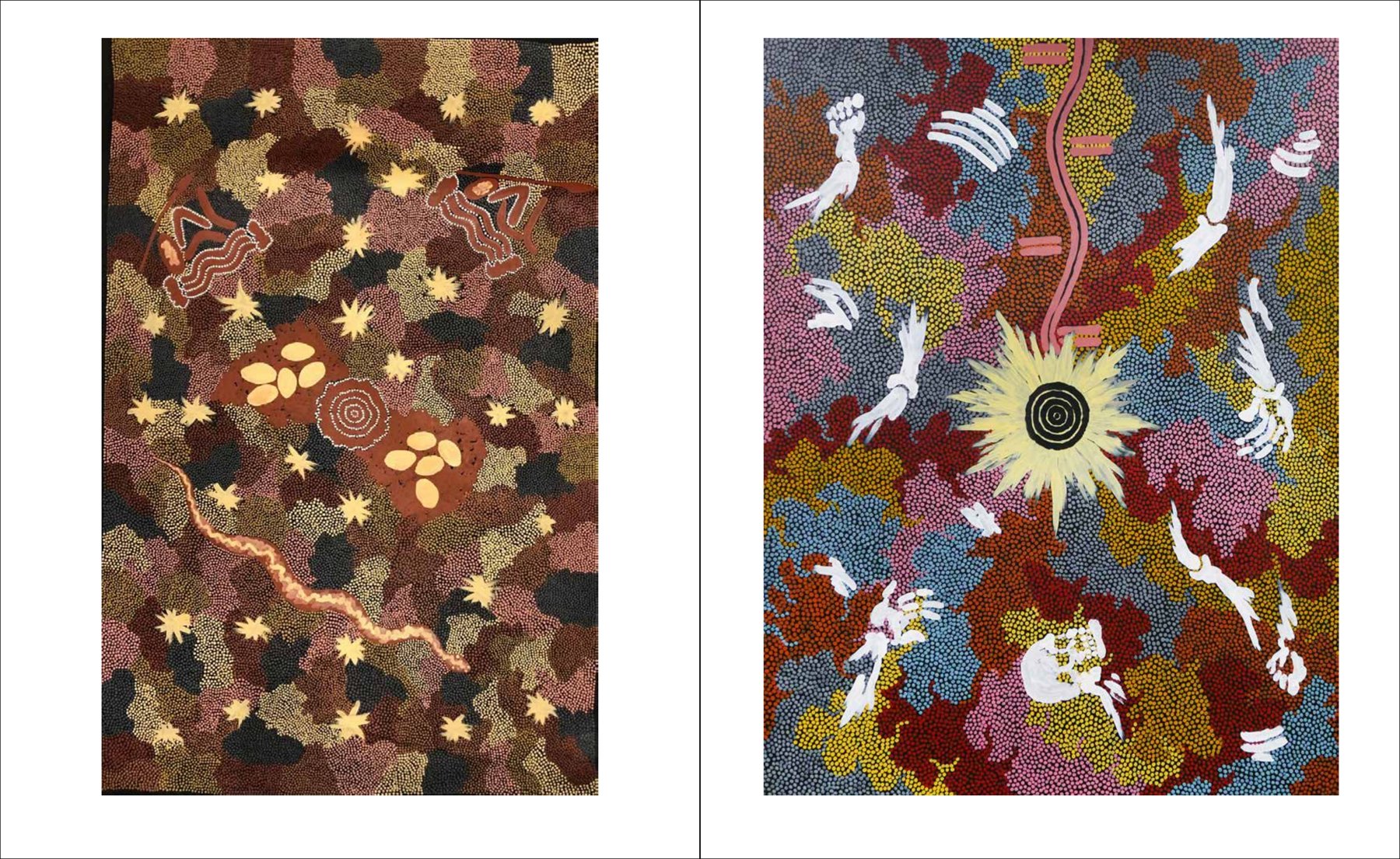
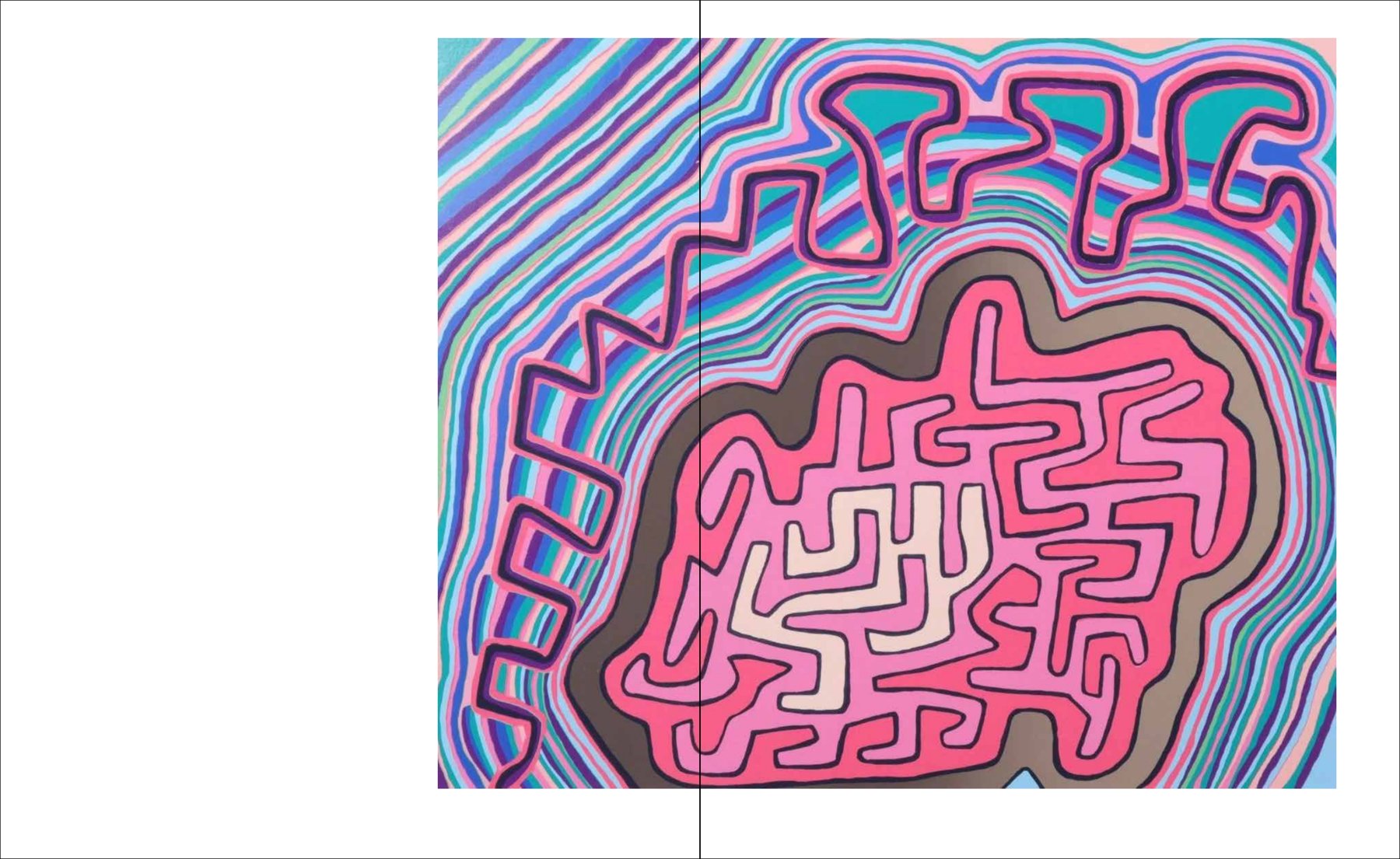
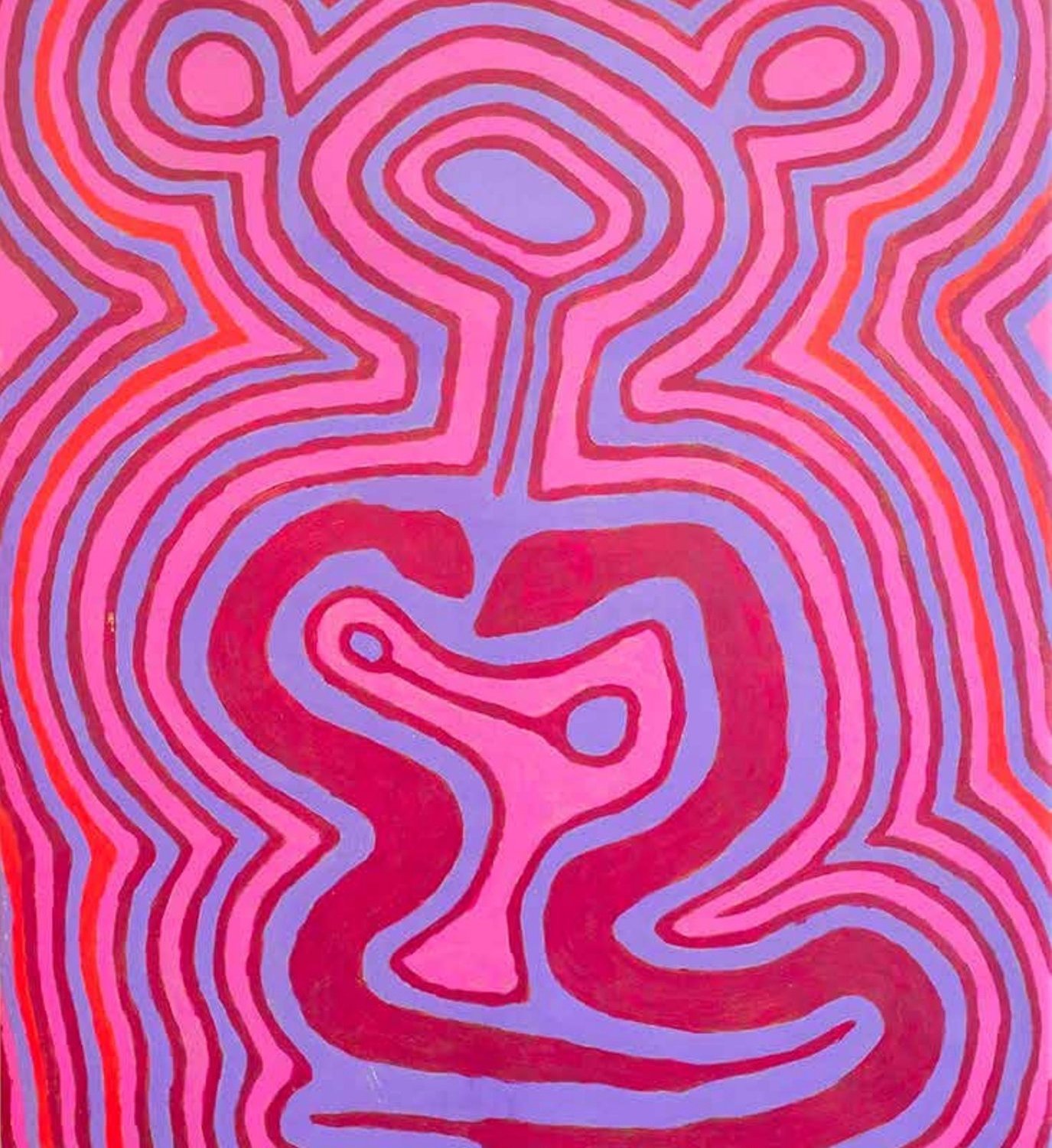
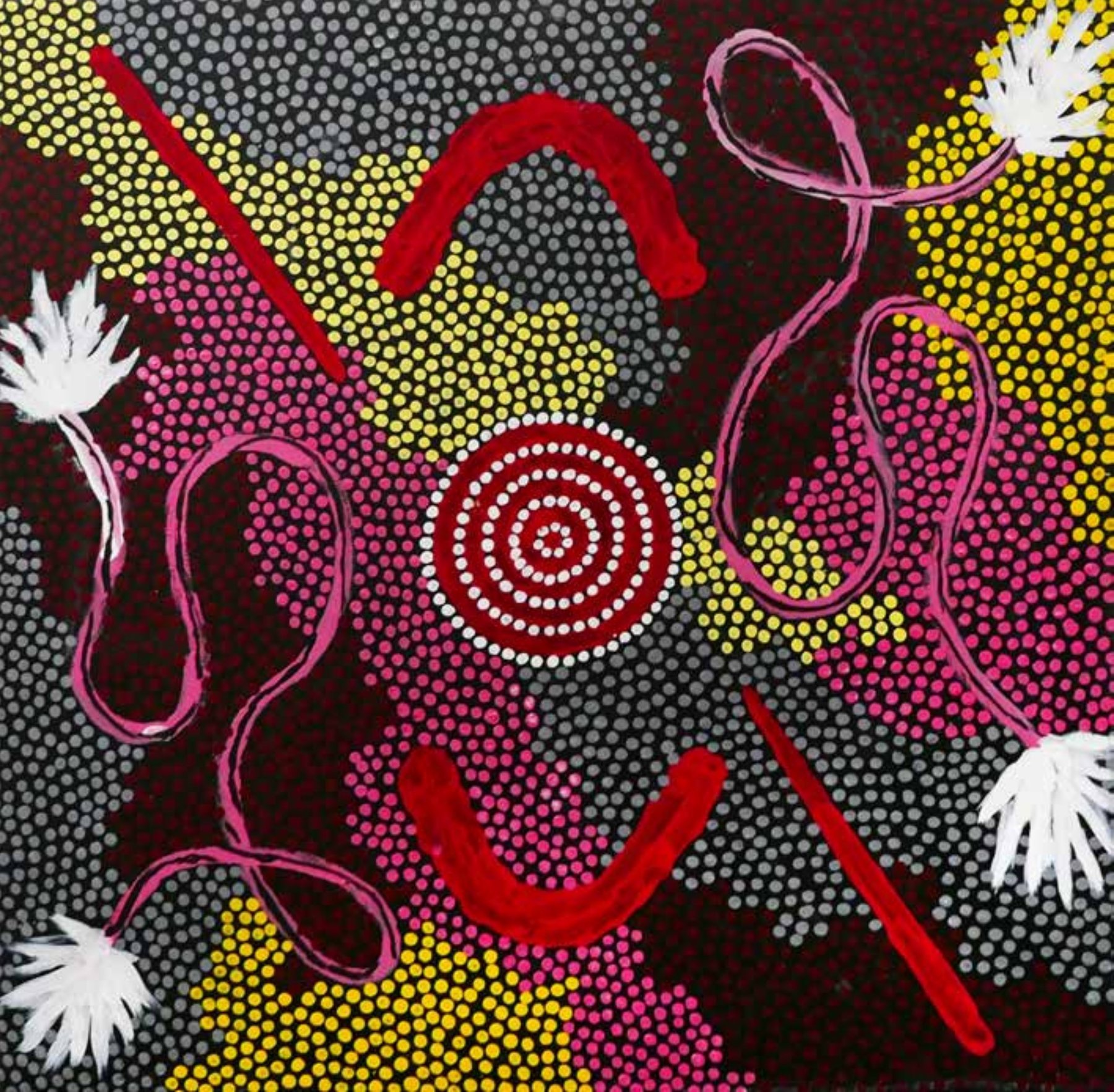
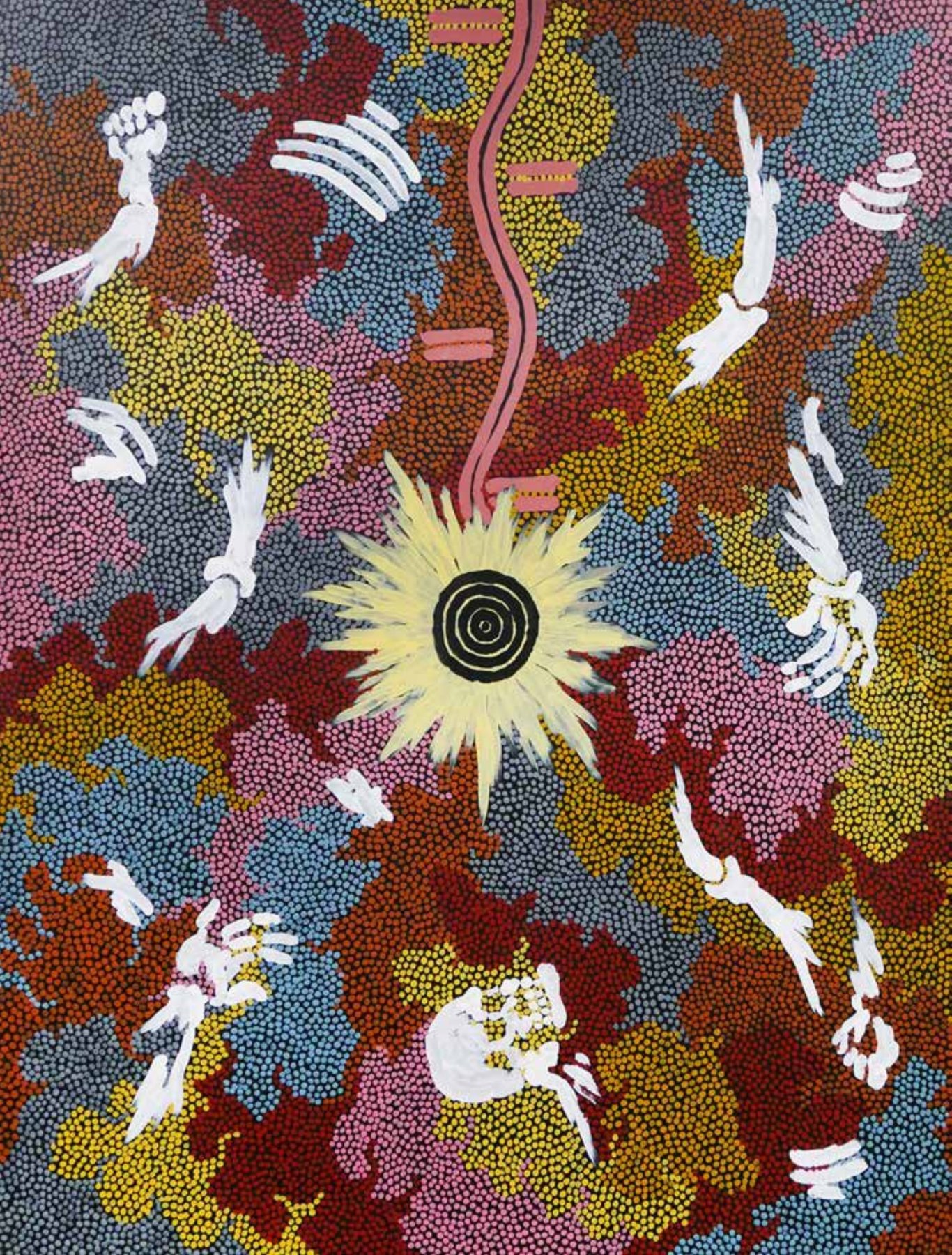
Also not surprisingly, The Dreaming has exerted a profound influence on Aboriginal contemporary art, shaping its distinctive character and storytelling. One of the defining features of this art form is the intricate dotting technique, which has become emblematic of Aboriginal artistic expression. In many contemporary artworks, the dotting technique serves as a visual representation of Dreamlines, mirroring the ancient song cycles that connect the spiritual and geographic aspects of the land. These dots often symbolize the sacred sites, ancestral journeys, and natural elements central to Dreamtime stories. The intricate patterns of dots, meticulously applied using a fine brush or even the artist’s fingertips, create a mesmerizing tapestry that reflects the deep connection between Aboriginal people, their culture, and the land. Through dot painting and other artistic forms, Aboriginal artists, today, continue to convey the timeless narratives of The Dreaming, ensuring that these cultural treasures remain not only preserved but also celebrated in the modern world.
Several Aboriginal artworks draw inspiration from the night, often portraying the mystical and celestial elements of the nighttime sky. Alma Granites, an Indigenous artist from the Northern Territory of Australia, created Starry Night as a testament to her deep connection with the night sky. The painting features a vast, dark canvas adorned with a profusion of meticulously dotted stars, forming constellations and celestial patterns. In the centre of the artwork, a prominent Milky Way stretches across the canvas, symbolising the ancestral journey of spirits through the night. The dots, representing stars, shimmer and twinkle as if alive, conveying the vibrant energy and spirituality of the night sky as understood by Indigenous people. Similarly, Minnie Pwerle, an acclaimed Aboriginal artist from the Utopia region in Central Australia, created Under the Southern Cross to capture the beauty of the night sky in the outback. This artwork features a dark background illuminated by a cluster of bright, white dots, symbolizing the Southern Cross constellation. The painting evokes a sense of awe, inviting viewers to contemplate the significance of the stars and their role in Aboriginal cosmology. Both paintings convey a deep reverence for the night sky, emphasizing its significance within Indigenous culture and storytelling.
One of the seminal books related to Aboriginal interest in the night and celestial knowledge is Dark Emu: Black Seeds by Bruce Pascoe, a groundbreaking work that delves into various aspects of Aboriginal culture, including their intricate understanding of the land, agriculture, and the environment, all of which connect with their celestial observations at night. In the book, Bruce Pascoe challenges the prevailing historical narrative that portrays Aboriginal people as mere hunter-gatherers, presenting evidence of advanced agricultural practices and land management techniques, often associated with the seasonal movements of stars and celestial bodies. Dark Emu represents the hidden or less visible aspects of Indigenous culture and agricultural practices that have been overlooked or underestimated by European colonizers and later generations. It symbolizes a reevaluation of the history and achievements of Indigenous Australians, shedding light on their complex and sustainable practices that have deep roots in their connection to the land, nourished by the wisdom of the night.
Long marginalized and often underestimated, yet rich in wisdom, Aboriginal culture embodies essential teachings for addressing climate change, promoting environmental sustainability, and nurturing the delicate balance of Australia’s ecosystem. Aboriginal communities, viewing themselves as custodians of the land, embrace practices like rotational farming, habitat preservation, and water purification, which can immensely inform contemporary land management. Their profound understanding of seasonal changes and local ecosystems supports climate-resilient agriculture and biodiversity conservation efforts.
Controlled burning, a centuries-old Aboriginal practice, is a particularly effective tool for managing wildfires and fostering biodiversity. It mitigates the risk of devastating wildfires, such as those that have ravaged Australia in recent years, by clearing underbrush and facilitating new growth. It also supports the resilience of plant species like eucalyptus trees, which thrive after controlled burns. Another remarkable Aboriginal practice is the use of ingenious aquaculture systems to sustain fish populations and ensure a continuous food source for the community. Aboriginal communities are celebrated for their adept construction of fish traps and weirs within river systems. These traps, fashioned from rocks, sticks, and woven materials, are expertly crafted to capture fish as they migrate upstream to spawn. Ingeniously, the traps permit larger fish to pass through, thereby safeguarding the breeding population while concurrently offering a sustainable food source. “Aboriginal people have a deep understanding of the interconnectedness of all living things. They know that everything is part of a larger system and that we must respect the balance of nature”, remarked David Attenborough, the renowned English broadcaster and naturalist, in his 2020 documentary film A Life on Our Planet. In the eloquent words of an ancient Aboriginal proverb: The land is my mother, the sky is my father, and all living things are my relatives.
That’s why the recent failure of the Indigenous Voice to Parliament Referendum, also known as The Voice referendum, on October 14, 2023, represents a significant loss, not only for Aboriginal people but for all Australians and the global community as well. On that day, Australians voted on a constitutional referendum to establish an Indigenous Voice to Parliament—a consultative body comprising Aboriginal and Torres Strait Islander individuals aimed at providing essential advice to the government on policies affecting Indigenous Australians. Sadly, the referendum ended in failure, with 61.2% of voters casting ‘no’ votes and only 38.8% in favour, marking a sombre day in the Aboriginals’ history of fight for social justice and representation.
In the profound connection forged at night, under the immense starry skies of Australia, Aboriginal culture, born thousands of years ago, unveils the enduring secrets of respect, knowledge, and sensitivity towards nature. Their voice, a repository of wisdom, deserves to be heard today, for within it lies the guidance to tackle the pressing challenges of our time. Aboriginal culture teaches us that we are all interconnected, and that we have a responsibility to care for the land and all its inhabitants.
The world would better listen. When the eagle soars high, it sees far, goes another indigenous proverb, reminding us that people who have a lot of experience and knowledge can see things that others cannot.
By Michele Fossi
Published in Acne Paper, issue 19, 2024