Yang Fudong (杨福东) is a prominent Chinese contemporary artist known for his video installations and photography. His work, often described as poetic and dreamlike, explores themes of memory, identity and the individual’s relationship with society.
The theme of the night is at the heart of Yang’s work. In his portrayal, the night becomes a canvas rich with emotions, a blend of longing, nostalgia, introspection and dark beauty. For him, the night is where dreams and reality converge, where the past meets the present; a realm of mystery and allure, transforming the world and rendering the familiar into something strange and captivating.
His characters, often silent and disembodied, move through the night like spectres, haunted by their memories and desires. Yang’s work invites us to explore the darkness within ourselves, to confront our deepest fears and longings. His timeless narratives reflect the questions and wanderings of a generation straddling modernity and tradition.
Michele Fossi: The night consistently emerges as a dominant theme in your work. Could you delve into your fascination with the nocturnal as a filmmaker and explain how the night influences your storytelling?
Yang Fudong: When we come into this world, we enter an unending cycle of days and nights, year after year. Within each of us there exist two personas: the one we are in the daytime, and our nighttime self. I believe it is the latter that reveals our true nature, and that’s why I’m deeply drawn to the night in my work.
At night we dream, and dreams can introduce a unique brightness into our lives. They bring unexpected and elusive experiences, along with expectations and aspirations. Every person’s dreams are unique and magical, presenting an intriguing alternative reality. However, nightmares can also be frightening, making us appreciate the return to reality when we wake up. Nighttime holds the anticipation of entering a colourful realm where imagination runs free.
Michele: Shot in 1997 but not completed until 2002, your debut film An Estranged Paradise is a poignant psychological portrait. Zhu Zi, a young man in Hangzhou, embodies the struggles faced by many of his contemporaries, grappling with a profound sense of disconnection from both his peers and his cultural roots. Can you shed light on your choice of such a distinctive title for this piece?
Fudong: The film’s title was influenced by my time at the China Academy of Art in Hangzhou, a historically rich southern city, once the Song dynasty’s capital. Hangzhou was often likened to paradise for its stunning beauty. My four university years there were pivotal for my personal growth, making the city feel like a second home. However, as graduation approached and I prepared to move north, I experienced a mix of familiarity and alienation towards Hangzhou. This bittersweet sentiment led me to name the film An Estranged Paradise.
The film was finished in 1997, but due to a lack of funding it remained dormant. It was only in 2002 that Okwui Enwezor, the curator of documenta in Kassel, came across the film in Shanghai. Recognising its potential, they offered financial backing for its post-production and extended an invitation for the film to be featured in the documenta exhibition.
Michele: The film features powerful nocturnal scenes that create an air of mystery and mirror Zhu Zi’s internal conflicts. A scene that I found particularly poignant occurs at night in a park, where Zhu Zi and a woman share their life stories and dreams, forging a deep bond.
Fudong: In the film, the night serves as a backdrop for intimacy and love, beautifully captured in the tender moments between Zhu Zi and his fiancée as they playfully care for each other in a cosy cottage by West Lake. It also provides a canvas for moments of gentleness, such as when a young girl learns to play the flute under her mother’s watchful eye. Additionally, night breathes life into the film’s setting, with the gentle murmur of the stream and the serene reflection of West Lake, particularly when the characters row across its tranquil waters.
Michele: The night scenes frequently unfold within labyrinthine settings. Zhu Zi’s journeys through deserted streets, parks and forests depict spaces that are both physically and metaphorically labyrinthine, mirroring his inner turmoil and pursuit of meaning. How do the themes of night and the labyrinth intertwine in your work?
Fudong: Night scenes in my movies often depict cities as forests made of buildings, where every corner has its own life – people talking, eating, resting, or falling in love. In these urban labyrinths, there’s no need to set a direction; time just flows naturally, capturing authentic emotions in a frozen reality. Even though the night veils these scenes in mystery, their existence is undeniable, adding to the night’s allure. This is akin to a labyrinth of the heart, where individuals navigate their unique journeys through joy, sadness and exhaustion. In this metaphorical labyrinth hope and despair coexist, and time becomes a tool for processing long, lonely nights. As darkness descends and dreams draw near, life’s complexities transcend simple understanding.
Michele: Is there a Minotaur hiding somewhere in Yang Fudong’s labyrinths?
Fudong: I believe each person harbours their own intricate maze within their heart. Some may feel trapped by it, while others might find comfort and learn to navigate its ever-changing contours, gracefully accepting the passage of time and the inevitability of ageing. Everyone carries their unique burdens and nurtures their personal hopes, as each life is a tapestry of individual challenges and milestones, from childhood to adulthood. Often, life presents us with unresolved situations, leading to a sense of passivity. Yet, sincere introspection and repentance can reignite hope within us.
As for the specific Minotaur dwelling within my inner labyrinth, I am not sure … maybe my Minotaur is time. Understanding the concept of time eludes me; it’s intangible, much like a sporadic poem composed in the depths of this metaphorical heart’s labyrinth. Perhaps its invisibility is what lends it such a profound and enigmatic influence on the heart, making it challenging to fully grasp.
Michele: The symbolism of the labyrinth in your work echoes themes found in Borges’s writings, in which labyrinths frequently symbolise the depths of the unconscious mind, a realm where one can become disoriented and perplexed, yet simultaneously unearth concealed truths about the self. Has literature influenced your practice?
Fudong: Growing up, my imagination was fuelled by Chinese mythological tales and ancient legends. Stories like Journey to the West, Fengshen Yanyi, and Strange Stories from a Chinese Studio were staples of my childhood, opening up a world of fantasy. In college, my literary interests expanded to include a broad spectrum of Eastern and Western literature, novels and art books. The school library became a treasure trove of knowledge for me, where I spent many hours.
Now, in my day-to-day life, I often find myself turning the TV on at home, unintentionally drawn to programs I hadn’t planned to watch. This reflects my visual nature; I’m captivated by images and visual storytelling. As I frequently say, ‘A picture is a film, a single frame of a movie.’
Michele: This concept is particularly evident in Ms. Huang at M. Last Night, which is an intriguing series of photographs captured in the evening. Could you please provide an introduction to this work?
Fudong: In 2005, I captured a series of black and white photographs near Shanghai’s iconic Bund area, in a well-known restaurant starting with ‘M’. These images, styled like newspaper reports, feature a woman resembling a mysterious celebrity, her identity unknown. She is accompanied by what appear to be influential men and numerous bodyguards, asserting her presence in the night. The scenes, reminiscent of movie frames or social news documentaries, unfold in lavish restaurants and elite hotels under a romantic, bustling city night. Here, the hidden passions and animosities of upper-class life play out in the midst of luxury, with cars streaming by and enigmatic figures emerging from the obscure night, fuelling endless speculation. Blurring the lines between cinema and reality, their true identities and homes remain a mystery.
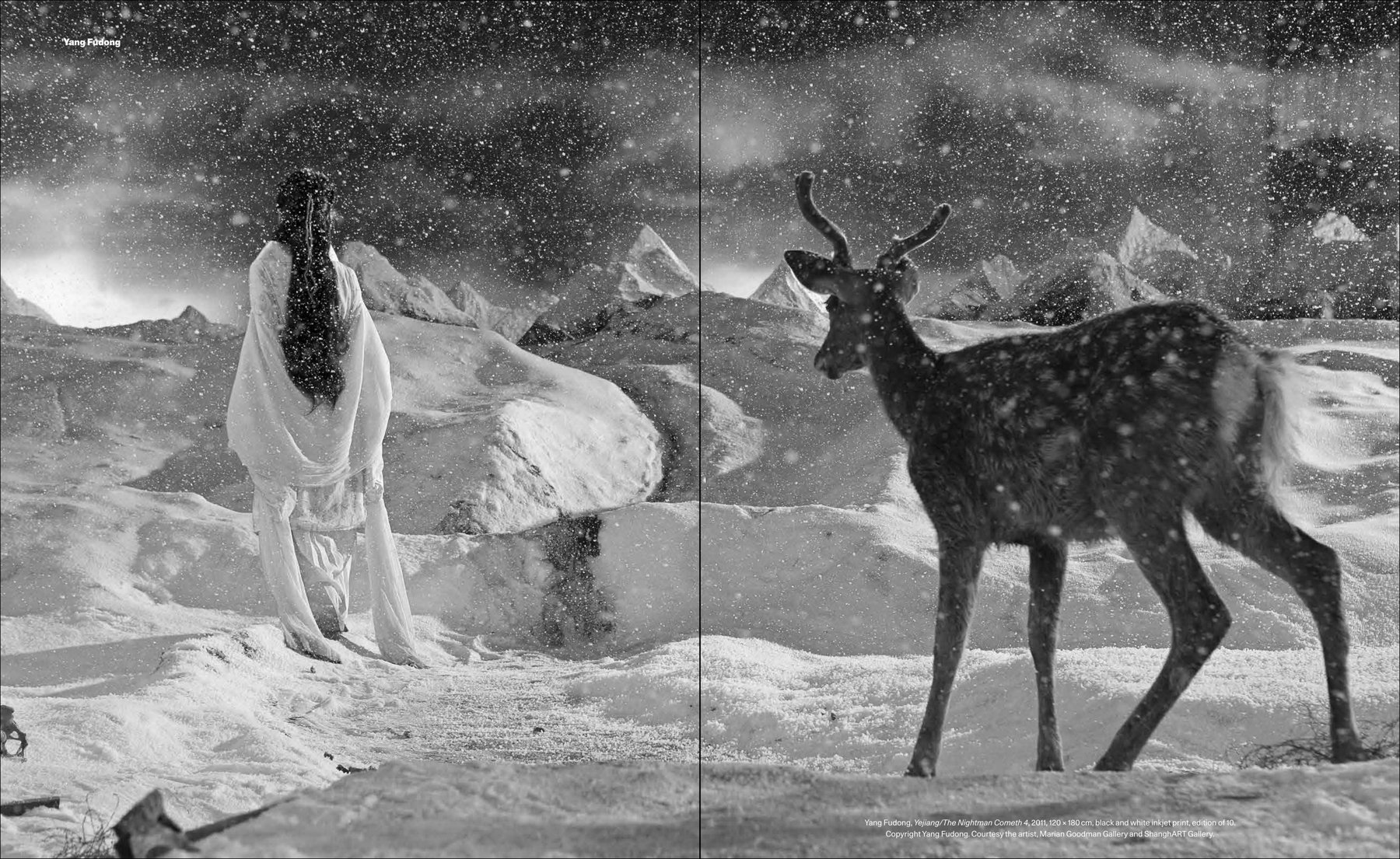
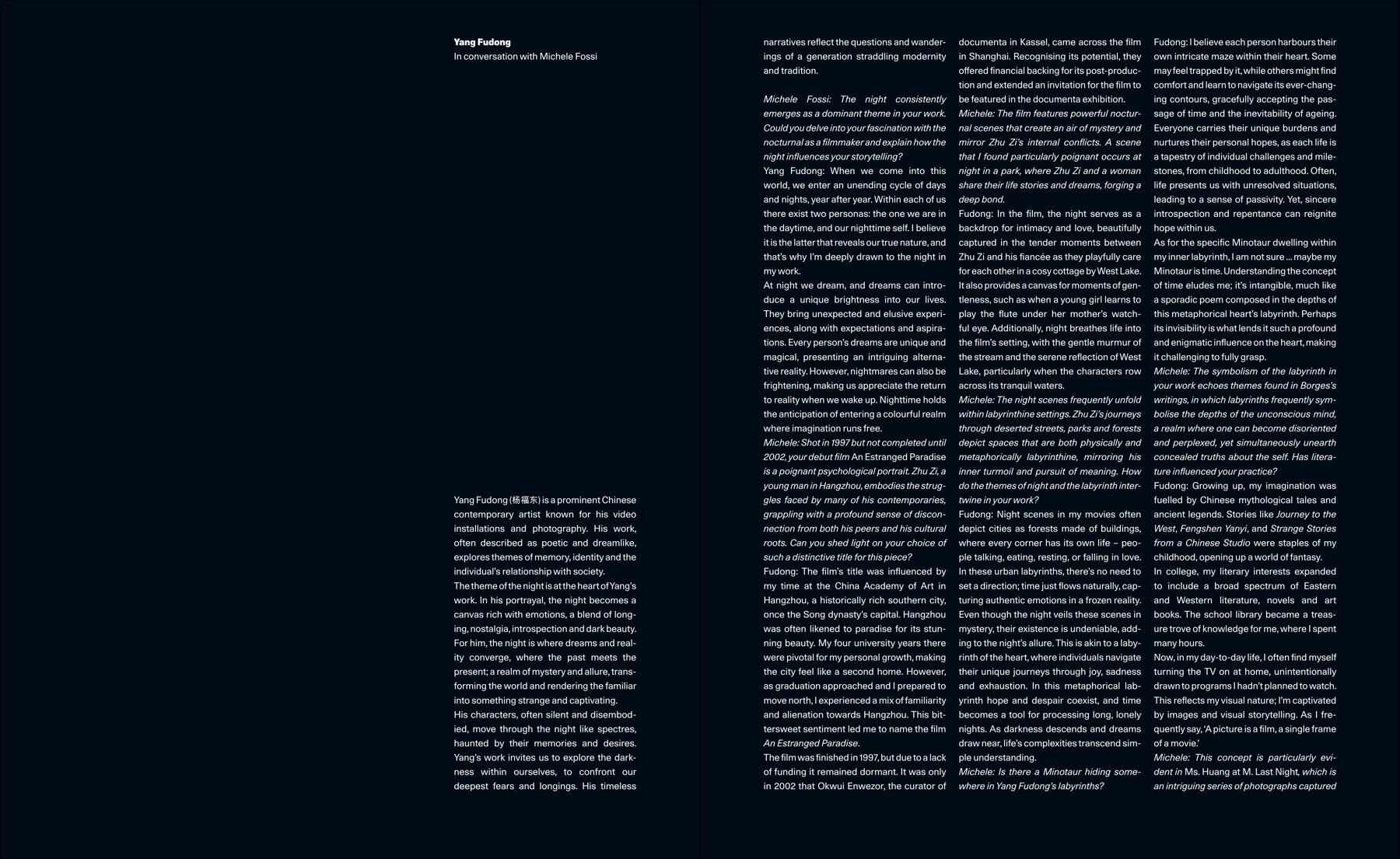
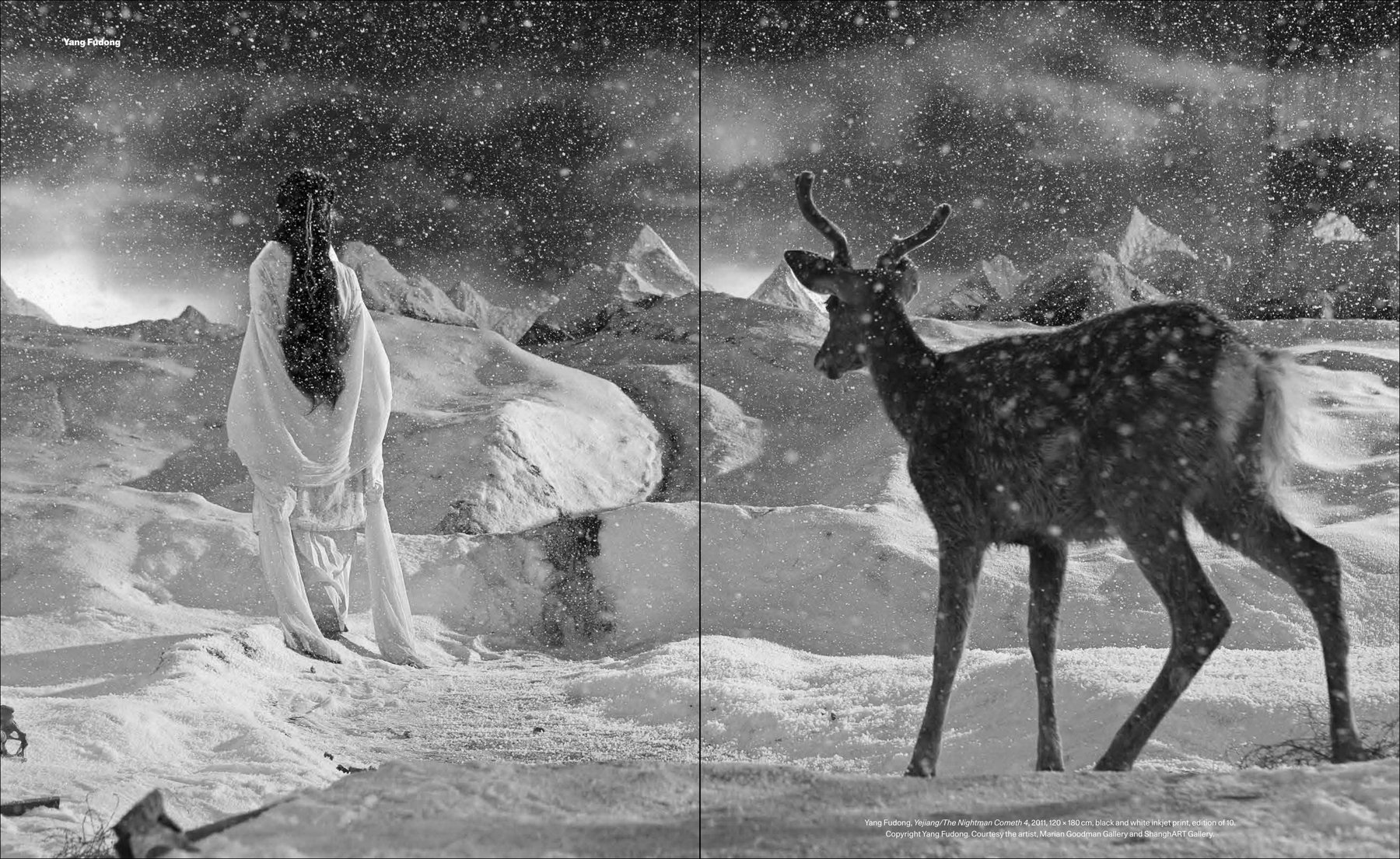
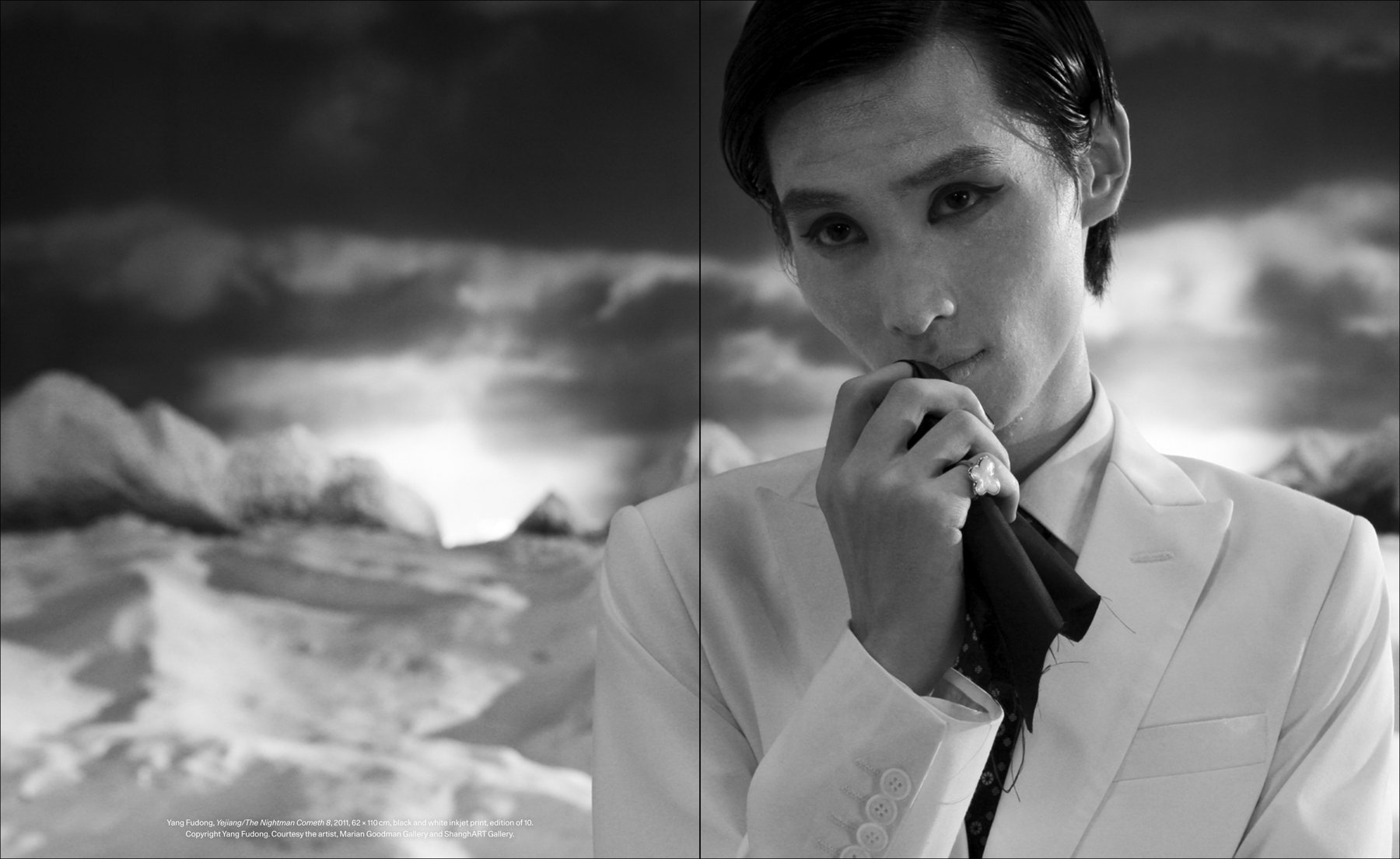
Michele: Even when the scenes of your movies take place in daylight, looking more closely, a symbolic connection to the night is still very present. I am thinking of works such as Yejiang / The Nightman Cometh (2011), a film which catapults us in a surreal snowy landscape populated by characters moving in slow motion and interacting with animals, a tableau-like dreamscapes of someone sleeping, more evocative of moods and impressions than any clear narrative. As the film progresses, we realise this is not actual daylight, but the subdued inner light of the subconscious.
Fudong: Yejiang / The Nightman Cometh, a black and white 35 mm short film from 2011, depicts a general’s last stand. He is confronted with a stark choice: face destruction and death in battle or abandon everything. The film portrays life as stark, cold and harsh, and the general’s decision – whether to cling to his faith or value his life – demands immense courage.
The film introduces symbolic elements like the deer, embodying the spirit of the East, and scenes of a warm family gathering, representing unbreakable bonds and eternal harmony. An ancient princess, an emblem of earthly purity and beauty, appears alongside the deer, symbolising respect, understanding and reliance on love. Their interaction is a beacon of light, dispelling the darkness of war on a chilly night, suggesting that love is all that truly matters.
The eagle, another key symbol, represents heroism, vigilance and boldness. Despite the harshness of the snowy landscape, the film recalls a childhood lesson: snowflakes act as blankets for plants in winter, nurturing their growth. This allegory extends to life itself, symbolising enduring hope and resilience amidst life’s challenges.
Michele: Yejiang / The Nightman Cometh, like many other films of yours, features long takes and slow motion. What is the effect you are trying to create with this?
Fudong: I think sometimes in film the use of long takes, as well as montage techniques and special camera movements, inherently implies a form of narration. It often signifies the passage of time. This change can either be real or a designed imaginative one. Life changes daily, from childhood to high school and then college, with different stages and feelings. These techniques of structuring and filming have a lot of modern qualities, inviting you to obsess over the film as one does with film photography. They enable you to capture and express your thoughts and imagination about life and the ever-flowing river of time.
Michele: You’ve mentioned your fascination with crafting a cinema of dreams and visions, and your lack of interest in realism. Could you delve into the reasons behind this artistic choice?
Fudong: Previously, I’ve often used the term ‘intuitive’ to describe my approach to filmmaking, which resonates with the dreamy, illusionary quality you mentioned. This style is akin to the Chinese idiom, ‘hearts connected as if with divine thread’, symbolising lovers who understand each other’s feelings without words, deeply sensing their mutual affection.
Reflecting on my school days, I recall being taught that art is born from life yet goes beyond it. Artistic creation, in my view, is deeply rooted in one’s understanding and interpretation of life, striving for the sublime in imagination and an appreciation for beauty. This pursuit of aesthetic beauty, in turn, inspires greater care and reverence for the realities of life. It’s important that we don’t suppress people’s natural inclination towards admiring and yearning for beauty.
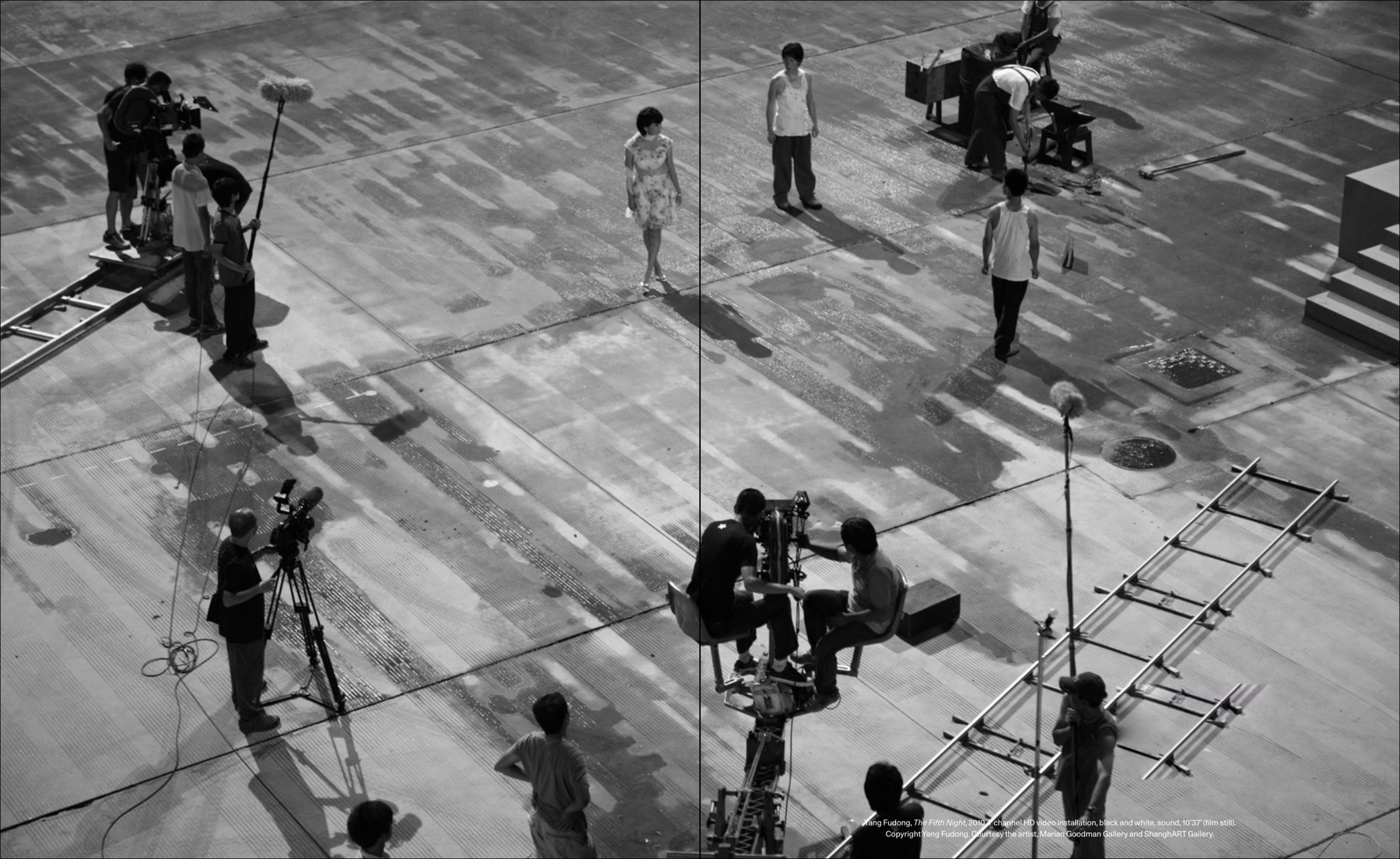
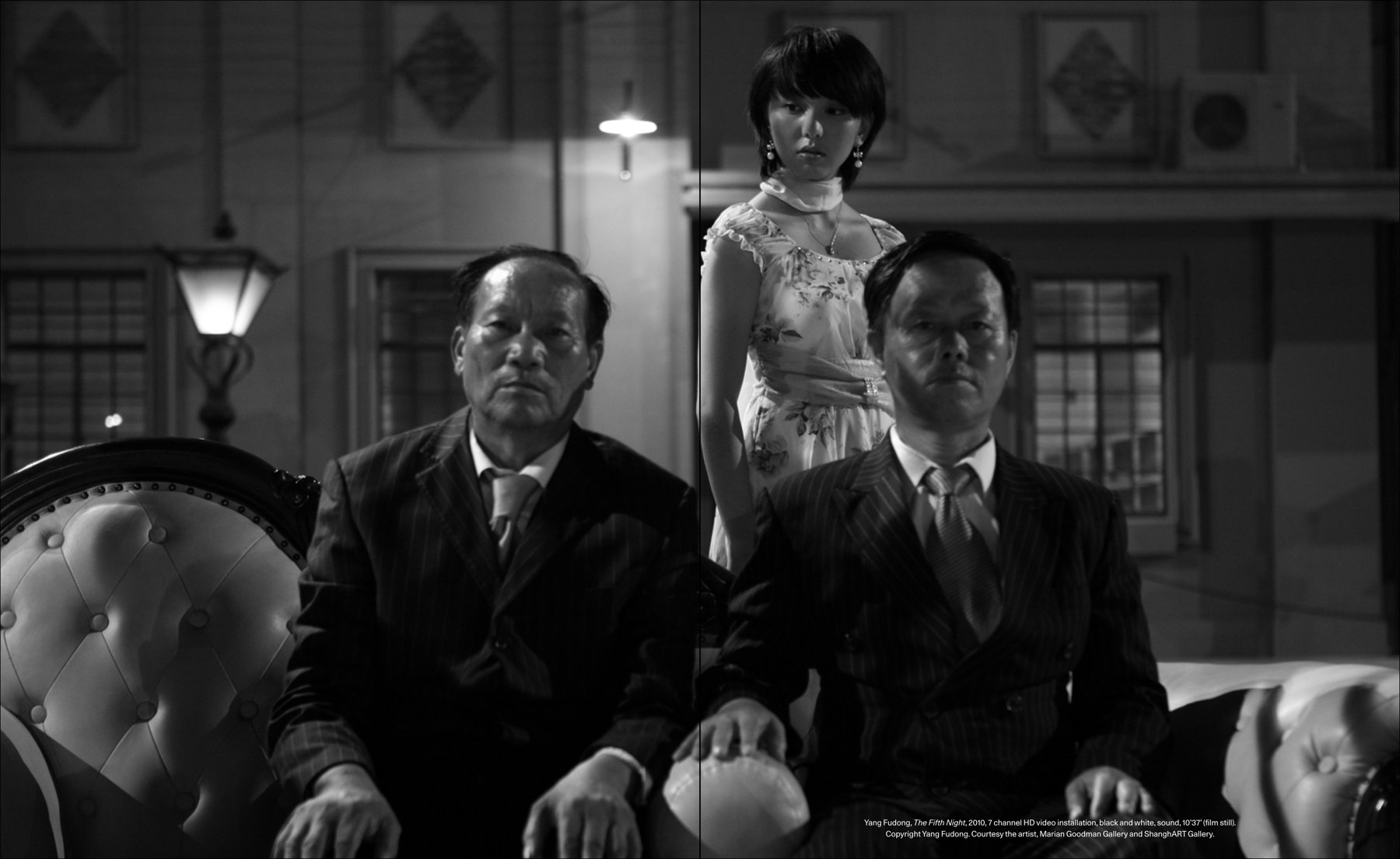
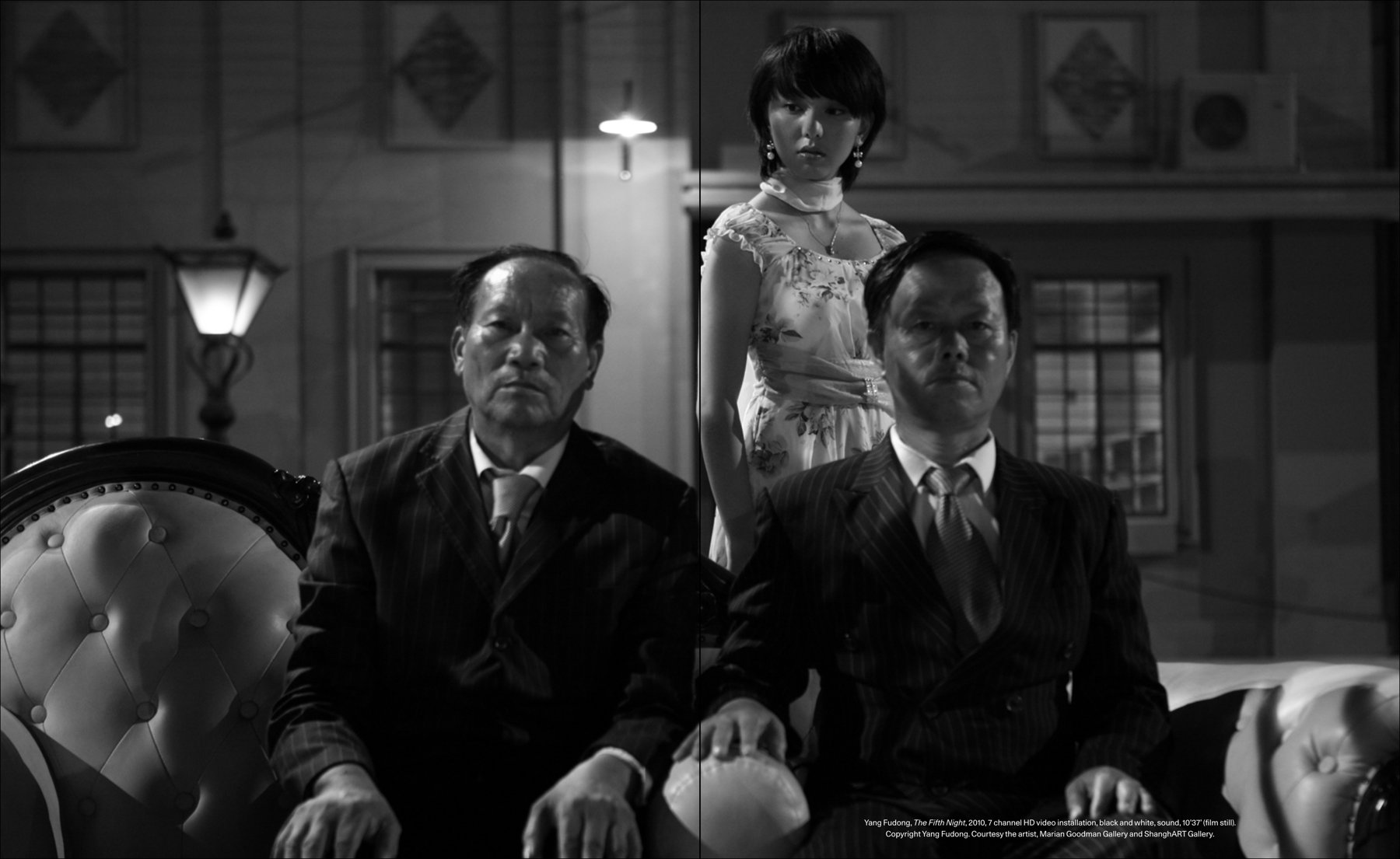
Michele: Mostly shot at night, The Fifth Night is a seven-channel video artwork telling the personal and intimate stories of seven young people in 1930s Shanghai in a dreamlike fashion. What is the story behind this work? Again, what is the function of the night in this work?
Fudong: In 2011, I created the video art piece The Fifth Night, which features seven screens and was filmed continuously from evening until dawn. We constructed a theatrical stage at a film and television base in Shanghai, replicating an old architectural square reminiscent of bygone decades. This setting transformed into a grand, authentic theatre stage, where actors performed inner monologues of detachment, exploring the psychological poetry of the night.
Each of the seven screens corresponded to different scenes, with seven cameras capturing the action simultaneously. This setup allowed us to experiment with cinematic language and techniques as our primary creative tools, thereby reconstructing the relationship between reality and illusion through cinematography. Our goal was to craft a surreal narrative in imagery.
In this work, the night acts as a constant beacon, shining light on the depths of everyone’s hearts. It prompts a contemplation of the vastness of the sea in comparison to their inner selves. It echoes Milan Kundera‘s sentiment that each person is the protagonist of their own story. In this solitary architectural square, every individual is navigating their own journey, akin to steering a canoe in uncharted waters.
Michele: You’ve regularly highlighted the crucial role of audience involvement in your movies. You have said, ‘I want the viewer to be an active participant in the viewing process. I want them to think about the films and to make their own interpretations. I don’t want to give the viewer all the answers. I want them to bring their own experiences and perspectives to the films.’ Could you expand on this concept?
Fudong: I’ve previously described the image works displayed in art spaces, particularly multi-screen installations, as akin to a form of peripheral vision cinema. This comparison stems from the nature of these exhibitions, where it’s impossible to view all the content simultaneously.
Instead, the audience’s peripheral vision catches glimpses of various screens, creating a unique viewing experience. In this environment, the film becomes a three-dimensional, somewhat blurred whole, encouraging a highly interactive form of visual imagination.
Michele: What you are saying is that in a multichannel setting like in The Fifth Night, the audience essentially becomes a co-director of the piece.
Fudong: Yes, they engage with the images, regardless of the screen sizes, and actively edit their understanding of the work. This process allows them to direct their own ‘new film’ in their minds. This version is not just unique to their perception but also stands as an independent interpretation of the original work. This approach underscores my belief in the importance of viewer participation, inviting them to bring their perspectives and experiences with them and interpret the films in their own way, without being handed all the answers.
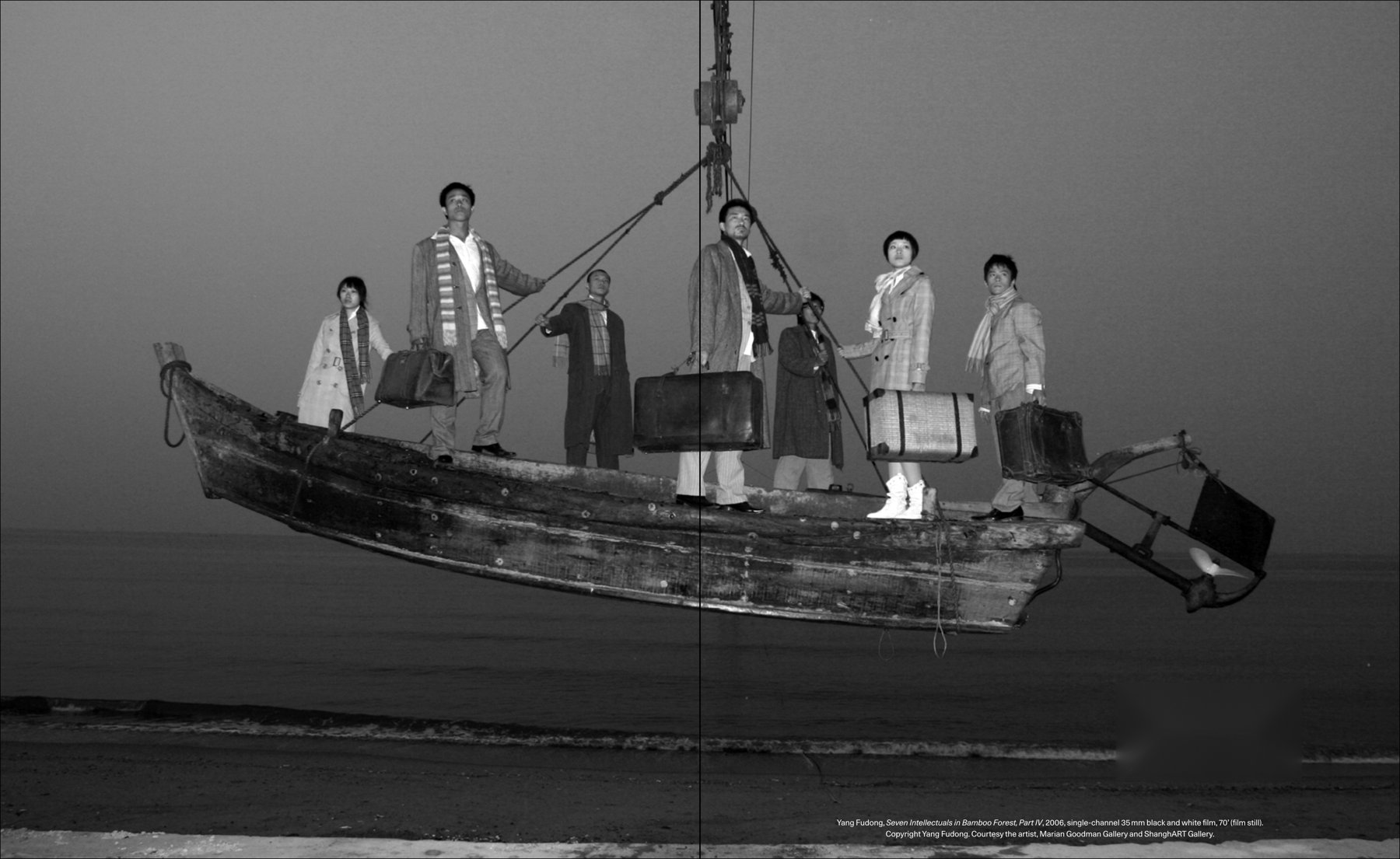
Michele: Seven Intellectuals in Bamboo Forest (2003–07), first screened at the 2007 Venice Biennale, is universally considered one of your masterpieces. This enigmatic film series in seven episodes is based on a famous Chinese fable about a group of youthful literati who withdraw from their corrupt third-century society to establish a loose utopian community in a bamboo forest. The films capture the sense of mystery and longing associated with the forest, as well as the scholars’ desire to escape the confines of conventional society.
Fudong: Seven Intellectuals in Bamboo Forest is a title that harkens back to seven esteemed intellectuals from the Wei, Jin, Southern, and Northern dynasties of ancient China. Between 2003 and 2007, I dedicated five years to crafting the series, focusing on the lives of young people and communities in contemporary society. The project was conceived as a collection of interconnected yet standalone chapters, each shot annually, exploring evolving thoughts and perspectives without a rigid script, yet guided by an overarching theme.
The series begins with a portrayal of seven youths journeying to Huangshan, capturing the idyllic essence of a postcard life. It then shifts to the second part, set in Shanghai, illustrating life in a bustling city where residents are familiar only with their immediate surroundings, lacking a broader connection with the city. The third instalment takes a turn, showing these individuals venturing into the countryside, embracing an alternate lifestyle. In the fourth chapter, they explore an island, searching for a utopian existence. The final chapter brings them back to urban life, confronting its stark realities once more.
Seven Intellectuals in Bamboo Forest transcends mere historical reflection, embodying the experiences of real life; it underscores the idea that youth, whether experienced individually or collectively, is a period brimming with vitality, imbuing life with the beauty of poetry and the allure of distant horizons.
Michele: Just as the night makes everything mysterious and enchanting, the bamboo forest in this work is a place where beauty and danger can be found side by side, even intertwined. Could you elaborate on this contrast and its significance in your work?
Fudong: The allure of the night lies in its invisibility, cloaking everything in mystery, anticipation, and an element of fear. The unknown merges beauty with danger, creating an enigmatic atmosphere. My recent years in Hangzhou have mostly been spent renting farmhouses in the mountains. On some nights I ventured on late-night hikes through solitary bamboo groves, a journey marked by fear and excitement. The absence of light heightened the sense of vulnerability, with the lurking possibility of encountering wild animals or venomous snakes. In these moments, surrounded by the rustling bamboo leaves, the slightest sound from behind or uphill could send shivers down my spine. Shouting into the void, hearing my echoes, and feeling the adrenaline rush reaffirmed my love for adventure. Youth emboldens us, making us fearless in the face of time’s passage and the night’s darkness.
In my creative work, this uncertainty breeds a unique kind of impulse and excitement. The anticipation of what a project might become is thrilling. Even if an idea isn’t fully formed, there’s a compelling need to pursue it courageously. The psychological journey from the birth of an idea to its realisation is intriguing. Night acts as a mirror, reflecting our images in uncertain light, leaving us to wonder if the reflection truly represents our authentic selves.
Michele: I’ve read that Jim Jarmusch has been a major inspiration for your work, which is not surprising, considering that his work is also deeply connected to the theme of the night. In many of his films, the night is used to create a sense of mystery, suspense and atmosphere. Like you, Jarmusch is also interested in exploring the ways in which the night can be a time of freedom, creativity and self-discovery.
Fudong: I first came across Jim Jarmusch’s work Stranger Than Paradise in a DVD shop in Shanghai in the early 2000s. The title of his movie closely resembled that of my first film, An Estranged Paradise, and it was also in black and white, so I immediately bought it and watched it. He filmed it superbly. I really admired it. His movie had a sense of loneliness, alienation and mystery, mixed with an indescribable sadness. It’s the kind of film that lingers in your memory for a long time, touching a unique chord in your heart.
Michele: To conclude, a more private question, if you’ll allow. Do you have a bedtime routine? Can you share it with us?
Fudong: My nightly routine isn’t set in stone, it’s rather spontaneous. Often I stay up late watching TV or sports, without a strict schedule. I recall the excitement from years ago when I first learned to drive and got a second-hand Jeep. It felt liberating, suddenly expanding my world. This freedom allowed for impromptu night road-trips to places like Suzhou, Nanjing, Wuxi, and Hangzhou, driving along unfamiliar roads and embracing the freshness and thrill of not having a predetermined destination.
Back then, I didn’t even feel the fatigue. Sometimes, I would stop by the roadside, enjoy a cigarette, engage in conversations with a night-shift security guard, or savour a bowl of noodles at a highway service station before resuming my journey. Everything felt new and unfamiliar, just like the scenes from Kerouac’s novel – that undeniable sensation of being on the road, immersed in a world of discovery.
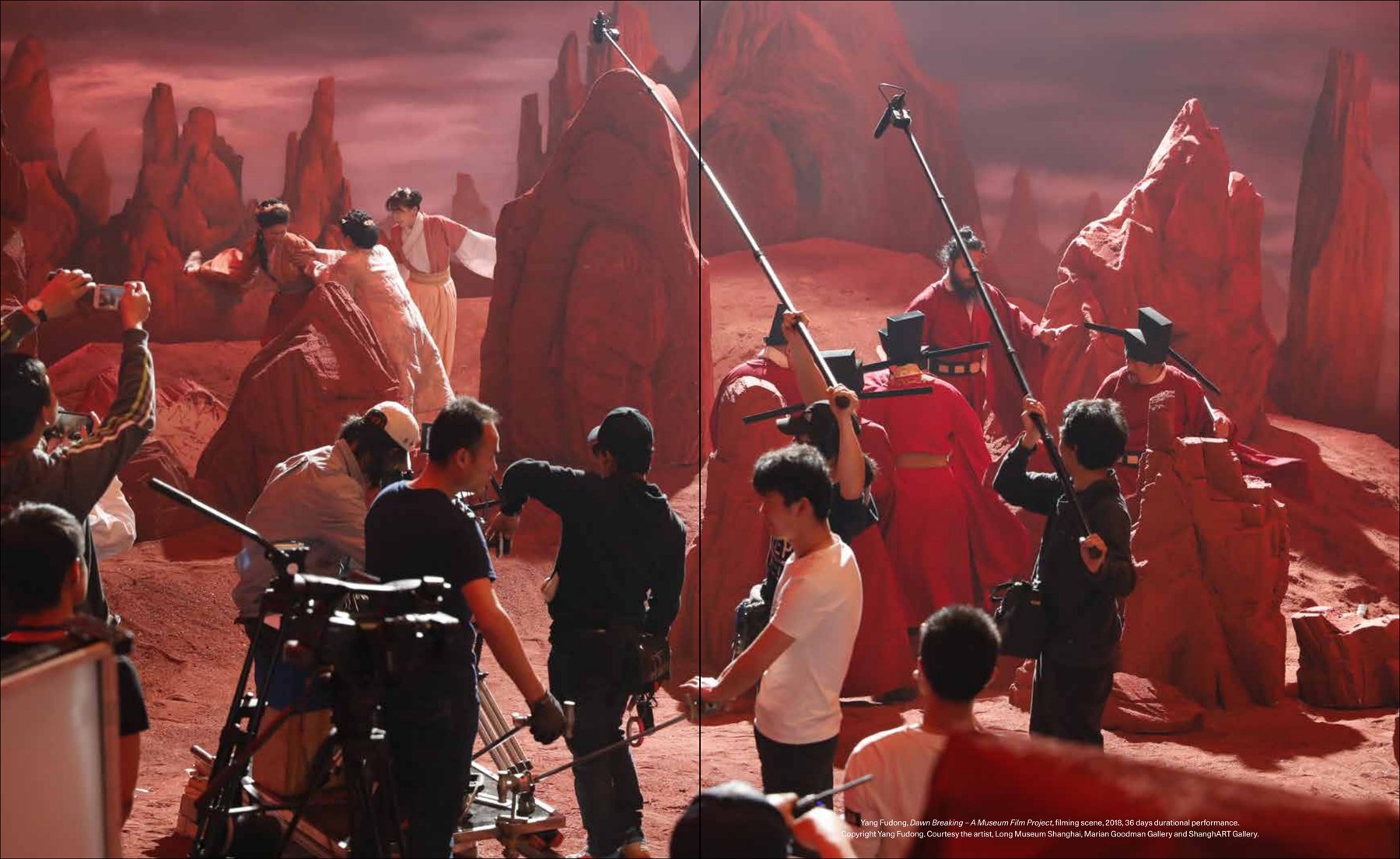
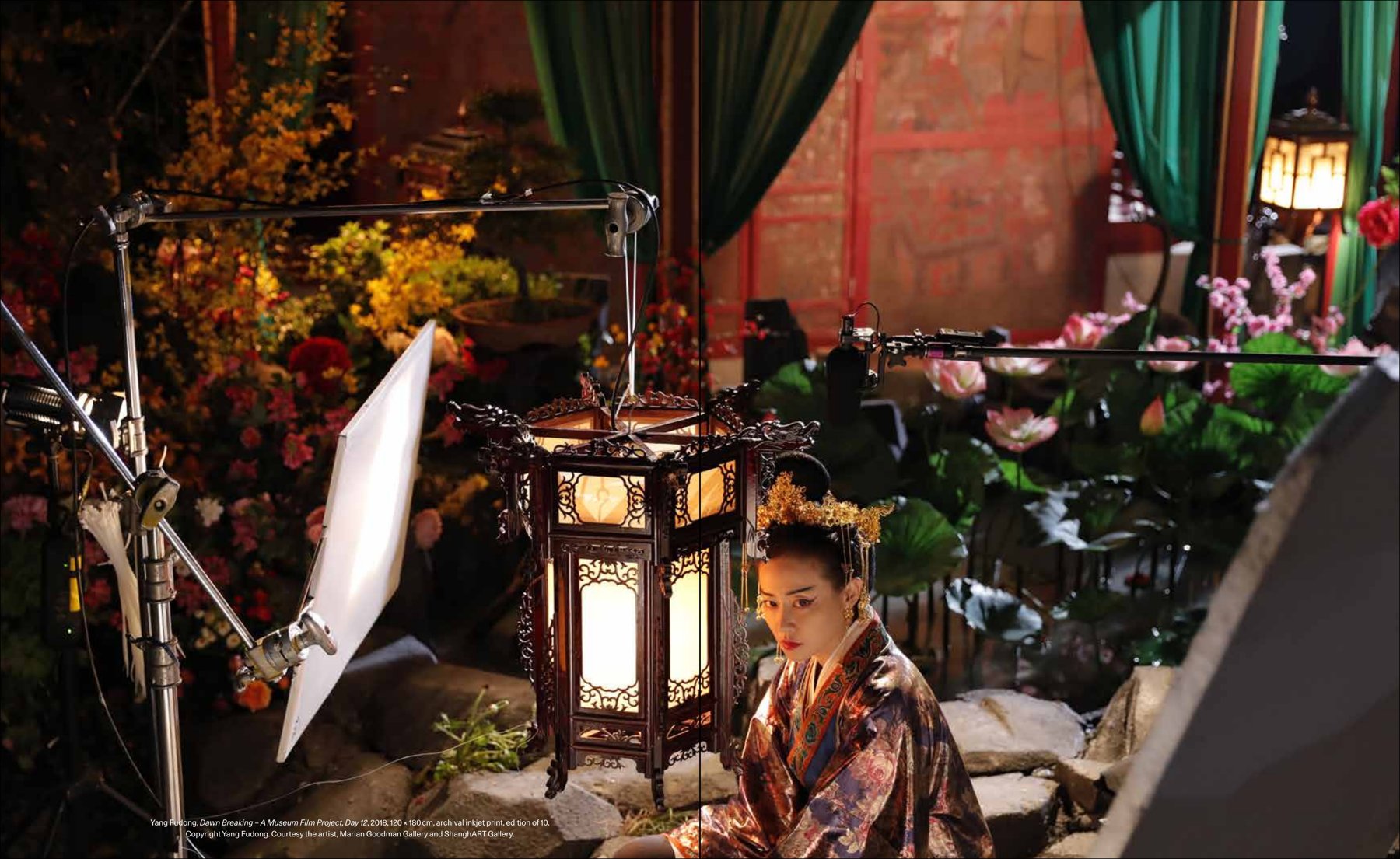
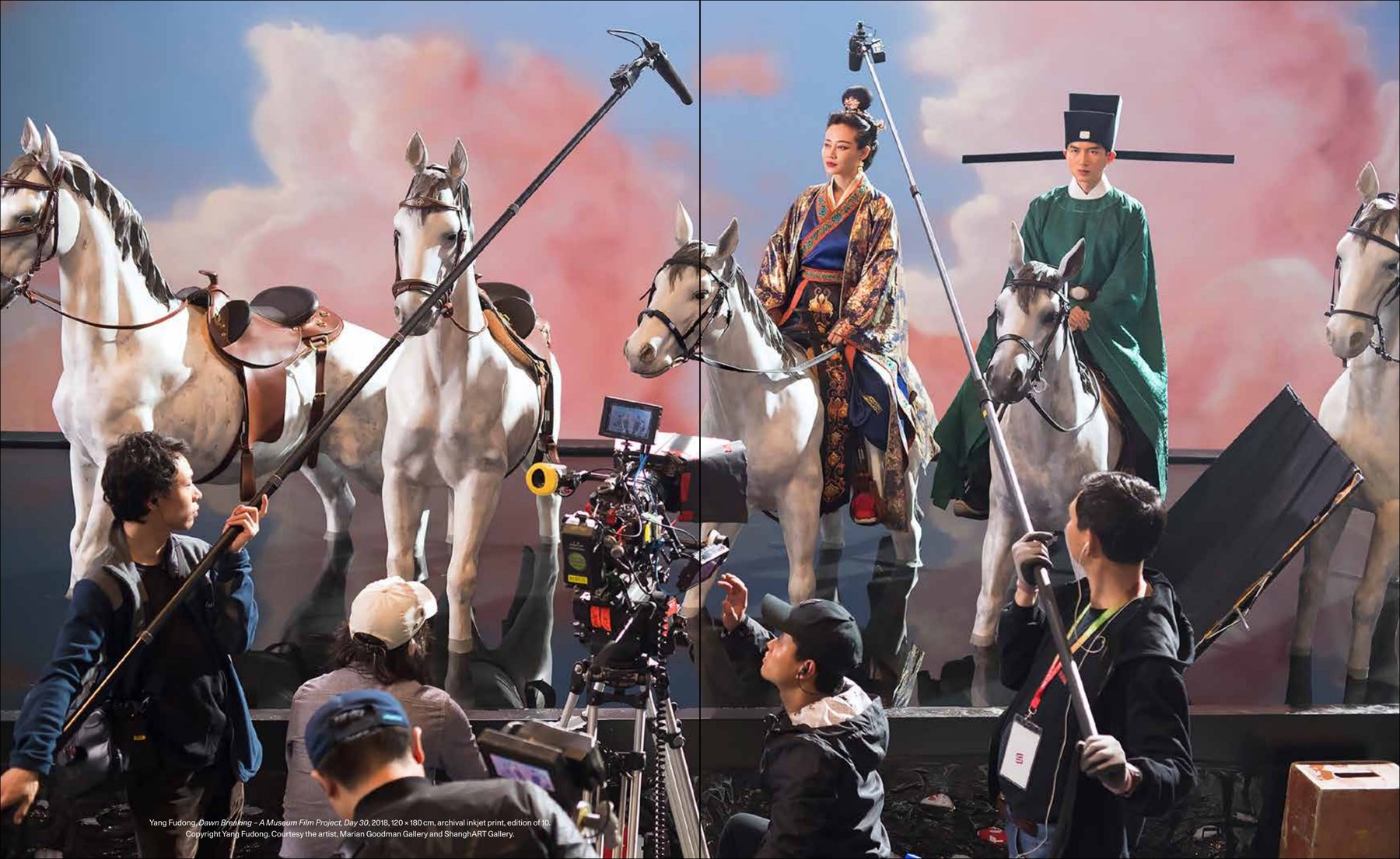
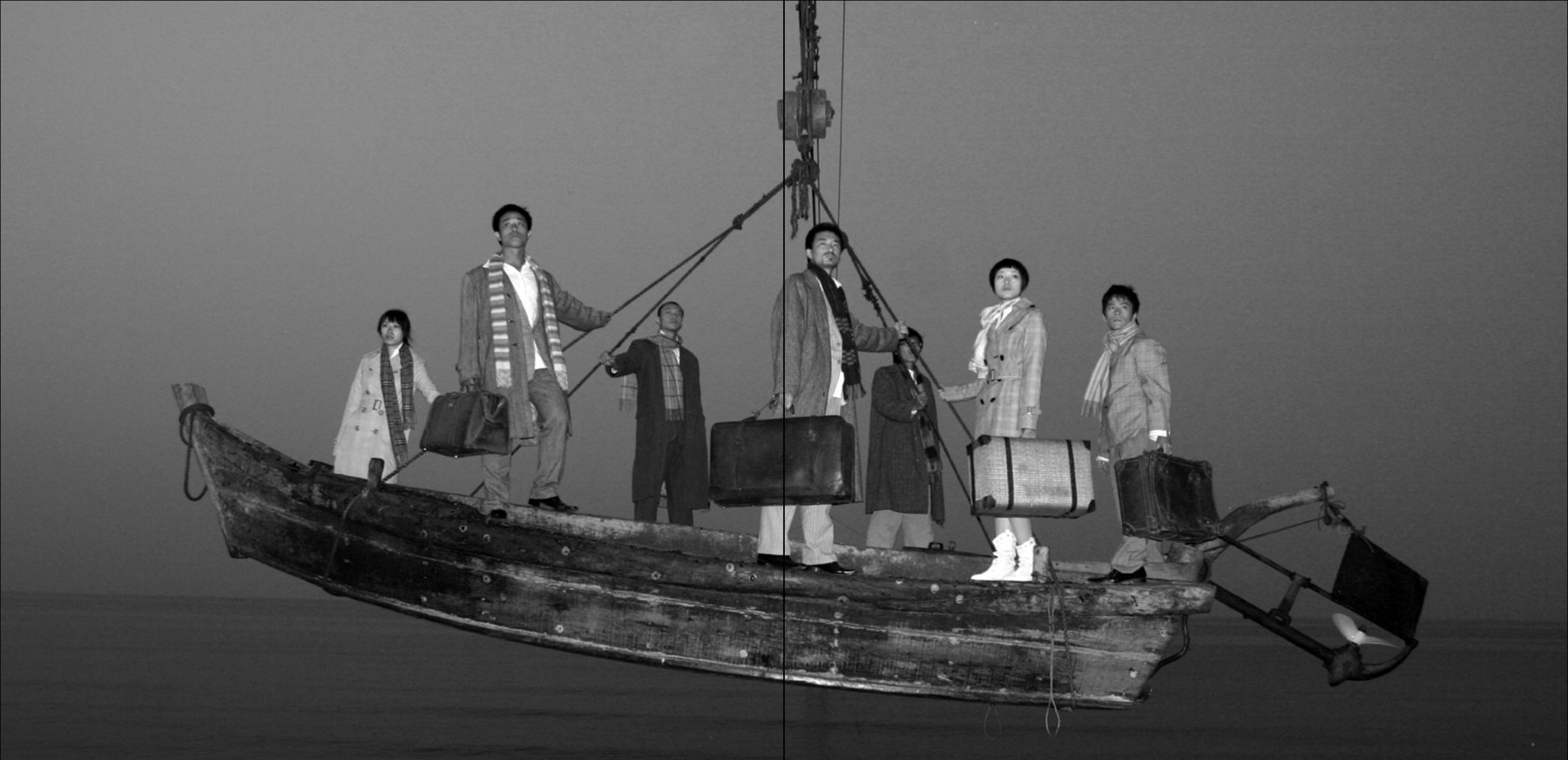
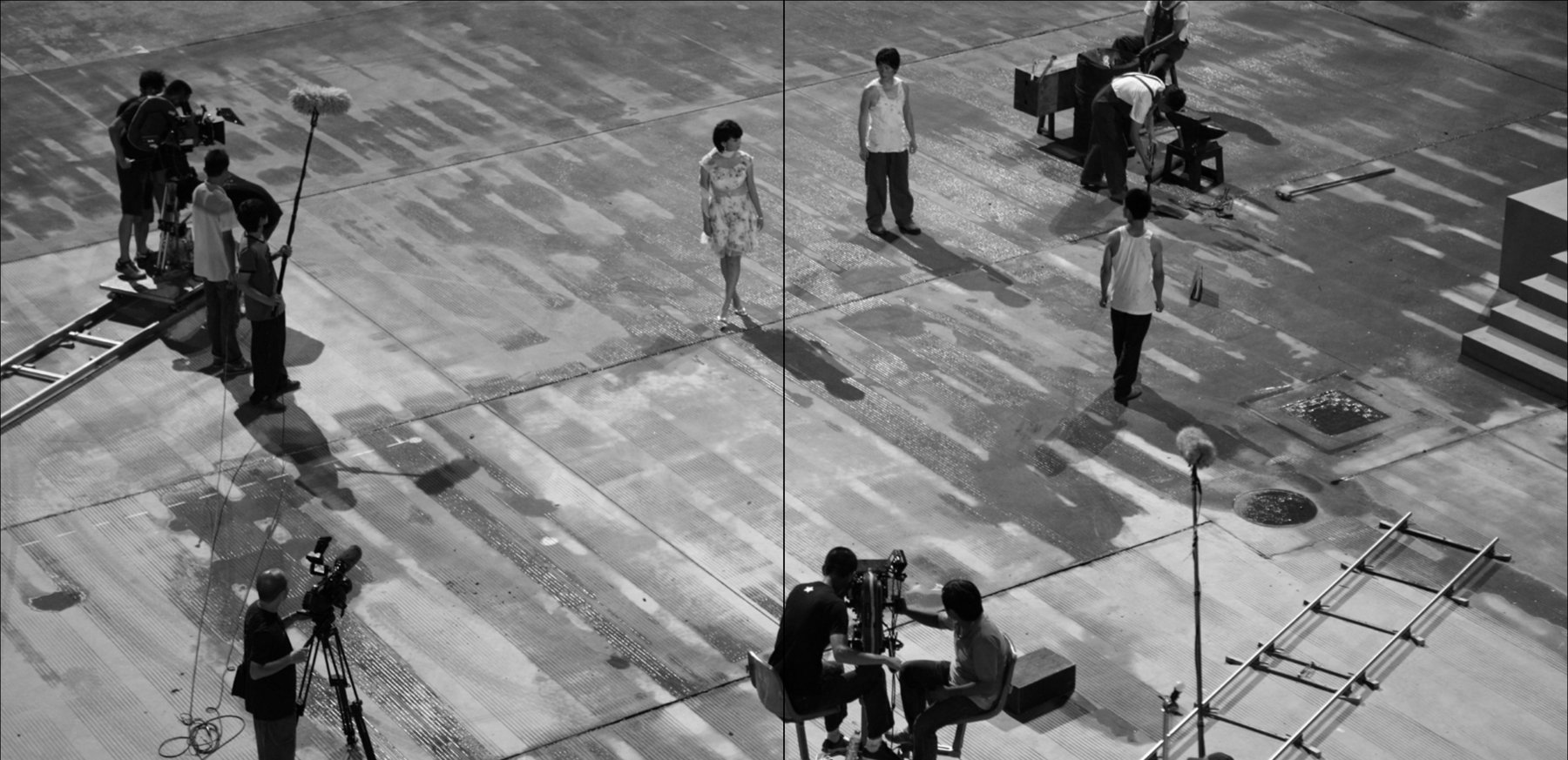
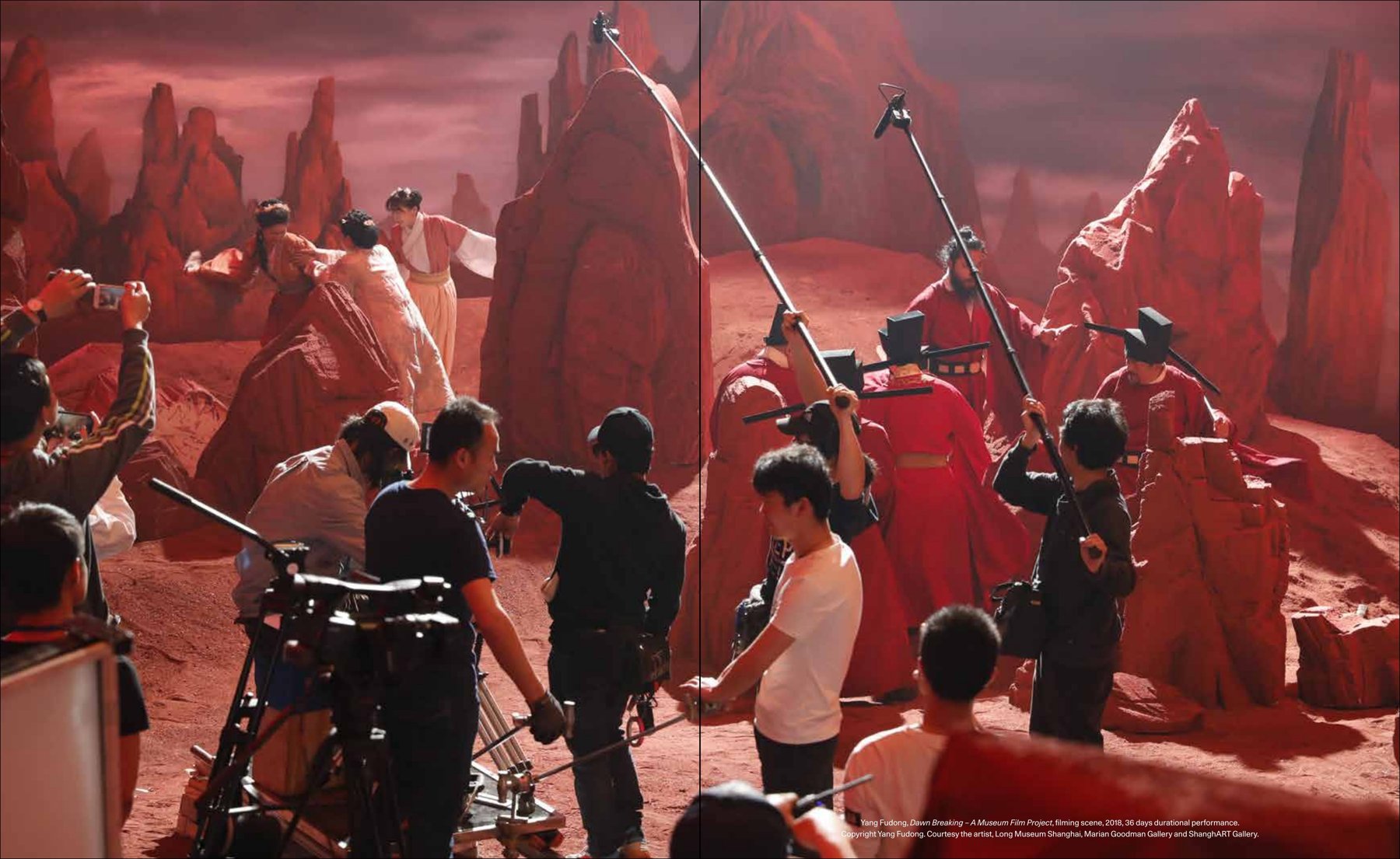
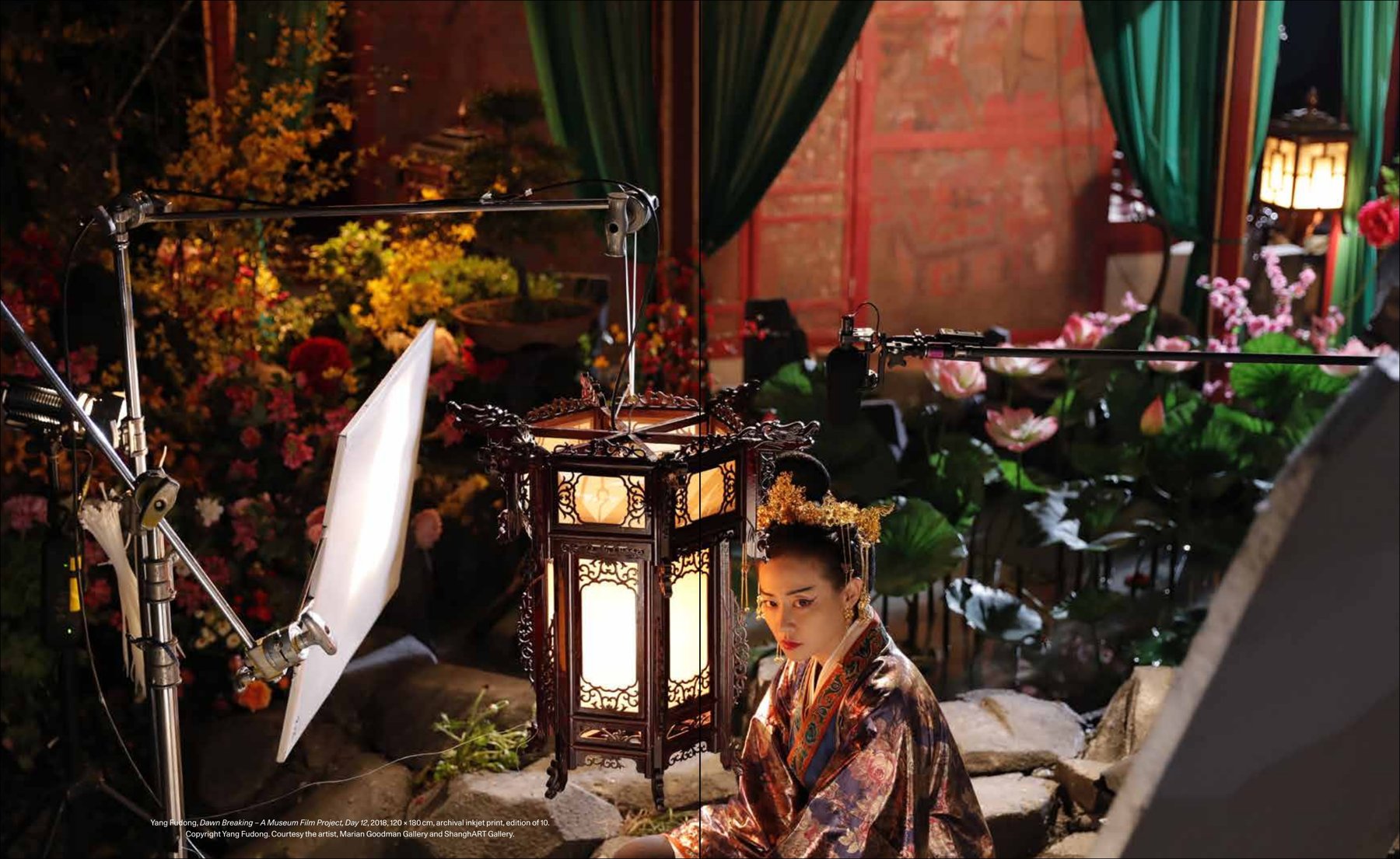
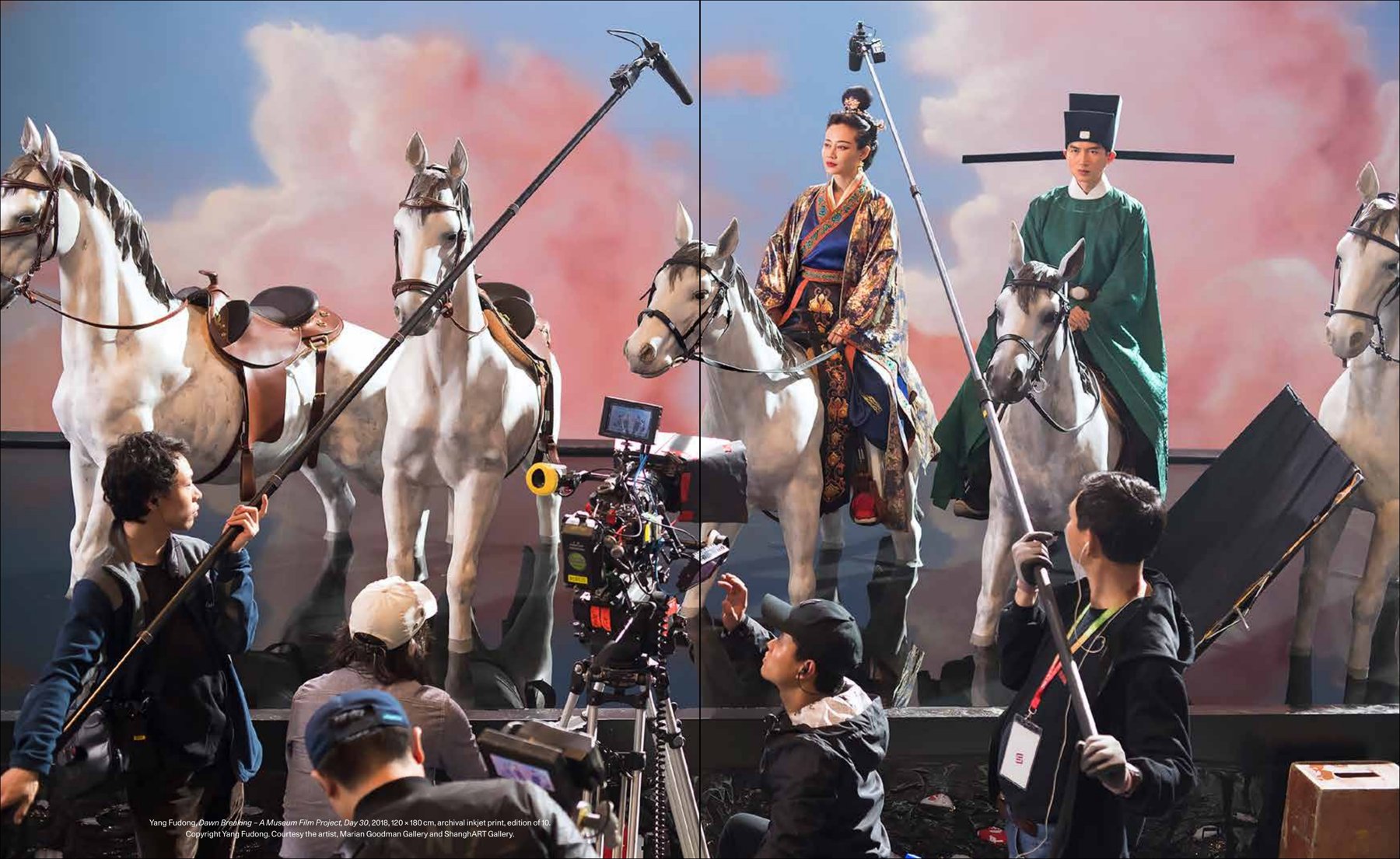
Images, in order: Yang Fudong, Yejiang/The Nightman Cometh 4, 2011, 120 × 180 cm, black and white inkjet print, edition of 10. · Yejiang/The Nightman Cometh 8, 2011, 62 × 110 cm, black and white inkjet print, edition of 10. · Seven Intellectuals in Bamboo Forest, Part IV, 2006, single-channel 35 mm black and white film, 70’ (film still). · The Fifth Night, 2010, 7 channel HD video installation, black and white, sound, 10’37’ (film stills). · Dawn Breaking – A Museum Film Project, filming scene, 2018, 36 days durational performance (Courtesy the artist, Long Museum Shanghai, Marian Goodman Gallery and ShanghART Gallery). · Dawn Breaking – A Museum Film Project, Day 12, 2018, 120 × 180 cm, archival inkjet print, edition of 10. · Dawn Breaking – A Museum Film Project, Day 30, 2018, 120 × 180 cm, archival inkjet print, edition of 10. Copyright Yang Fudong. Courtesy the artist, Marian Goodman Gallery and ShanghART Gallery.
In conversation with Michele Fossi
Published in Acne Paper, issue 19 «Nocturne», June 2024