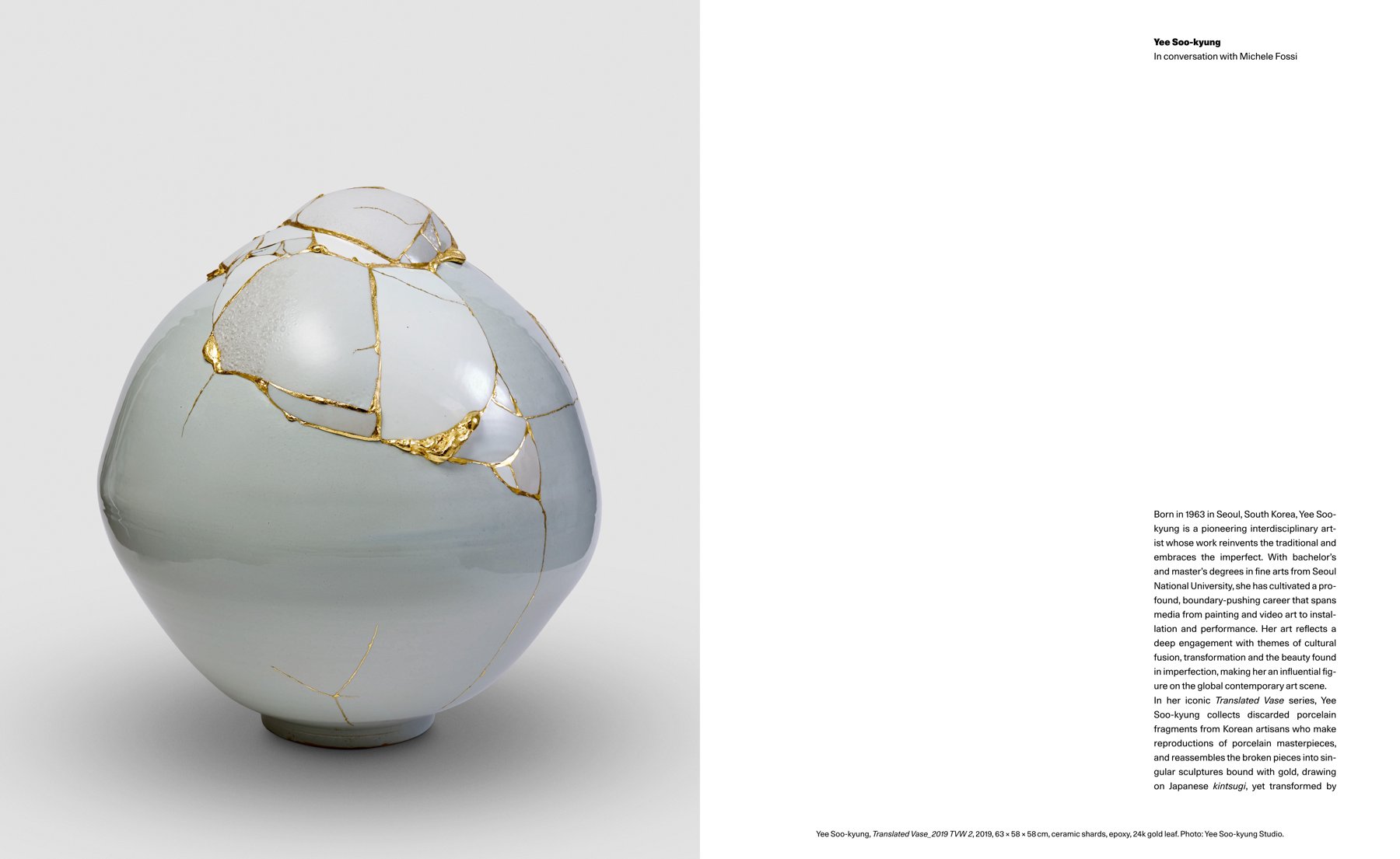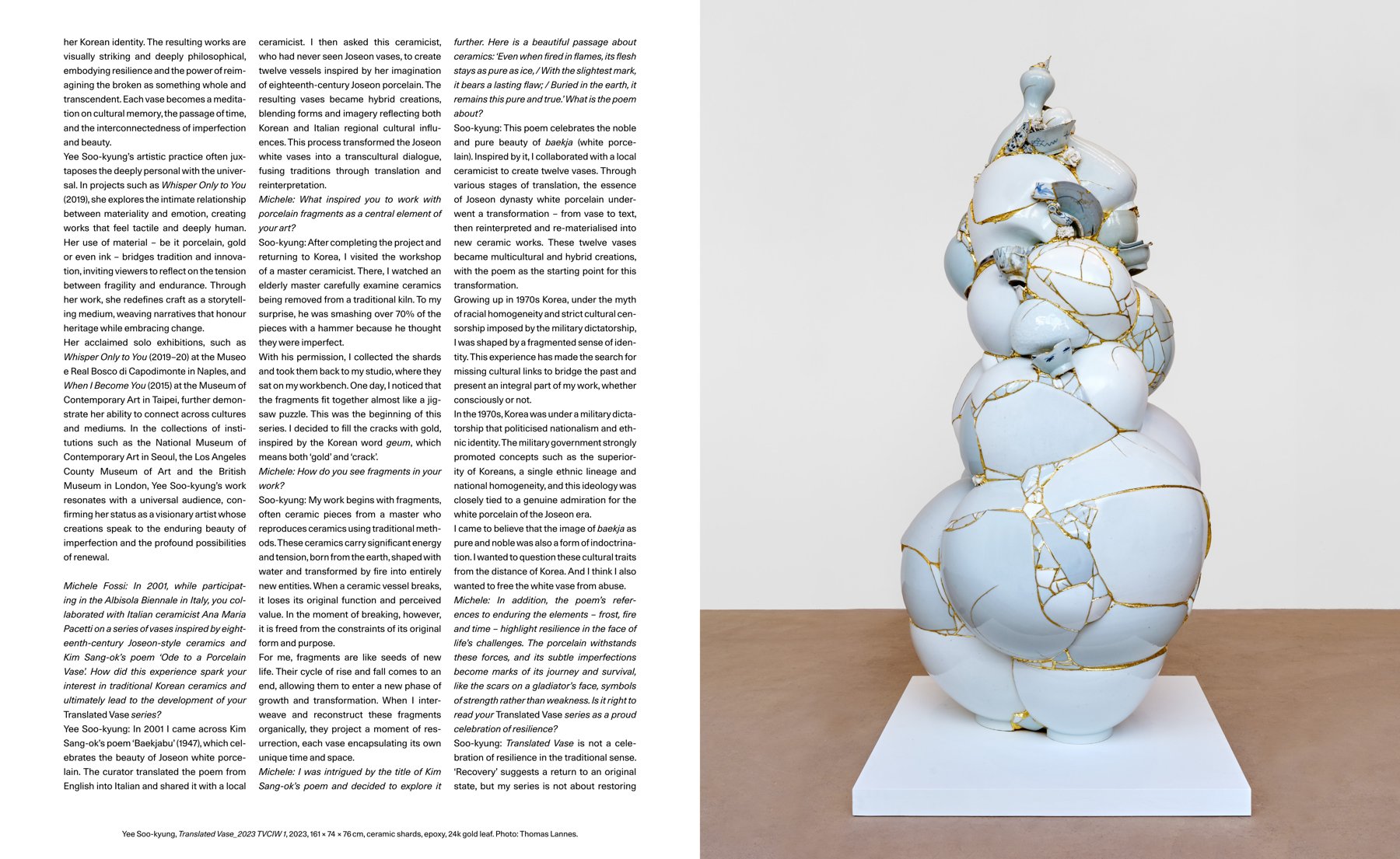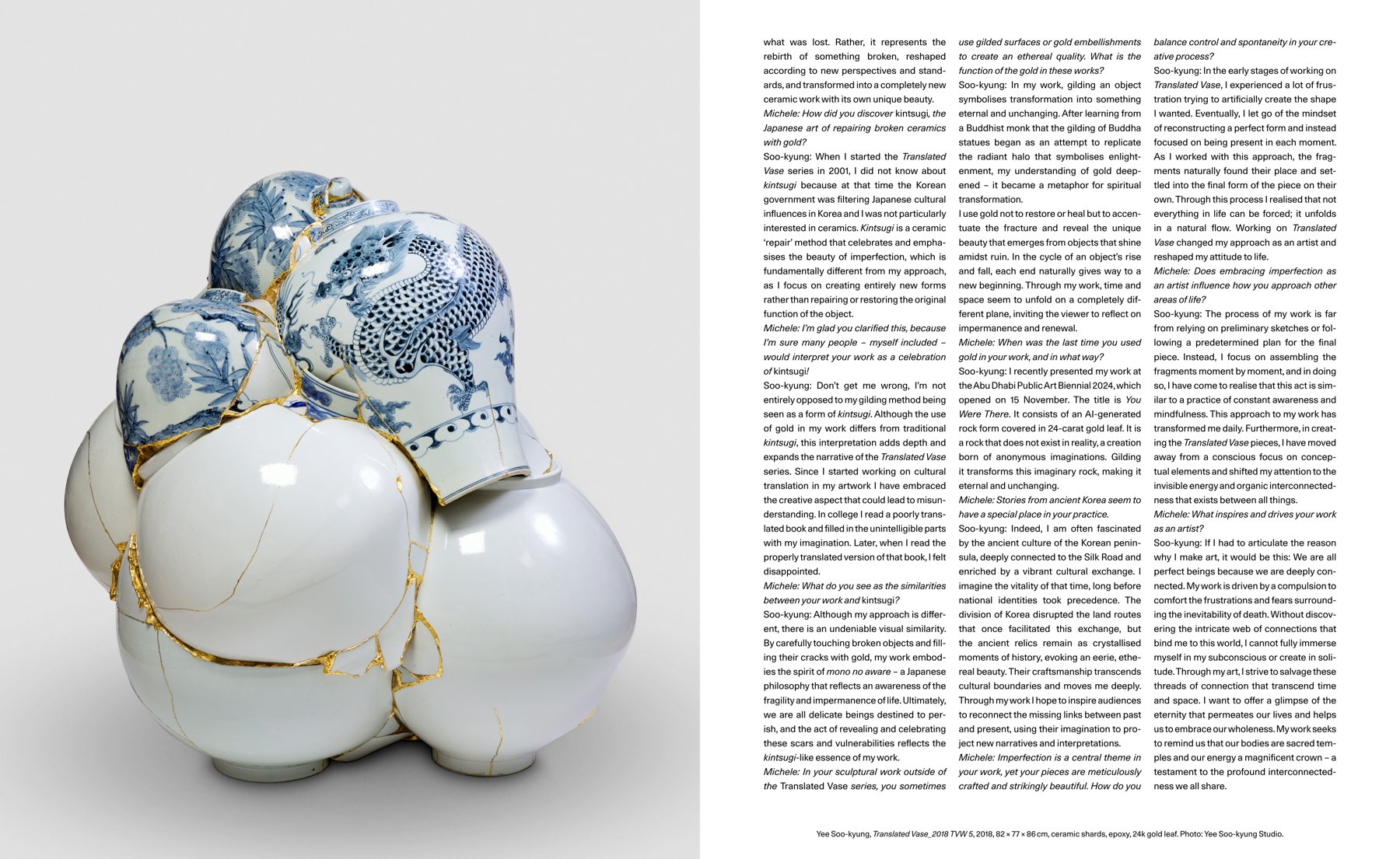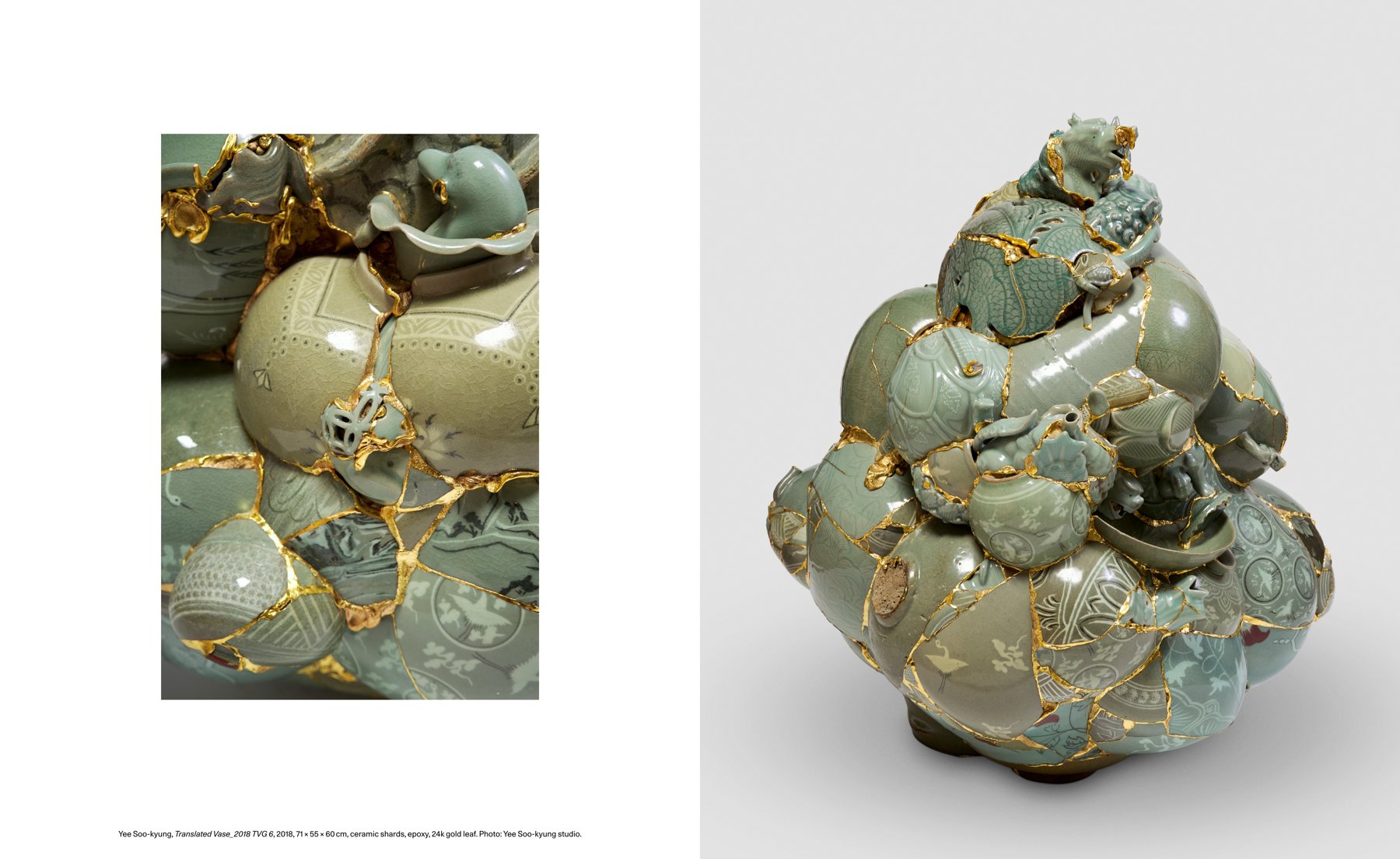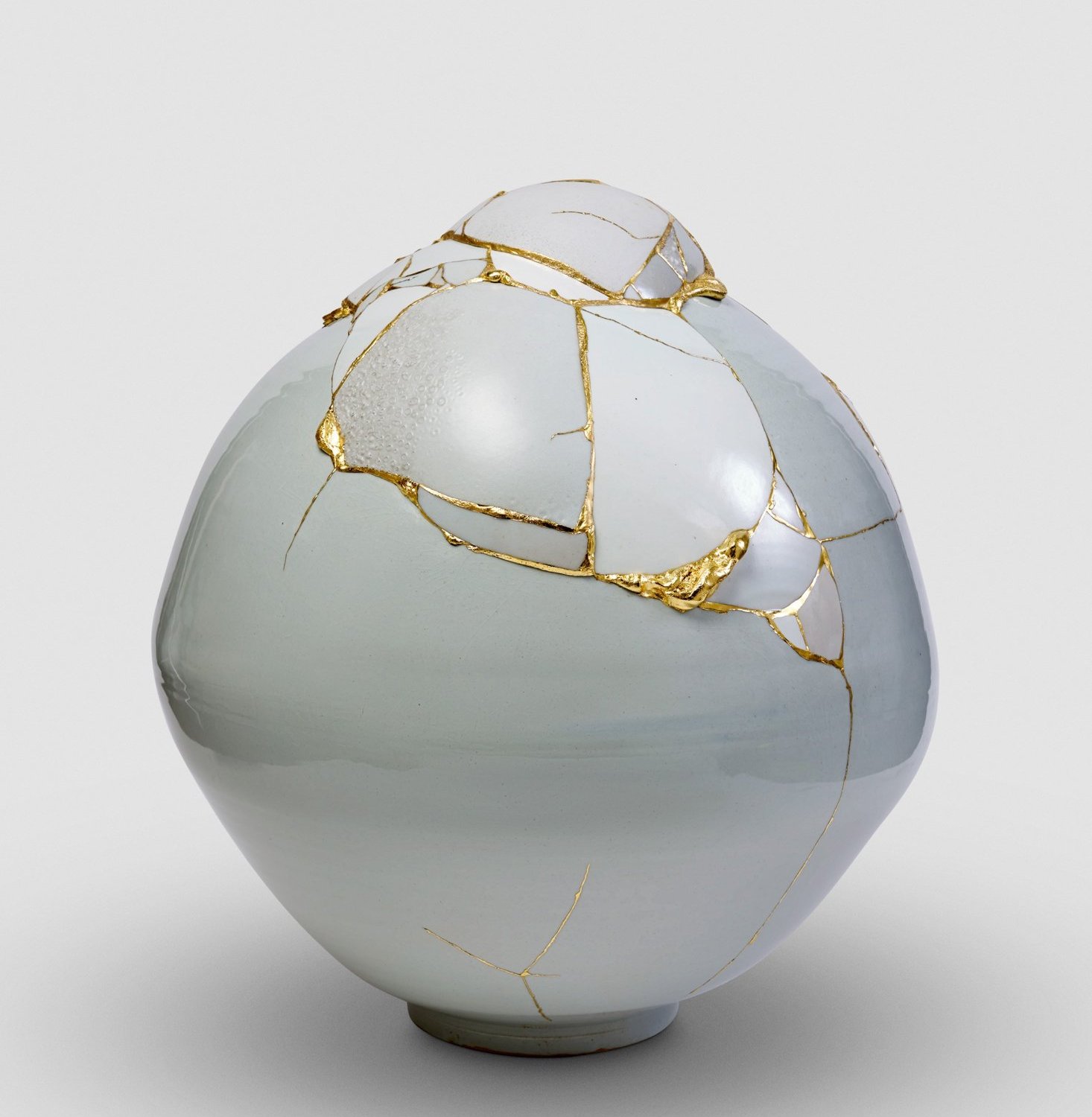
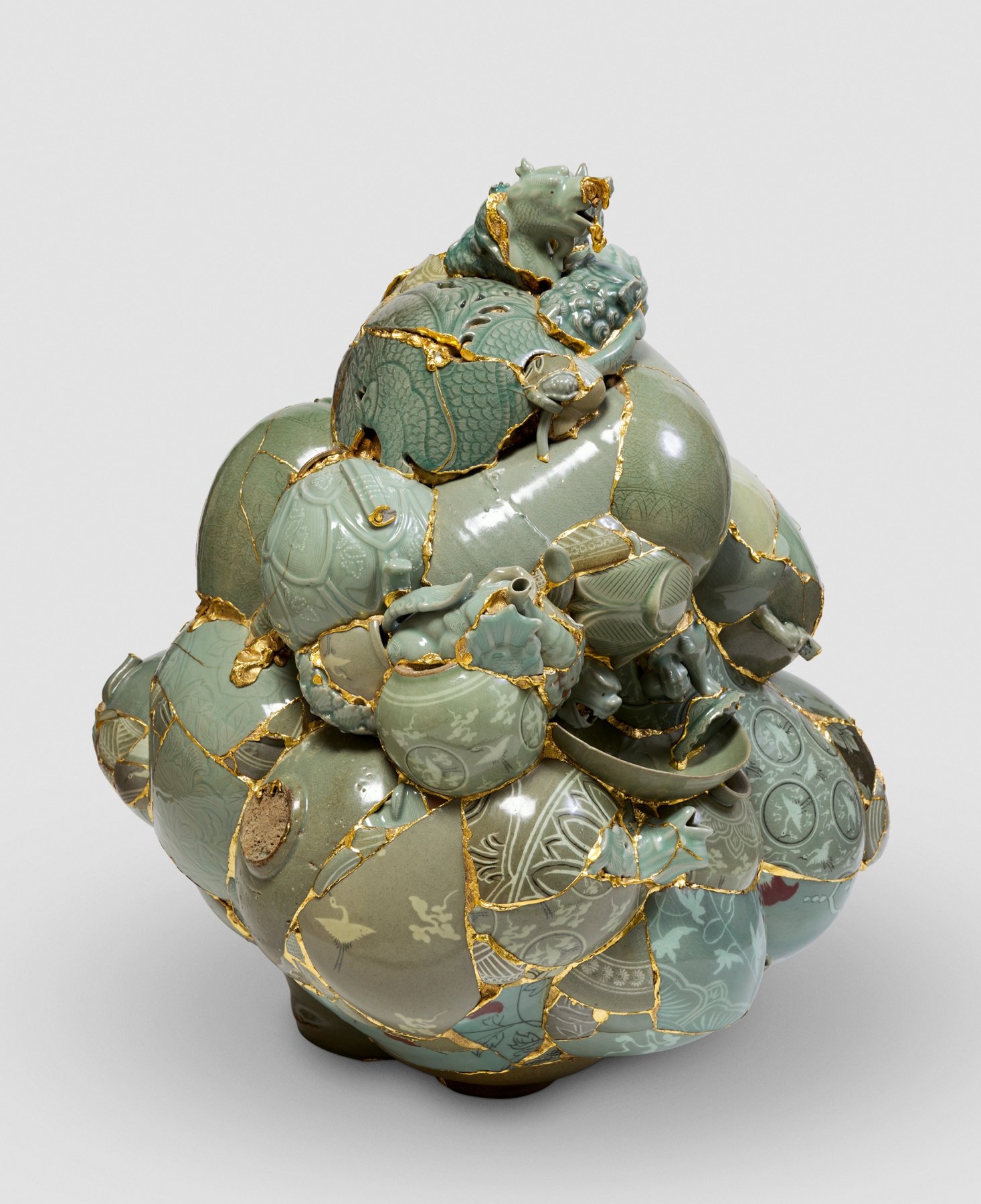
Born in 1963 in Seoul, South Korea, Yee Sookyung is a pioneering interdisciplinary artist whose work reinvents the traditional and embraces the imperfect. With bachelor’s and master’s degrees in fine arts from Seoul National University, she has cultivated a profound, boundary-pushing career that spans media from painting and video art to installation and performance. Her art reflects a deep engagement with themes of cultural fusion, transformation and the beauty found in imperfection, making her an influential figure on the global contemporary art scene. In her iconic Translated Vase series, Yee Soo-kyung collects discarded porcelain fragments from Korean artisans who make reproductions of porcelain masterpieces, and reassembles the broken pieces into singular sculptures bound with gold, drawing on Japanese kintsugi, yet transformed by her Korean identity. The resulting works are visually striking and deeply philosophical, embodying resilience and the power of reimagining the broken as something whole and transcendent. Each vase becomes a meditation on cultural memory, the passage of time, and the interconnectedness of imperfection and beauty.
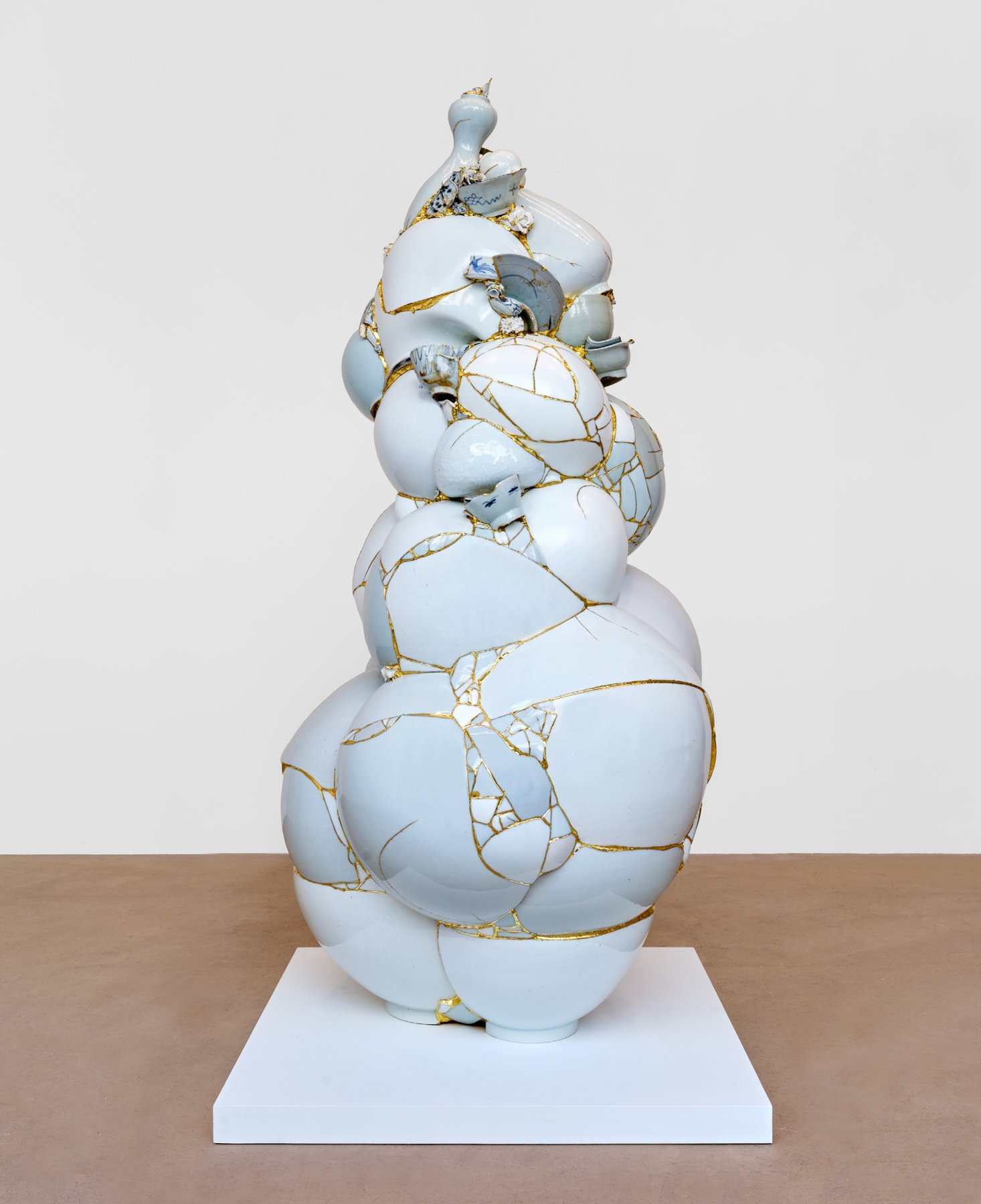
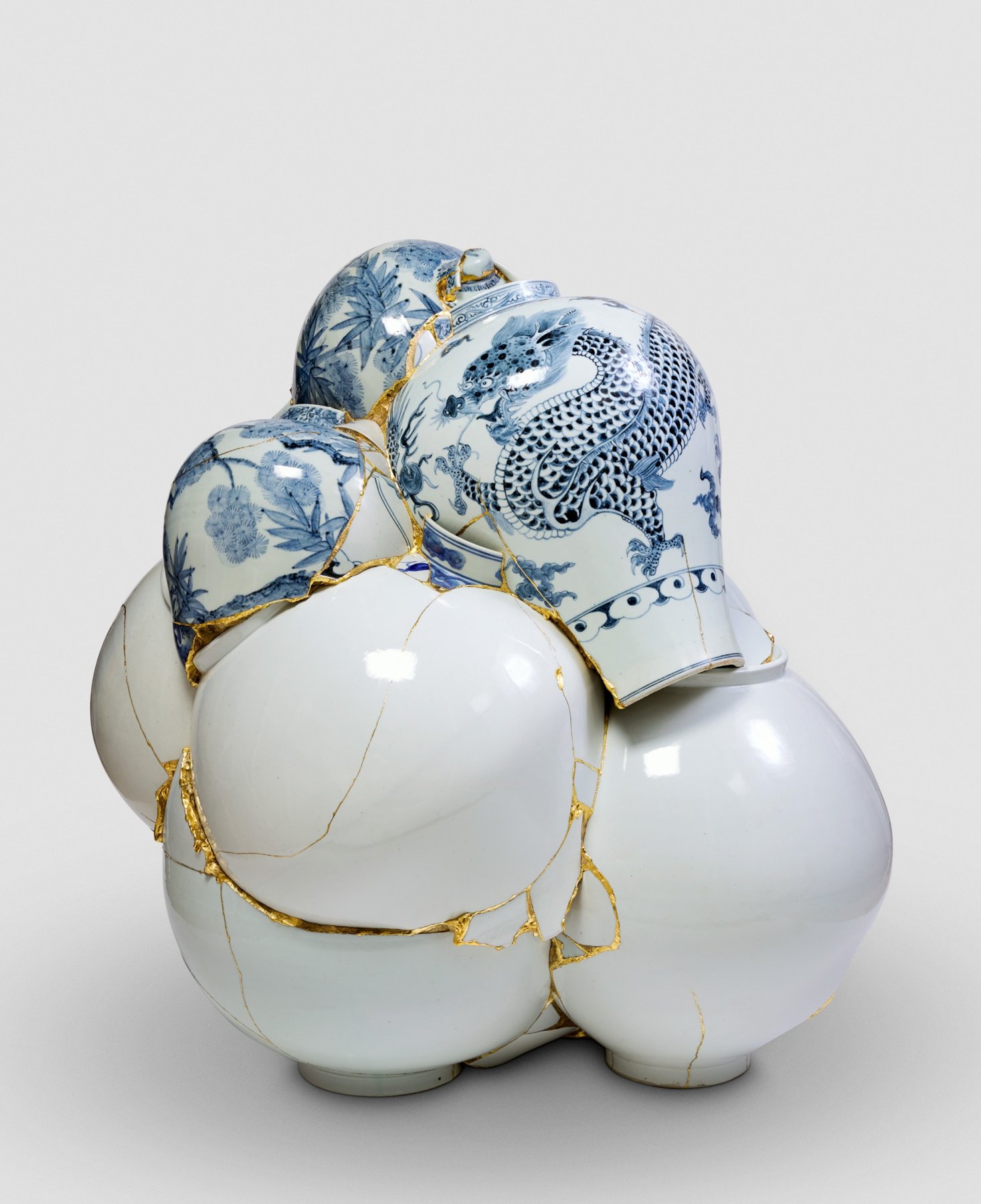
Yee Soo-kyung’s artistic practice often juxtaposes the deeply personal with the universal. In projects such as Whisper Only to You (2019), she explores the intimate relationship between materiality and emotion, creating works that feel tactile and deeply human. Her use of material – be it porcelain, gold or even ink – bridges tradition and innovation, inviting viewers to reflect on the tension between fragility and endurance. Through her work, she redefines craft as a storytelling medium, weaving narratives that honour heritage while embracing change.
Her acclaimed solo exhibitions, such as Whisper Only to You (2019–20) at the Museo e Real Bosco di Capodimonte in Naples, and When I Become You (2015) at the Museum of Contemporary Art in Taipei, further demonstrate her ability to connect across cultures and mediums. In the collections of institutions such as the National Museum of Contemporary Art in Seoul, the Los Angeles County Museum of Art and the British Museum in London, Yee Soo-kyung’s work resonates with a universal audience, confirming her status as a visionary artist whose creations speak to the enduring beauty of imperfection and the profound possibilities of renewal.
Michele Fossi: In 2001, while participating in the Albisola Biennale in Italy, you collaborated with Italian ceramicist Ana Maria Pacetti on a series of vases inspired by eighteenth-century Joseon-style ceramics and Kim Sang-ok’s poem ‘Ode to a Porcelain Vase’. How did this experience spark your interest in traditional Korean ceramics and ultimately lead to the development of your Translated Vase series?
Yee Soo-kyung: In 2001 I came across Kim Sang-ok’s poem ‘Baekjabu’ (1947), which celebrates the beauty of Joseon white porcelain. The curator translated the poem from English into Italian and shared it with a local ceramicist. I then asked this ceramicist, who had never seen Joseon vases, to create twelve vessels inspired by her imagination of eighteenth-century Joseon porcelain. The resulting vases became hybrid creations, blending forms and imagery reflecting both Korean and Italian regional cultural influences. This process transformed the Joseon white vases into a transcultural dialogue, fusing traditions through translation and reinterpretation.
Michele: What inspired you to work with porcelain fragments as a central element of your art?
Soo-kyung: After completing the project and returning to Korea, I visited the workshop of a master ceramicist. There, I watched an elderly master carefully examine ceramics being removed from a traditional kiln. To my surprise, he was smashing over 70 of the pieces with a hammer because he thought they were imperfect.
With his permission, I collected the shards and took them back to my studio, where they sat on my workbench. One day, I noticed that the fragments fit together almost like a jigsaw puzzle. This was the beginning of this series. I decided to fill the cracks with gold, inspired by the Korean word geum, which means both ‘gold’ and ‘crack’.
Michele: How do you see fragments in your work?
Soo-kyung: My work begins with fragments, often ceramic pieces from a master who reproduces ceramics using traditional methods. These ceramics carry significant energy and tension, born from the earth, shaped with water and transformed by fire into entirely new entities. When a ceramic vessel breaks, it loses its original function and perceived value. In the moment of breaking, however, it is freed from the constraints of its original form and purpose.
For me, fragments are like seeds of new life. Their cycle of rise and fall comes to an end, allowing them to enter a new phase of growth and transformation. When I interweave and reconstruct these fragments organically, they project a moment of resurrection, each vase encapsulating its own unique time and space.
Michele: I was intrigued by the title of Kim Sang-ok’s poem and decided to explore it further. Here is a beautiful passage about ceramics: ‘Even when fired in flames, its flesh stays as pure as ice, / With the slightest mark, it bears a lasting flaw; / Buried in the earth, it remains this pure and true.’ What is the poem about?
Soo-kyung: This poem celebrates the noble and pure beauty of baekja (white porcelain). Inspired by it, I collaborated with a local ceramicist to create twelve vases. Through various stages of translation, the essence of Joseon dynasty white porcelain underwent a transformation – from vase to text, then reinterpreted and re-materialised into new ceramic works. These twelve vases became multicultural and hybrid creations, with the poem as the starting point for this transformation.
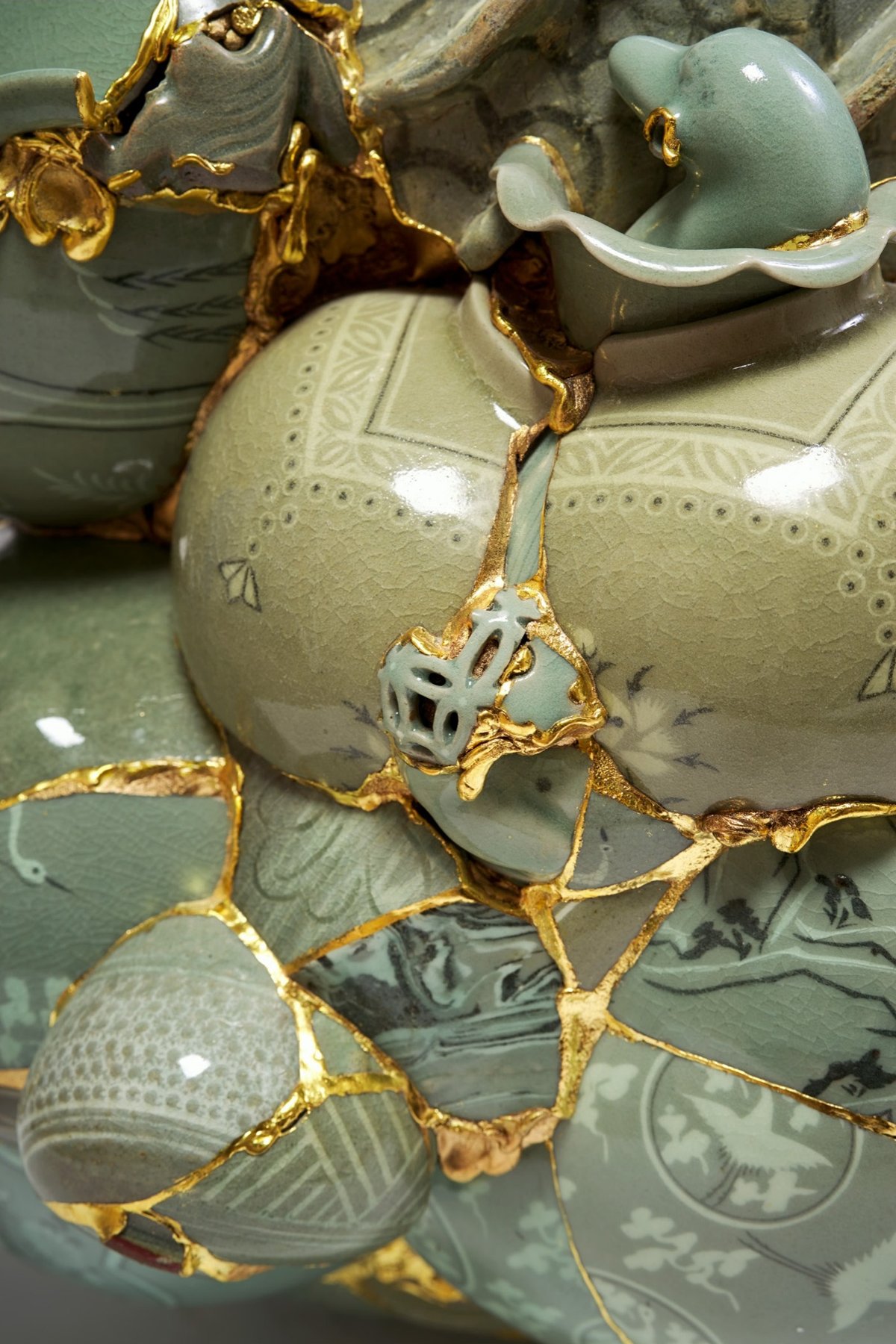
Growing up in 1970s Korea, under the myth of racial homogeneity and strict cultural censorship imposed by the military dictatorship, I was shaped by a fragmented sense of identity. This experience has made the search for missing cultural links to bridge the past and present an integral part of my work, whether consciously or not.
In the 1970s, Korea was under a military dictatorship that politicised nationalism and ethnic identity. The military government strongly promoted concepts such as the superiority of Koreans, a single ethnic lineage and national homogeneity, and this ideology was closely tied to a genuine admiration for the white porcelain of the Joseon era.
I came to believe that the image of baekja as pure and noble was also a form of indoctrination. I wanted to question these cultural traits from the distance of Korea. And I think I also wanted to free the white vase from abuse.
Michele: In addition, the poem’s references to enduring the elements – frost, fire and time – highlight resilience in the face of life’s challenges. The porcelain withstands these forces, and its subtle imperfections become marks of its journey and survival, like the scars on a gladiator’s face, symbols of strength rather than weakness. Is it right to read your Translated Vase series as a proud celebration of resilience?
Soo-kyung: Translated Vase is not a celebration of resilience in the traditional sense. ‘Recovery’ suggests a return to an original state, but my series is not about restoring what was lost. Rather, it represents the rebirth of something broken, reshaped according to new perspectives and standards, and transformed into a completely new ceramic work with its own unique beauty.
Michele: How did you discover kintsugi, the Japanese art of repairing broken ceramics with gold?
Soo-kyung: When I started the Translated Vase series in 2001, I did not know about kintsugi because at that time the Korean government was filtering Japanese cultural influences in Korea and I was not particularly interested in ceramics. Kintsugi is a ceramic ‘repair’ method that celebrates and emphasises the beauty of imperfection, which is fundamentally different from my approach, as I focus on creating entirely new forms rather than repairing or restoring the original function of the object.
Michele: I’m glad you clarified this, because I’m sure many people – myself included – would interpret your work as a celebration of kintsugi!
Soo-kyung: Don’t get me wrong, I’m not entirely opposed to my gilding method being seen as a form of kintsugi. Although the use of gold in my work differs from traditional kintsugi, this interpretation adds depth and expands the narrative of the Translated Vase series. Since I started working on cultural translation in my artwork I have embraced the creative aspect that could lead to misunderstanding. In college I read a poorly translated book and filled in the unintelligible parts with my imagination. Later, when I read the properly translated version of that book, I felt disappointed.
Michele: What do you see as the similarities between your work and kintsugi?
Soo-kyung: Although my approach is different, there is an undeniable visual similarity. By carefully touching broken objects and filling their cracks with gold, my work embodies the spirit of mono no aware– a Japanese philosophy that reflects an awareness of the fragility and impermanence of life. Ultimately, we are all delicate beings destined to perish, and the act of revealing and celebrating these scars and vulnerabilities reflects the kintsugi-like essence of my work.
Michele: In your sculptural work outside of the Translated Vase series, you sometimes use gilded surfaces or gold embellishments to create an ethereal quality. What is the function of the gold in these works?
Soo-kyung: In my work, gilding an object symbolises transformation into something eternal and unchanging. After learning from a Buddhist monk that the gilding of Buddha statues began as an attempt to replicate the radiant halo that symbolises enlightenment, my understanding of gold deepened – it became a metaphor for spiritual transformation.
I use gold not to restore or heal but to accentuate the fracture and reveal the unique beauty that emerges from objects that shine amidst ruin. In the cycle of an object’s rise and fall, each end naturally gives way to a new beginning. Through my work, time and space seem to unfold on a completely different plane, inviting the viewer to reflect on impermanence and renewal.
Michele: When was the last time you used gold in your work, and in what way?
Soo-kyung: I recently presented my work at the Abu Dhabi Public Art Biennial 2024, which opened on 15 November. The title is You Were There. It consists of an AI-generated rock form covered in 24-carat gold leaf. It is a rock that does not exist in reality, a creation born of anonymous imaginations. Gilding it transforms this imaginary rock, making it eternal and unchanging.
Michele: Stories from ancient Korea seem to have a special place in your practice.
Soo-kyung: Indeed, I am often fascinated by the ancient culture of the Korean peninsula, deeply connected to the Silk Road and enriched by a vibrant cultural exchange. I imagine the vitality of that time, long before national identities took precedence. The division of Korea disrupted the land routes that once facilitated this exchange, but the ancient relics remain as crystallised moments of history, evoking an eerie, ethereal beauty. Their craftsmanship transcends cultural boundaries and moves me deeply. Through my work I hope to inspire audiences to reconnect the missing links between past and present, using their imagination to project new narratives and interpretations.
Michele: Imperfection is a central theme in your work, yet your pieces are meticulously crafted and strikingly beautiful. How do you balance control and spontaneity in your creative process?
Soo-kyung: In the early stages of working on Translated Vase, I experienced a lot of frustration trying to artificially create the shape I wanted. Eventually, I let go of the mindset of reconstructing a perfect form and instead focused on being present in each moment. As I worked with this approach, the fragments naturally found their place and settled into the final form of the piece on their own. Through this process I realised that not everything in life can be forced; it unfolds in a natural flow. Working on Translated Vase changed my approach as an artist and reshaped my attitude to life.
Michele: Does embracing imperfection as an artist influence how you approach other areas of life?
Soo-kyung: The process of my work is far from relying on preliminary sketches or following a predetermined plan for the final piece. Instead, I focus on assembling the fragments moment by moment, and in doing so, I have come to realise that this act is similar to a practice of constant awareness and mindfulness. This approach to my work has transformed me daily. Furthermore, in creating the Translated Vase pieces, I have moved away from a conscious focus on conceptual elements and shifted my attention to the invisible energy and organic interconnectedness that exists between all things.
Michele: What inspires and drives your work as an artist?
Soo-kyung: If I had to articulate the reason why I make art, it would be this: We are all perfect beings because we are deeply connected. My work is driven by a compulsion to comfort the frustrations and fears surrounding the inevitability of death. Without discovering the intricate web of connections that bind me to this world, I cannot fully immerse myself in my subconscious or create in solitude. Through my art, I strive to salvage these threads of connection that transcend time and space. I want to offer a glimpse of the eternity that permeates our lives and helps us to embrace our wholeness. My work seeks to remind us that our bodies are sacred temples and our energy a magnificent crown– a testament to the profound interconnectedness we all share.
Images, in order: Yee Soo-kyung, Translated Vase_2019 TVW 2, 2019, 63 × 58 × 58 cm, ceramic shards, epoxy, 24k gold leaf. Photo: Yee Soo-kyung Studio. · Translated Vase_2023 TVCIW 1, 2023, 161 × 74 × 76 cm, ceramic shards, epoxy, 24k gold leaf. Photo: Thomas Lannes. · Translated Vase_2018 TVW 5, 2018, 82 × 77 × 86 cm, ceramic shards, epoxy, 24k gold leaf. Photo: Yee Soo-kyung Studio. · Translated Vase_2018 TVG 6, 2018, 71 × 55 × 60 cm, ceramic shards, epoxy, 24k gold leaf. Photo: Yee Soo-kyung studio.
In conversation with Michele Fossi
Published in Acne Paper, issue 20, 2025