Skateboarders are connoisseurs of built surface and shape in an urban environment they scour to find potential spots to ride. That unique relationship with architecture – design after design – is now inflecting conceptions of the social potential of architecture itself.
“Dismissive of authority and convention, skateboarders suggest that the city is not just a place for working and shopping but a true pleasure-ground, a place where the human body, emotions and energy can be expressed to the full,” wrote Iain Borden, author of Skateboarding, Space and the City: Architecture and the Body. For the British architectural historian, this relatively new urban activity, performed mostly in non-places such as sidewalks, subways and abandoned factories, known as “skate spots”, investigates new ways of understanding and interpreting space. Besides being a sport, skateboarding should be seen – he argues – as a performative critique of the constructed world.
“Whether in disused warehouses and railway stations, car parks or desolate Soviet memoryscapes, skateboarding has an eye for appropriating discarded places and giving them a fresh lease of life that’s centred on joy and leisure rather than market and productivity. Regardless of how unconventional or subversive it may be, this urban activity has a deep appreciation and understanding of architecture, helping us rethink its manifold possibilities,” says Rotterdam-based photographer and skater Rubén Dario Kleimeer. “Artist, writer and photographer Craig Stecyk, known for having captured the surf and skate in California since day one, could not have stated it better: ‘Two hundred years of American technology has unwittingly created a massive cement playground of unlimited potential. But it was the minds of 11-year-olds that could see that potential.’”
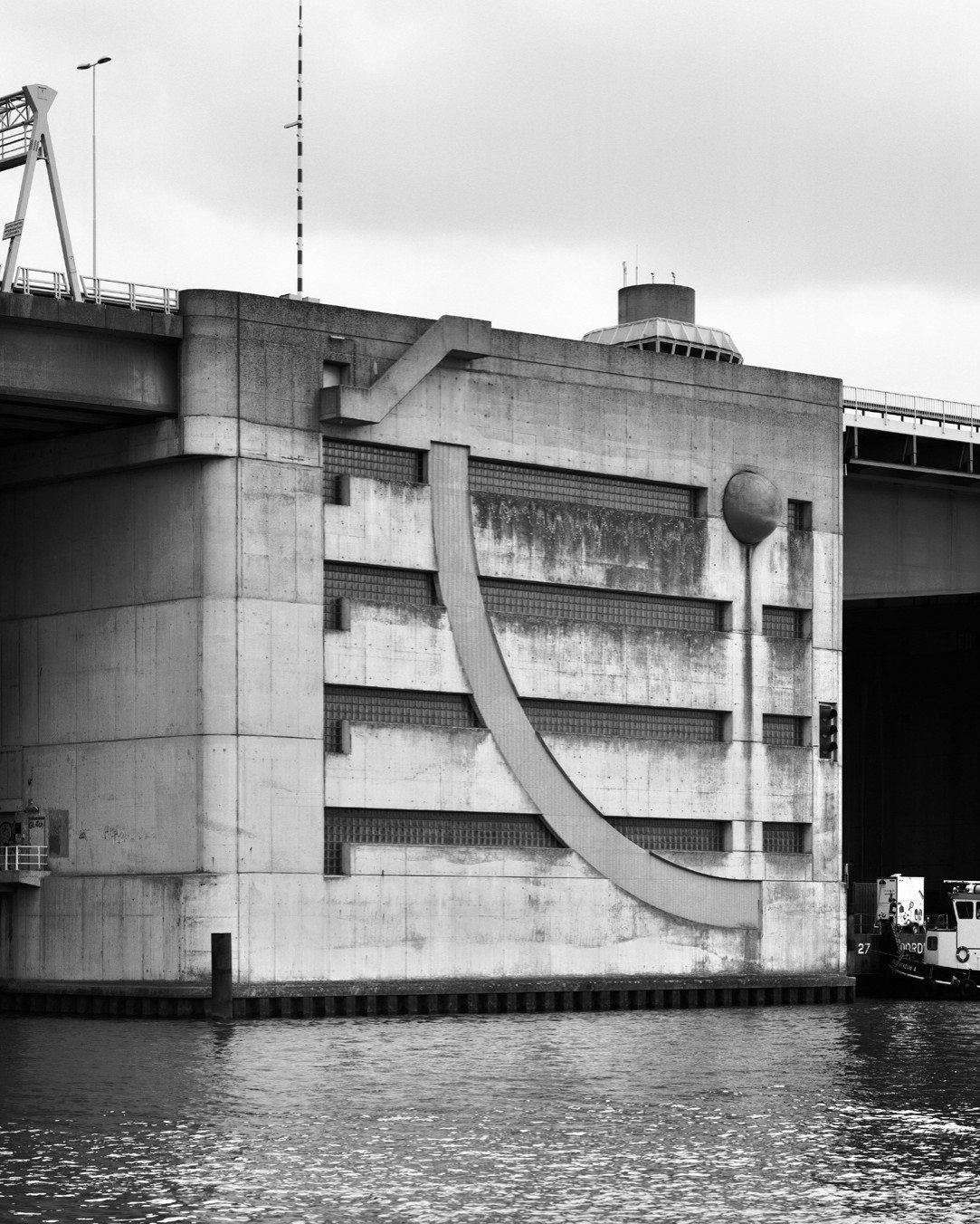
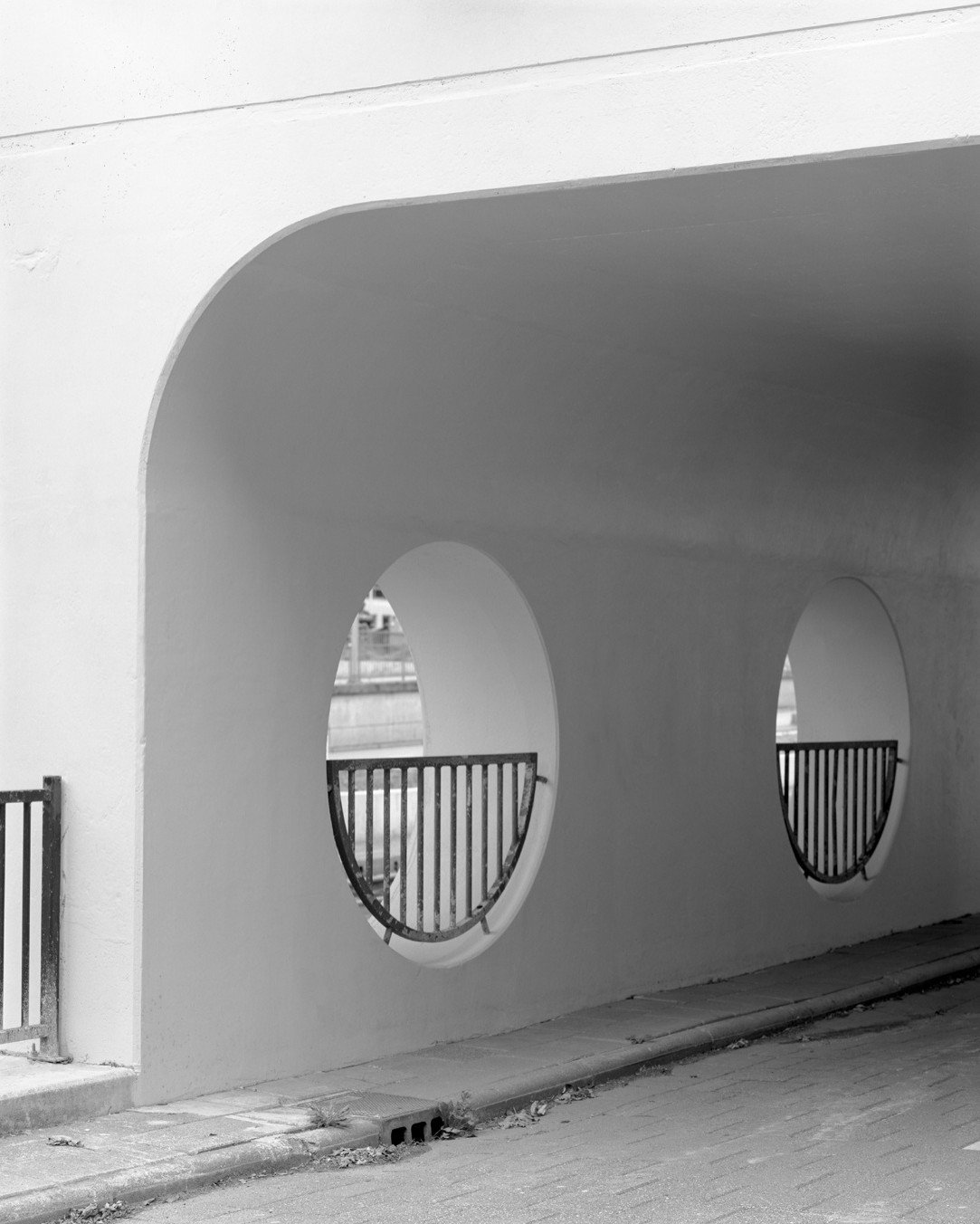
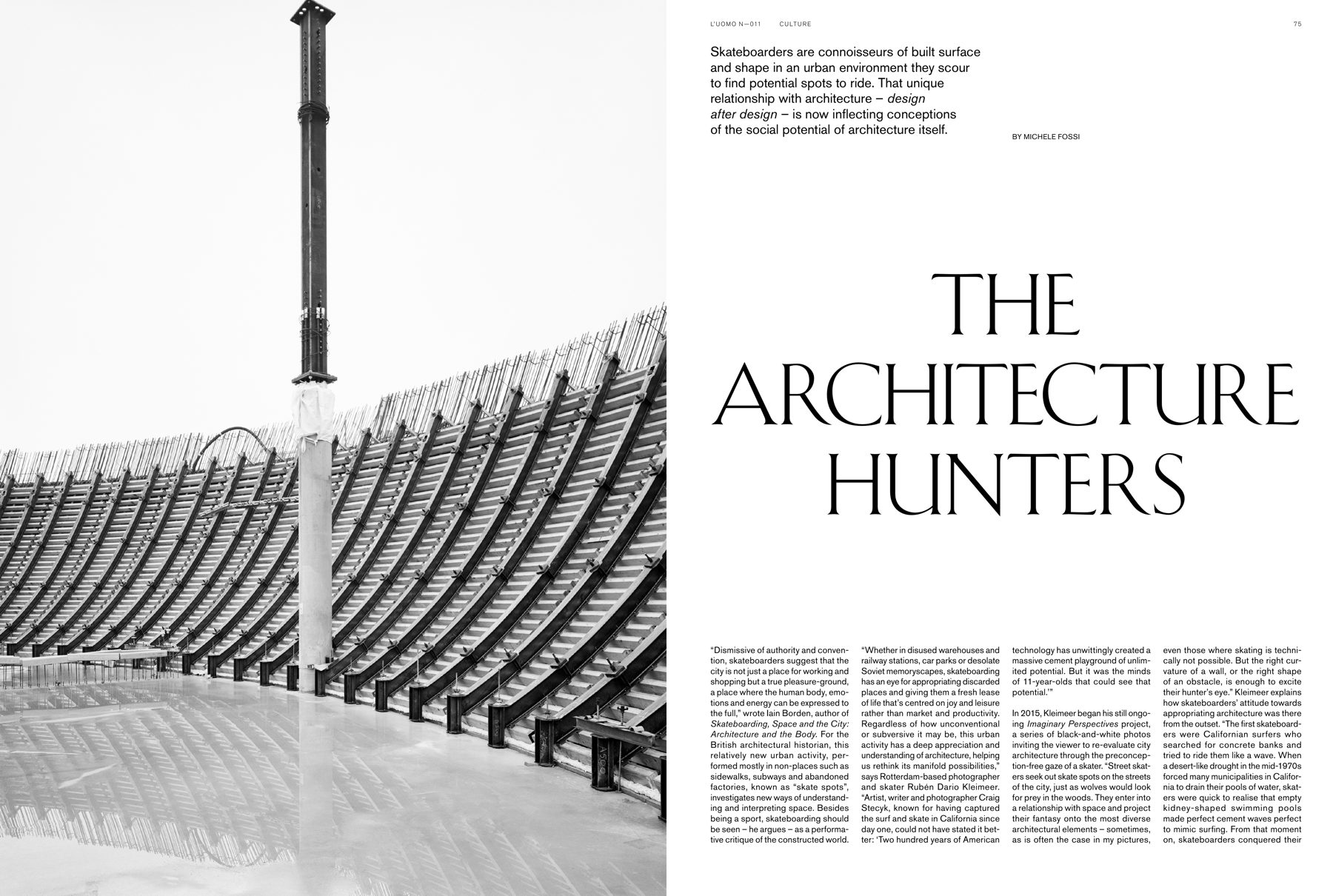
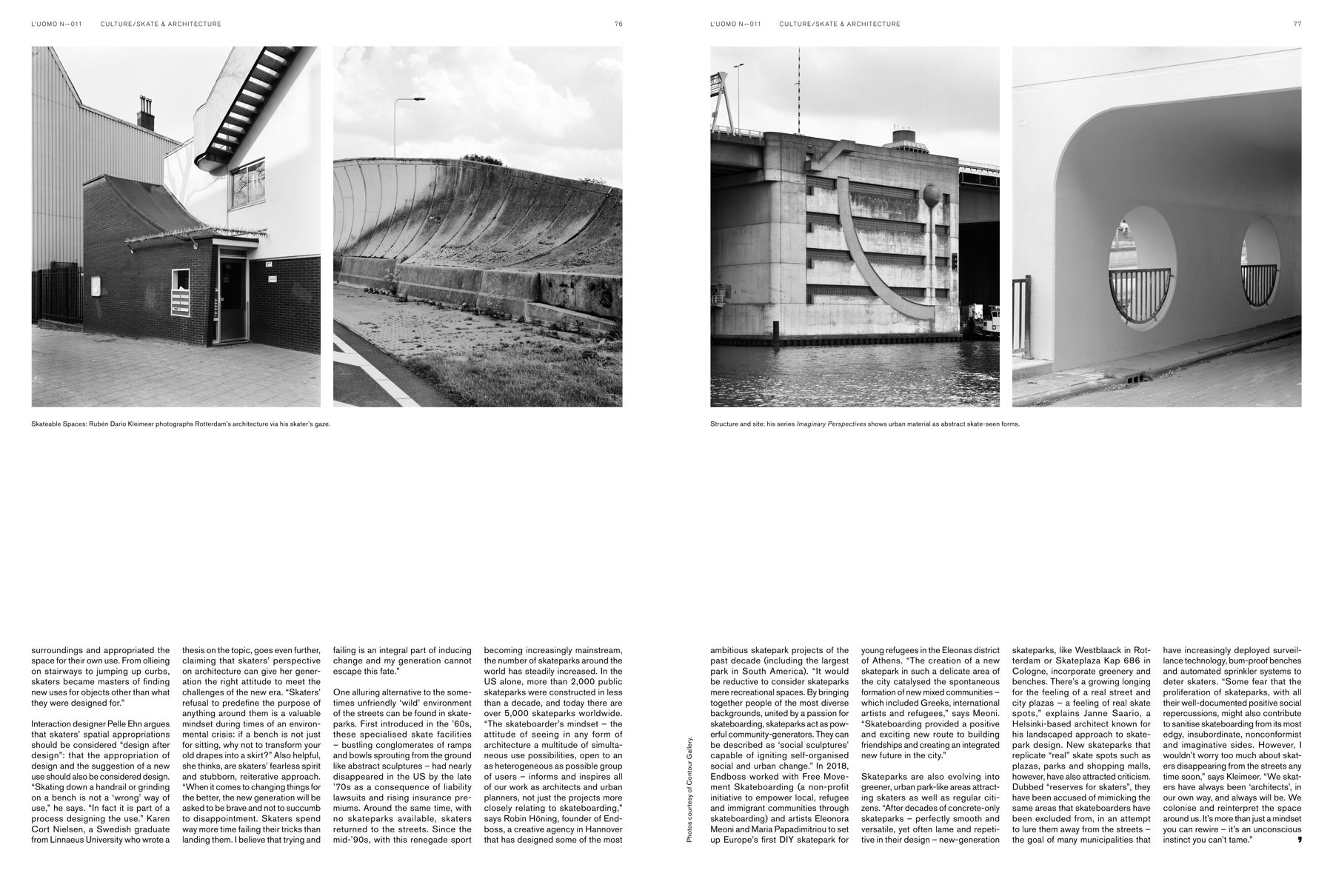
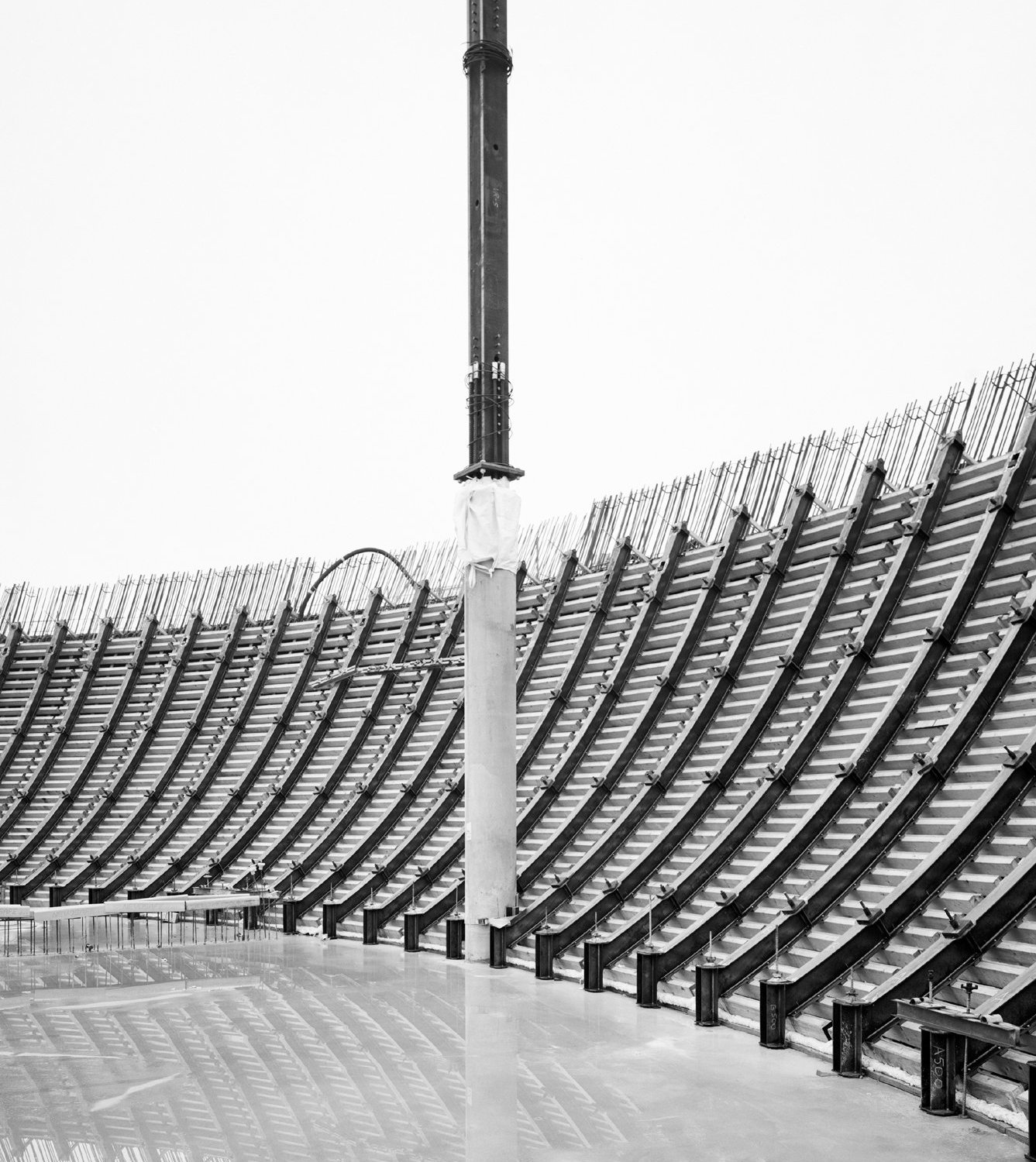
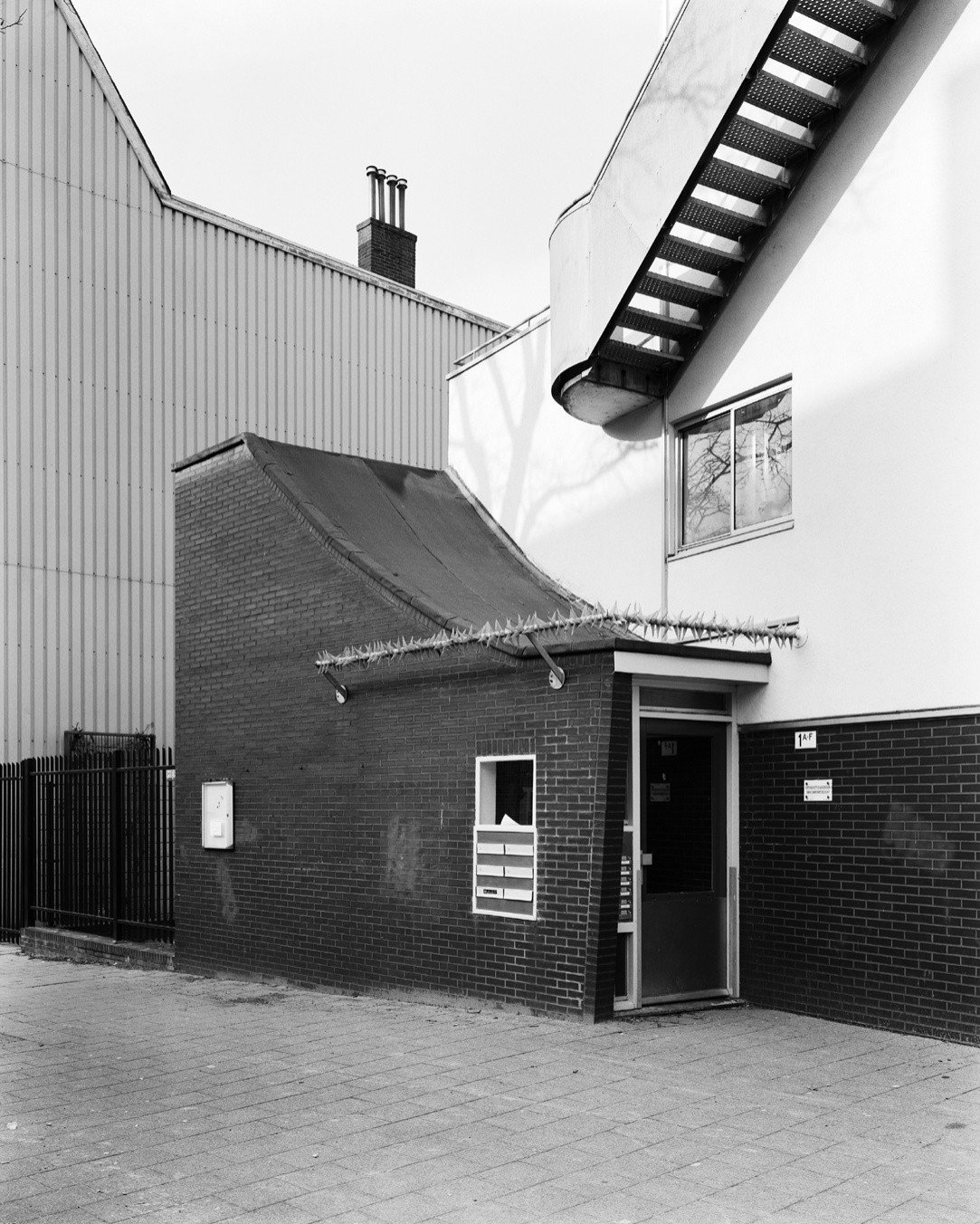
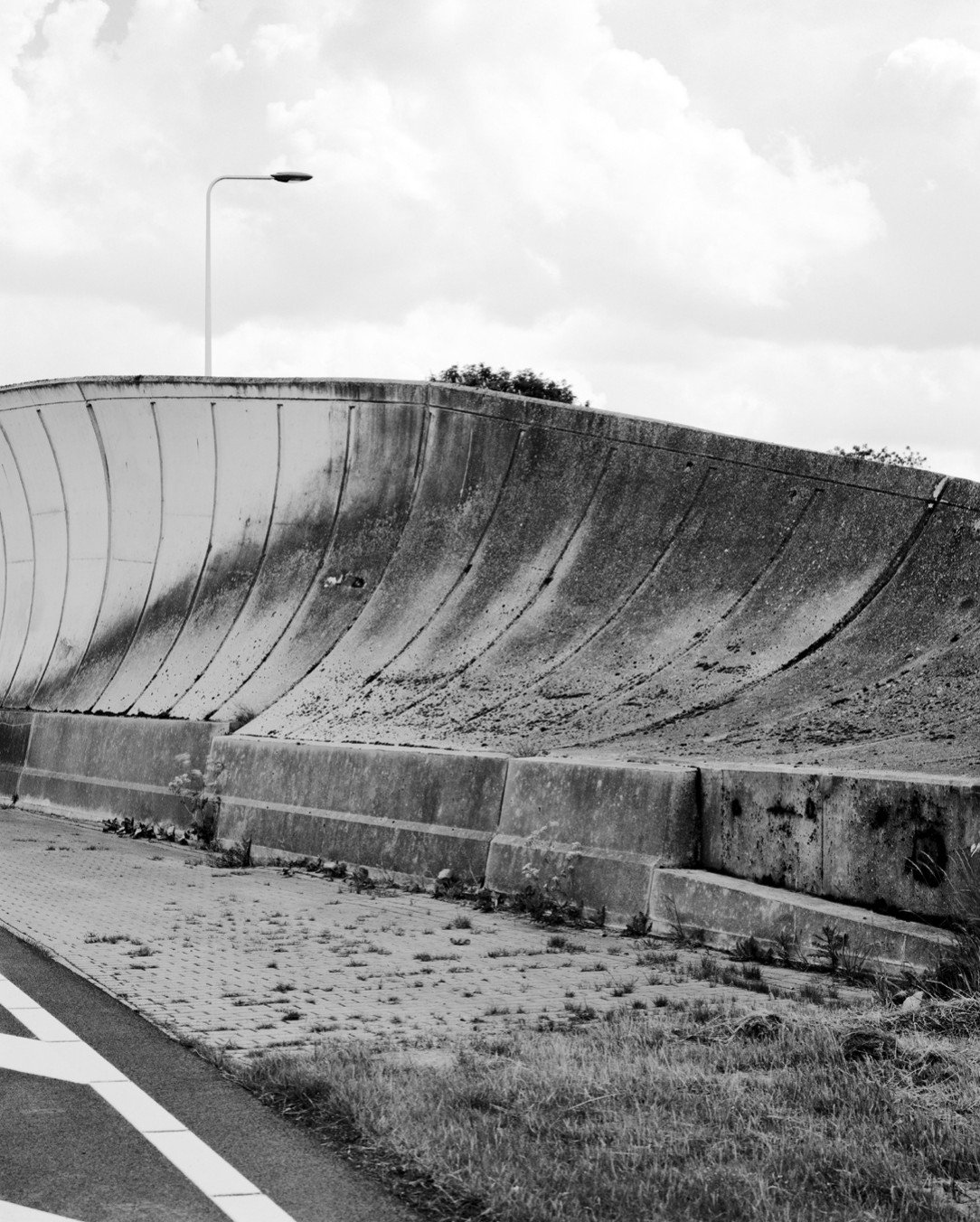
In 2015, Kleimeer began his still ongoing Imaginary Perspectives project, a series of black-and-white photos inviting the viewer to re-evaluate city architecture through the preconception-free gaze of a skater. “Street skaters seek out skate spots on the streets of the city, just as wolves would look for prey in the woods. They enter into a relationship with space and project their fantasy onto the most diverse architectural elements – sometimes, as is often the case in my pictures, even those where skating is technically not possible. But the right curvature of a wall, or the right shape of an obstacle, is enough to excite their hunter’s eye.” Kleimeer explains how skateboarders’ attitude towards appropriating architecture was there from the outset. “The first skateboarders were Californian surfers who searched for concrete banks and tried to ride them like a wave. When a desert-like drought in the mid-1970s forced many municipalities in California to drain their pools of water, skaters were quick to realise that empty kidney-shaped swimming pools made perfect cement waves perfect to mimic surfing. From that moment on, skateboarders conquered their surroundings and appropriated the space for their own use. From ollieing on stairways to jumping up curbs, skaters became masters of finding new uses for objects other than what they were designed for.”
Interaction designer Pelle Ehn argues that skaters’ spatial appropriations should be considered “design after design”: that the appropriation of design and the suggestion of a new use should also be considered design. “Skating down a handrail or grinding on a bench is not a ‘wrong’ way of use,” he says. “In fact it is part of a process designing the use.” Karen Cort Nielsen, a Swedish graduate from Linnaeus University who wrote a thesis on the topic, goes even further, claiming that skaters’ perspective on architecture can give her generation the right attitude to meet the challenges of the new era. “Skaters’ refusal to predefine the purpose of anything around them is a valuable mindset during times of an environmental crisis: if a bench is not just for sitting, why not to transform your old drapes into a skirt?” Also helpful, she thinks, are skaters’ fearless spirit and stubborn, reiterative approach. “When it comes to changing things for the better, the new generation will be asked to be brave and not to succumb to disappointment. Skaters spend way more time failing their tricks than landing them. I believe that trying and failing is an integral part of inducing change and my generation cannot escape this fate.”
One alluring alternative to the sometimes unfriendly ‘wild’ environment of the streets can be found in skateparks. First introduced in the ’60s, these specialised skate facilities – bustling conglomerates of ramps and bowls sprouting from the ground like abstract sculptures – had nearly disappeared in the US by the late ’70s as a consequence of liability lawsuits and rising insurance premiums. Around the same time, with no skateparks available, skaters returned to the streets. Since the mid-’90s, with this renegade sport becoming increasingly mainstream, the number of skateparks around the world has steadily increased. In the US alone, more than 2,000 public skateparks were constructed in less than a decade, and today there are over 5,000 skateparks worldwide. “The skateboarder’s mindset – the attitude of seeing in any form of architecture a multitude of simultaneous use possibilities, open to an as heterogeneous as possible group of users – informs and inspires all of our work as architects and urban planners, not just the projects more closely relating to skateboarding,” says Robin Höning, founder of Endboss, a creative agency in Hannover that has designed some of the most ambitious skatepark projects of the past decade (including the largest park in South America). “It would be reductive to consider skateparks mere recreational spaces. By bringing together people of the most diverse backgrounds, united by a passion for skateboarding, skateparks act as powerful community-generators. They can be described as ‘social sculptures’ capable of igniting self-organised social and urban change.” In 2018, Endboss worked with Free Movement Skateboarding (a non-profit initiative to empower local, refugee and immigrant communities through skateboarding) and artists Eleonora Meoni and Maria Papadimitriou to set up Europe’s first DIY skatepark for young refugees in the Eleonas district of Athens. “The creation of a new skatepark in such a delicate area of the city catalysed the spontaneous formation of new mixed communities – which included Greeks, international artists and refugees,” says Meoni. “Skateboarding provided a positive and exciting new route to building friendships and creating an integrated new future in the city.”
Skateparks are also evolving into greener, urban park-like areas attracting skaters as well as regular citizens. “After decades of concrete-only skateparks – perfectly smooth and versatile, yet often lame and repetitive in their design – new-generation skateparks, like Westblaack in Rotterdam or Skateplaza Kap 686 in Cologne, incorporate greenery and benches. There’s a growing longing for the feeling of a real street and city plazas – a feeling of real skate spots,” explains Janne Saario, a Helsinki-based architect known for his landscaped approach to skatepark design. New skateparks that replicate “real” skate spots such as plazas, parks and shopping malls, however, have also attracted criticism. Dubbed “reserves for skaters”, they have been accused of mimicking the same areas that skateboarders have been excluded from, in an attempt to lure them away from the streets – the goal of many municipalities that have increasingly deployed surveillance technology, bum-proof benches and automated sprinkler systems to deter skaters. “Some fear that the proliferation of skateparks, with all their well-documented positive social repercussions, might also contribute to sanitise skateboarding from its most edgy, insubordinate, nonconformist and imaginative sides. However, I wouldn’t worry too much about skaters disappearing from the streets any time soon,” says Kleimeer. “We skaters have always been ‘architects’, in our own way, and always will be. We colonise and reinterpret the space around us. It’s more than just a mindset you can rewire – it’s an unconscious instinct you can’t tame.”
Photography Rubén Dario Kleimeer, courtesy Contour Gallery
By Michele Fossi
Published in L’Uomo Vogue, April 2021