
By Michele Fossi
For centuries, the question of whether animals possess meaningful language has sparked curiosity and debate. Dr. Con Slobodchikoff, renowned for his pioneering research with Gunnison’s prairie dogs, has brought us closer to an answer. His studies reveal that prairie dogs communicate not just with generic alarm calls but with a sophisticated system capable of describing predators by size, shape, and even clothing colour. This discovery challenges the long-held assumption that complex language is uniquely human.
In this conversation, Dr. Slobodchikoff shares insights into the growing field of animal communication research. From dolphins using signature whistles as personal identifiers to elephants vocalising unique rumbles for specific herd members, the evidence suggests that many species possess intricate and nuanced communication systems. With the rise of artificial intelligence, researchers now have tools capable of decoding these systems at an unprecedented level, uncovering patterns and structures akin to human language.
This is more than an academic pursuit. Understanding animal communication offers profound opportunities for conservation and could reshape our ethical relationship with the animal world. AI, often viewed with apprehension, emerges here as a force for connection, enabling us to bridge the divide between species. As Dr. Slobodchikoff’s work demonstrates, this is not just about understanding animals better—it’s about creating a future where technology helps us coexist more harmoniously with the natural world.
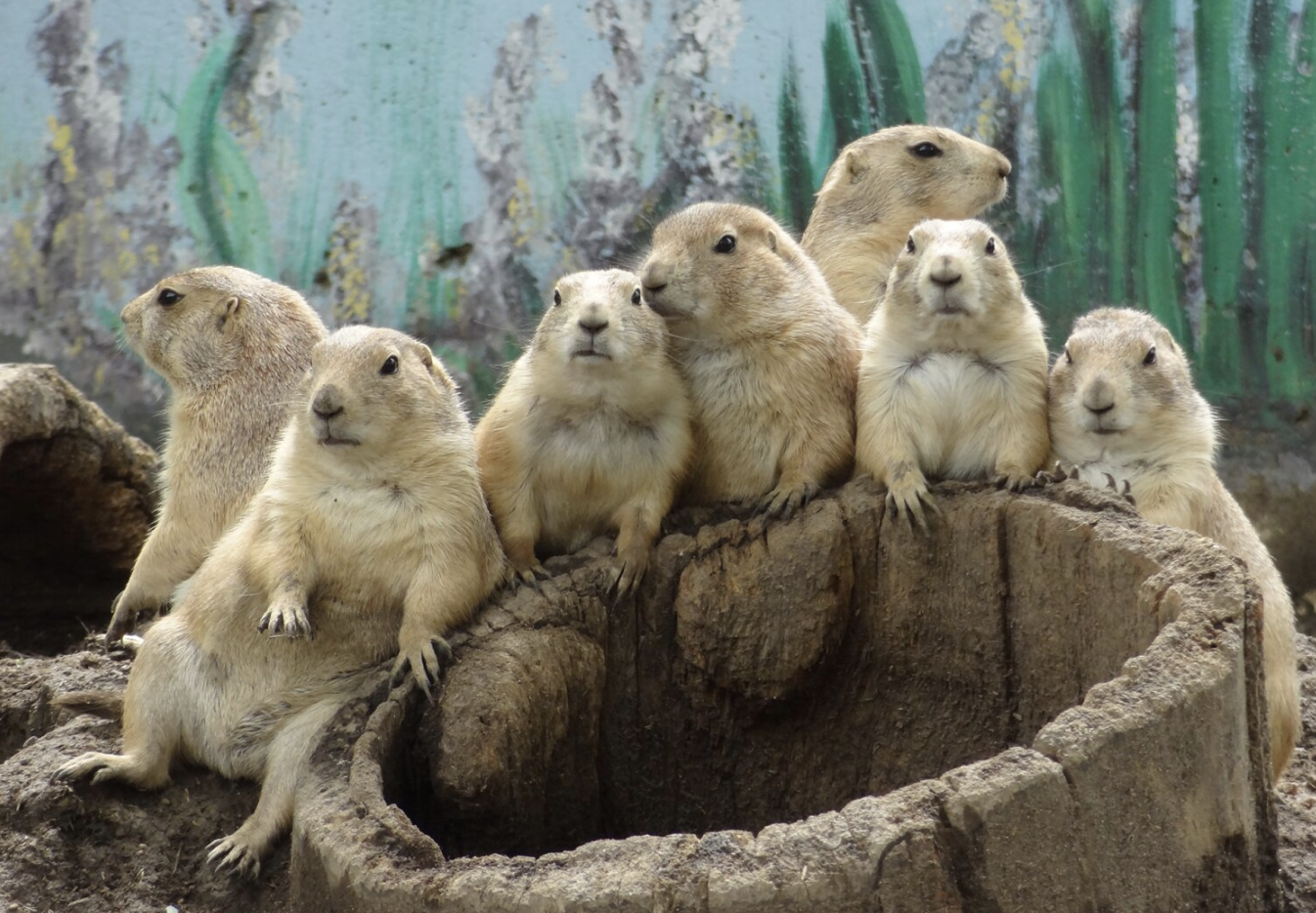
Michele Fossi: Before we begin, a quick note to our readers: Prairie dogs are small, burrowing rodents from North America that look like chunky squirrels with tan or brown coats. If you’ve seen the Dramatic Prairie Dog meme, that’s them! These lively, social critters are often portrayed in cartoons as quirky, alert animals. Dr. Slobodchikoff, you are renowned for your research into prairie dog communication systems, particularly your discovery about their alarm calls conveying detailed information. Why them in particular?
Dr. Con Slobodchikoff: Yes, our studies have concentrated primarily on the language of one of the five species of prairie dogs, the Gunnison’s prairie dog. Prairie dogs have alarm calls that they give when they see a predator. These alarm calls are a series of relatively high-pitched notes that sound somewhat like a bird chirping. The alarm calls have been a Rosetta Stone for us in decoding prairie dog language because we can observe the predator approach, and we can record the alarm calls of the prairie dogs in response to the predator.
M.F. – How can you be so sure that the high-pitched chirping actually contains meaningful information?
C.S. – We can videotape the escape responses of the prairie dogs. Then, when there is no predator present, we can play back the alarm calls that we previously recorded and videotape the escape responses of the prairie dogs to the playback. If the escape responses to the playback match those from when the predator was present, we know that meaningful information is encoded into the alarm call. We can bring the alarm call recordings into our laboratory and use computer analysis to examine the calls’ acoustic structure.
M.F. – What do you get from the computer analysis?
C.S. – Computer software generates a sonogram, which is a pictorial representation of the frequencies and time values contained in a vocalisation. Prairie Dog alarm calls look like a series of stacked chevrons, like Sergeant stripes, with the peak pointing upward. Each call is about a 10th of a second, so it is very brief. Most of the calls are repeated multiple times so that you hear something that sounds like we can then measure the frequency and time values within a chirp and use statistical analysis to determine whether an alarm call for, say, a coyote is the same as or different than an alarm call for, say, a human. So, the analysis of the sounds is based on rigorous statistical methods using observations and experiments.
M.F. – And what have you discovered?
C.S. – We have found that prairie dogs give different alarm calls for different species of predators. They have one alarm call for coyotes, another distinct alarm call for domestic dogs, and a third for humans. They also have a single-note alarm call for red-tailed hawks. Amazingly, even though some dogs resemble coyotes, prairie dogs never mistake a dog for a coyote, or vice versa, and always give the appropriate alarm call.
M.F. – That’s not all that surprising, is it? After all, we already know that monkeys and some bird species produce distinct sounds to alert their group members to specific predators.
C.S. – Wait, that’s just the beginning of the story. We’ve discovered that each prairie dog alarm call includes descriptive information—not just about the predator’s species but also about its individual characteristics.
M.F. – Descriptive information?
C.S. – For example, a human alarm call not only identifies the intruder as a human but also includes details about their size, shape, and the colour of their clothing. In experiments where the same person walked through a prairie dog colony wearing different coloured T-shirts at different times, the prairie dogs’ alarm calls consistently described the person’s size and shape, but through field and laboratory experiments, we’ve also found that prairie dogs can describe the colour of the T-shirt.
M.F. – Wow, you are basically telling me that they are sensitive to fashion!
C.S. – Amazingly, prairie dogs can describe clothes, colours and even objects they’ve never seen before. In one experiment, we showed them a silhouette of a black oval, and they consistently produced the same alarm call for the black oval. In other experiments, we presented silhouettes of circles and triangles, and the prairie dogs responded with distinctly different alarm calls for each shape.
Through computer analysis, we’ve demonstrated that these alarm calls are composed of smaller units of sound, similar to human phonemes, like vowels and consonants. Each prairie dog alarm call is equivalent to a human sentence, consisting of nouns and adjectives formed by these smaller sound units. The ‘nouns’ indicate the predator species, such as a coyote or domestic dog, while the ‘adjectives’ describe physical traits like tall, thin, or yellow. This level of complexity shows just how detailed their communication system is.
M.F. – Wait a minute. Are you saying they have a system similar to ours, in which they can create words by combining different letters of the alphabet?
C.S. – Yes, that’s precisely what we have discovered. Prairie dog alarm calls even exhibit dialects, much like human accents. Just as someone from California might pronounce the word ‘dog’ differently than someone from Georgia, prairie dogs in Arizona, New Mexico, and Colorado have subtle variations in how they vocalise the same alarm call for ‘human.’ This regional variation highlights the complexity and adaptability of their communication.
In addition to alarm calls, prairie dogs have other vocalisations we have yet to decode due to the lack of observable context. For example, they engage in what we call ‘social chatters,’ where one prairie dog will lift its head and emit a string of chatter, and another prairie dog in the colony will respond with its own chatter. Interestingly, these exchanges don’t seem to trigger any noticeable behavioural changes, making their purpose and meaning elusive. Although we can analyse the syllables and show that they do indeed vary, without a clear Rosetta Stone for interpretation, the deeper significance of these interactions remains a mystery.
M.F. – What I would give to know what they are chatting about! Can prairie dogs of one species understand the language of prairie dogs from a different species?
C.S. – Although I haven’t conducted experiments to test this directly, examining sonograms of different prairie dog species vocalising in response to the same human wearing the same colour of clothing suggests that the answer is likely no. It appears that each species has its own distinct ‘language,’ much like how humans have different spoken languages such as French, Spanish, German, Russian, and Portuguese.
Currently, prairie dogs possess the most sophisticated animal language that has been decoded—more complex than those of primates, whales, or dolphins. However, I believe that as we continue to study the vocalisations and signals of other species in specific contexts, much as we’ve done with prairie dogs, we’ll uncover similar levels of complexity in many other animals’ communication systems.
M.F. – How did your research in animal communication start?
C.S. – I had an insight, which, at the time, many of my colleagues dismissed as completely absurd: what if prairie dogs were incorporating information about the physical features of individual predators into their calls? To test this, I designed experiments and found that, sure enough, they were doing exactly that. This discovery made me wonder about other animals—could they also possess similar capabilities? These questions eventually inspired me to write my book, Chasing Dr. Doolittle, which I published about ten years ago.
M.F. – Who is Dr. Doolittle?
C.S. – Dr. Doolittle is a fictional character from a series of children’s stories. He was a veterinarian who explored the idea of animal communication, assisted by a parrot who could translate all animal languages for him. This unique ability allowed him to speak with pigs, cows, horses, dogs, lions, tigers, and many other animals. The stories were published in the 1920s and became quite popular. The parrot served as the pivotal translator, making the concept of interspecies communication central to the narrative.
However, in hindsight, it might not have been the best title choice—some people misinterpreted the book as being for children, and it ended up being catalogued in that way in some places.
M.F. – Hopefully, we’ll do justice to the book by mentioning it in this article. So, the book expands the topic to other species, right?
C.S. – Exactly, and as I delved deeper into the subject, I discovered a wealth of information in scientific literature, but notably, none of these researchers explicitly mention ‘animal language’. Even then, and to some extent still today, the topic of animal language remains taboo amongst many scientists.
M.F. – A taboo?
C.S. – Yes, particularly amongst biologists. Many believe that humans are the only species capable of language, while other animals are viewed as limited to simple, instinctive forms of communication. This perspective reinforces the idea of language as uniquely human despite mounting evidence to the contrary.
M.F. – What are your most fascinating discoveries, and which species reveal the most intriguing communication systems?
C.S. – One standout example comes from lizards, a group often underestimated in complexity. Groundbreaking research revealed something extraordinary: some lizards use a form of grammar in their communication.
This discovery is remarkable because it challenges the assumption that grammar is exclusive to higher-order species. It suggests that even animals we consider ‘simpler’ may possess sophisticated ways to convey nuanced information.
Such findings expand our understanding of animal communication and hint at how complex behaviours may have evolved independently across diverse branches of the animal kingdom. Could lizard grammar parallel human linguistic structure, or is it a unique form of communication? This study opens a window into possibilities we’re only beginning to explore.
M.F. – What do you mean by grammar?
C.S. – Syntax—the set of rules that govern the arrangement of words and phrases in a language to create meaningful sentences or express relationships between ideas, such as whether the adjective comes before or after the noun it describes—is increasingly evident in animal vocalisations.
M.F. – You recently published a book called How to Talk to Your Dog.
C.S. – Dogs are fascinating in how they use their entire body for communication, and I explored this in my recent book, How to Talk to Your Dog. Their ‘grammar,’ if you will, involves not just one signal—like a wagging tail—but the combination of multiple signals: the tail, ears, eyes, mouth, and even the pitch of their growl. For example, a slowly wagging tail paired with forward-pointing ears, dilated pupils, and a low growl is a sign of aggression. In contrast, a rapidly wagging tail with relaxed ears and an open mouth signals friendliness. It’s like a whole-body syntax for emotion and intent.
M.F. – Nothing too surprising for an Italian accustomed to using hand gestures to add meaning while speaking!
C.S. – You’re absolutely right—humans do this too! A simple sentence can take on entirely different connotations—irony, humour, or emphasis—depending on how our hands move. Similarly, dogs use their entire body, from their tail to their ears, to modify or enhance the meaning of their signals, much like humans use gestures to add layers to spoken language.
As for other animals, whales and dolphins are excellent examples of equally complex communication systems, albeit in different forms. Dolphins, for instance, use a combination of whistles, clicks, and body movements to communicate. Some research suggests they even have signature whistles akin to names, which they use to identify individuals. Whales, especially humpbacks, are known for their hauntingly beautiful songs, which are believed to convey complex information and even change over time, almost like cultural evolution.
M.F. – Another intriguing example is the honeybee, which performs the ‘waggle dance’ to inform hive mates about the location of food sources. The angle and duration of the dance convey precise spatial coordinates relative to the sun—a stunning example of non-verbal grammar in the animal kingdom.
C.S. – These examples show that animals have developed diverse and intricate ways to communicate, each tailored to their specific ecological and social needs. It’s a rich field of study, and the more we explore, the more we realise how much we still have to learn.
However, one of the biggest challenges in decoding animal language lies in establishing a ‘translation device’—a Rosetta Stone for the animal world.
M.F. – Do you mean to have specific indications about the context that can be used to ‘crack the code’?
C.S. – Exactly. The clear context of a predator’s presence provides the key to decoding communication systems. By linking specific vocalisations to observable events, we are able to discern patterns and meanings.
With species like whales and dolphins, however, identifying context is challenging. They vocalise frequently, but interpreting their communication becomes a guessing game without understanding the immediate circumstances or intentions behind those sounds. It’s like an alien observing humans gesturing and talking—they might recognise patterns but would struggle to grasp the meaning without context.
Despite this, recent studies are shedding light on their complex communication. For instance, researchers studying sperm whales have identified a clear syntax in their clicks. Certain click patterns appear together more frequently, separated by deliberate pauses, suggesting an intentional flow of information. This indicates a structured signalling system, possibly akin to a form of language, revealing just how sophisticated their communication might be.
M.F. – These findings suggest that complex and individualised communication is not unique to humans but is also a feature of some of the most intelligent and socially intricate species on Earth. This raises compelling questions about the depth of their communication systems: Could these vocalisations encode not just identification but also information about relationships, emotions, or intentions?
C.S. – Distinguishing feelings in animal communication is indeed a challenging area, but there are fascinating examples that hint at remarkable emotional and cognitive complexity. Let me share one particularly intriguing case: Caribbean reef squids, a type of cephalopod known for their dynamic light displays achieved through skin pigment changes.
What’s truly remarkable is that male squids can simultaneously send two distinct ‘messages’ using their body. For instance, if a female is on one side, they’ll display a mating signal directed at her. At the same time, if a rival male is on the other side, they flash an aggressive, threatening signal toward him. This means a single squid can communicate two completely different intentions simultaneously: ‘I want to mate’ to the female, and ‘Back off, I’ll fight you’ to the male.
This kind of dual signalling demonstrates an extraordinary level of communication complexity, blending social interaction, emotional states, and situational awareness. It raises profound questions about how animals express and manage competing desires or intentions in real time.
As we begin to explore this kind of nuanced communication, the potential for breakthroughs with AI is enormous. AI tools excel at identifying and analysing patterns—whether in visual signals, vocalisations, or other modes of communication. Since all human or animal languages rely on patterns, AI provides the perfect framework to uncover and interpret these subtle layers of meaning. We’re only at the start of understanding how rich and sophisticated non-human communication truly is, but the future looks incredibly promising.
M.F. – Is there a particular project in this field you suggest we keep an eye on?
C.S. – One standout initiative is the Earth Species Project in California, which is at the forefront of using AI to decode patterns in animal communication. Their work focuses on bridging the gap in our understanding of a broad range of species, from dolphins and elephants to birds and whales—creatures renowned for their intelligence and intricate social behaviours. By harnessing the power of machine learning and natural language processing, the project is uncovering hidden structures in animal vocalisations and behaviours, paving the way for a deeper understanding of our fellow species.
What’s particularly fascinating about this project is its innovative use of AI to interpret and decode animal communication. For instance, the Earth Species Project employs techniques similar to those used in large language models like Chat-GPT to animal vocalisations. By building massive foundation models trained on human speech, music, environmental sounds, and animal noises, they’re revealing patterns and sequences that could represent the building blocks of an animal’s ‘language,’ offering profound insights into how these species interact and experience their world.
M.F. – How does it work?
C.S. – In human speech, language can be mapped into multi-dimensional space, with words or sounds placed near each other based on their characteristics. For instance, certain sounds or words might cluster close together in Japanese because they are likely to occur in similar contexts. Large language models use this principle to predict which word will likely follow another, essentially modelling the relationships between words in this spatial framework.
Now, consider applying this to animal vocalisations. Researchers at Earth Species Project are mapping the sounds of animals into their own multi-dimensional space. Then, using the power of modern AI to build complex representations.
This approach highlights the potential depth of animal communication systems. It demonstrates how advanced AI techniques can uncover hidden patterns and relationships, bringing us closer to decoding the ‘languages’ of other species.
M.F. – That’s so fascinating!
C.S. – While they haven’t yet reached the point of making direct predictions—like translating human speech into whale song or vice versa—the groundwork is being laid. It’s a bold step toward understanding the universal principles that might underlie all communication systems, human or otherwise.
This kind of work could eventually lead to AI tools capable of ‘translating’ across species, like Google Translate, which bridges human languages today. It’s a thrilling prospect that opens up new possibilities for interspecies communication. Right now, another exciting development in AI involves addressing the ‘black box problem.’
M.F. – What is that?
C.S. – You know how AI relies on neural networks, where information passes through multiple nodes, and the system makes decisions at each step. We can see the input, and we can see the output, but the process in between—the reasoning behind those decisions—remains opaque. That’s what we call the ‘black box problem’. A company called Pattern Computer, based in Seattle, is working on technology capable of unravelling this mystery. They’re developing tools that can track and explain the individual decisions AI makes at every step in the process. Essentially, it would give us a window into the black box, showing us why AI makes specific choices and how it connects different pieces of information. This could revolutionise our understanding of animal grammar. Imagine applying this to animal communication: if AI can tell us, ‘I made this decision because these signals are closely related,’ we could begin to understand the structure behind animal vocalisations—how certain patterns work like syntax or grammar.
M.F. – The grammar of animals, you mean?
C.S. – Yes, exactly! AI could show us how signals and patterns are connected in animal communication systems, just as it does for human language. For example, it could map out the ‘rules’ that link specific vocalisations, body signals, or combinations of the two.
This isn’t just exciting for linguistics or animal behaviour—it’s a fundamental shift in how we use AI to decode the natural world. Thanks to this emerging technology, we could see breakthroughs in understanding the ‘grammar’ of animals within a few years.
M.F. – You founded Zoolingua, which is dedicated to helping dog owners communicate more effectively with their four-legged friends.
C.S. – We’re leveraging AI to identify patterns in dog behaviour and vocalisations tied to specific contexts—things like I’m hungry, thirsty, needing to go outside, or even Something hurts. The goal is to create an app that analyses video and audio inputs, using AI to decode and deliver the context of what the dog is trying to communicate. Eventually, we envision the app evolving into a tool sophisticated enough to facilitate real conversations with dogs.
We already know that dogs are exceptional at understanding human language. Consider Chaser, the border collie who passed away recently. She understood over 1,000 English words—an extraordinary feat, given that the average high school student knows around 10,000 words. This demonstrates the immense potential for cross-species communication.
Looking ahead, we aim to expand this technology to other species, like horses, cows, sheep, and possibly even wild animals.
M.F. – What do you think will happen when we discover that animals not only possess languages but also have cognitive processes sophisticated enough to formulate complex thoughts?
C.S. – It could lead to a seismic shift in how we perceive and treat animals, prompting profound ethical and philosophical questions about their rights and roles in our world.
M.F. – I completely agree. It could lead to a surge in veganism and a broader push for animal welfare.
C.S. – Beyond that, it could challenge our anthropocentric worldview—this idea that humans are the centre of everything—and help foster a more holistic understanding of our place in the natural world. Recognising animals as part of a complex web of interactions alongside plants and ecosystems could inspire greater respect for all life forms. Hopefully, this shift could also positively impact how we tackle climate change. While current politics in some places may seem bleak—like with leaders denying climate change—I think in the long run, this kind of progress could encourage a more harmonious relationship between humanity and the planet.
M.F. – Am I speaking with an incurable optimist?
C.S. – I came to this realisation through my work with prairie dogs. When I spoke to groups about prairie dog conservation, I would begin by explaining that their populations have collapsed to less than 1-2% of what they were a century ago. Colonies are being destroyed to make way for shopping centres, parking lots, and other developments. But I often saw people’s eyes glaze over—they’d heard similar stories about elephants, lions, and tigers, and it just didn’t seem to resonate anymore.
So, I tried a different approach. I told them that prairie dogs can talk to each other, sharing specific information about the size, shape, and even a person’s clothing. Suddenly, their eyes would light up. They’d exclaim, They can talk? Maybe they’re more like us. Maybe we shouldn’t be exterminating them. This shift in perception was profound. When people begin to see animals as sentient beings capable of communication, it fundamentally changes how they value them.
Advances in understanding animal communication have the power not only to enhance conservation efforts but also to reshape our ethical relationship with the animal world.
M.F. – In many ways, this is both a step forward and a return to ancient wisdom. In non-technological cultures, animals have long been revered as messengers and spiritual guides, believed to convey profound truths—a reminder that reconnecting with this perspective could lead us to a deeper respect for all living beings.
C.S. – True. The Lakota Sioux, for example, believe that eagles carry messages from the spirit world, while Siberian shamans report vivid interactions with bear spirits, who are believed to mediate between humans and the gods. In Inuit legends, seals and marine animals communicate directly with humans, warning of ecological imbalance and teaching respect for nature. In Hindu mythology, the snake Naga shares divine wisdom, while the crow delivers messages from the ancestors during sacred ceremonies. The San people of southern Africa tell stories of jackals warning humans of danger, and their language is a reminder of the delicate balance between humans and the wild.
M.F. – Meanwhile, the Ainu of Japan hold elaborate rituals to converse with Kim-un Kamuy, the bear deity, to seek his blessing and guidance.
C.S. – These stories reveal a universal human belief in animals’ intelligence and communicative power, each tailored to the unique landscapes and spiritual needs of the cultures that tell them. In all these societies, communication with animals was taken for granted. Contrast this with what happened during the scientific revolution and the rise of Western philosophy. Ideas emerged suggesting that humans were the only beings with souls and language, while animals were reduced to mere automatons without consciousness or the ability to communicate meaningfully. This belief drove a wedge between us and the natural world, breaking the connection that many cultures had once embraced.
M.F. – There’s something profoundly beautiful about the idea that animals have so much to share with us if only we take the time to truly listen. This perspective could not only reconnect us with a sense of humility but also rekindle a deeper, more meaningful relationship with the natural world.
C.S. – In a world brimming with dystopian AI-driven fears, the vision of AI helping us restore the lost magic of connection with the animal kingdom is a future I impatiently long to see—one where technology becomes the bridge to understanding, not the barrier.
Published in DUST Magazine – Issue 26 – Uncancelling the future

(c) Wildwood photo
 Michele Fossi