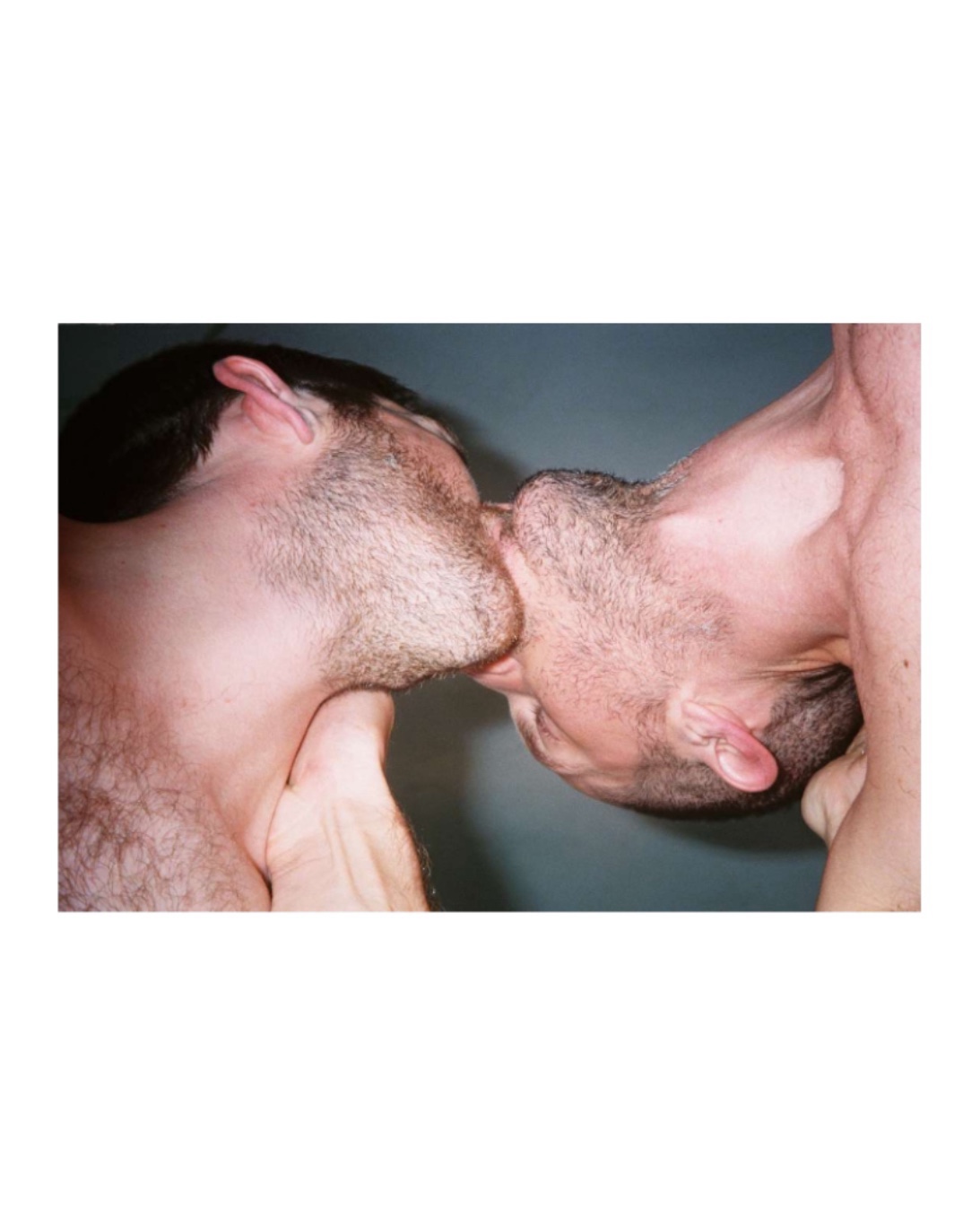

Intertwined, the fourth book by Berlin-based Greek photographer Spyros Rennt, unfolds as a series of diptychs – a journey of paired images in which Rennt invites us to explore themes close to his heart: intimacy, sensuality and community. It emerges from a slow process of coalescence, like salt crystallising from a solution. Spreading hundreds of photographs across the floor of his Kreuzberg studio, each printed in the classic 10×15 format, Rennt walked among them in an almost meditative state, searching for meaningful connections that form self-explanatory pairs. Rennt’s choice of diptychs gives the book a natural clarity: the repetition of a composition, gesture or body part across paired images provides all that’s needed to understand the artist’s intent, making his vision accessible, pleasantly intuitive, and poignant.
What stands out in this book, compared to Rennt’s previous work, is the absence of the explicit gay sex scenes that once earned him a reputation as a chronicler of Berlin’s notoriously excessive gay nightlife. While many saw an interest in the pornographic in those images, they actually reflected and were only a specific sub-case of the photographer’s wider fascination with capturing intimacy. In this book, intimacy manifests itself in a variety of less sexualised but still sensual forms, making his artistic intent clear as never before: arms embracing athletic, sweaty torsos in a club, a friend retouching their make-up in the bathroom, a young, beautiful man scouted online trusting enough to pose nude before a stranger’s lens.

It’s no coincidence that the celebration of intimacy becomes more explicit at this stage in the photographer’s career. We live in dark times – or so they are perceived by the Berlin’s queer community Rennt belongs to. In this historical moment, injustice seems more victorious than ever, leaving us with an overwhelming feeling of impotence; furthermore, the rise of the far right in Germany and the resurgence of police violence mark this period as particularly unsettling. “Only in seeking the intimacy and warmth of close friends and community, those who feel different and unaccepted can truly hope to maintain their mental well-being”, the photographer explains in his studio. As the title suggests, our lives are subtly intertwined. In a continuous, poetic sequence of butterfly effects, fleeting moments of shared closeness can leave lasting impressions, offering warmth and connection just when needed, sometimes altering us in ways that resonate long after. The focus on intimacy is further reflected in Rennt’s choice of paper for this book. For the first time, he opted for a subtly yellowish tone, perfectly suited to evoke warmth—whether it’s the comfort of a safe space, the embrace of a loved one, or the ephemeral connection shared with a stranger.
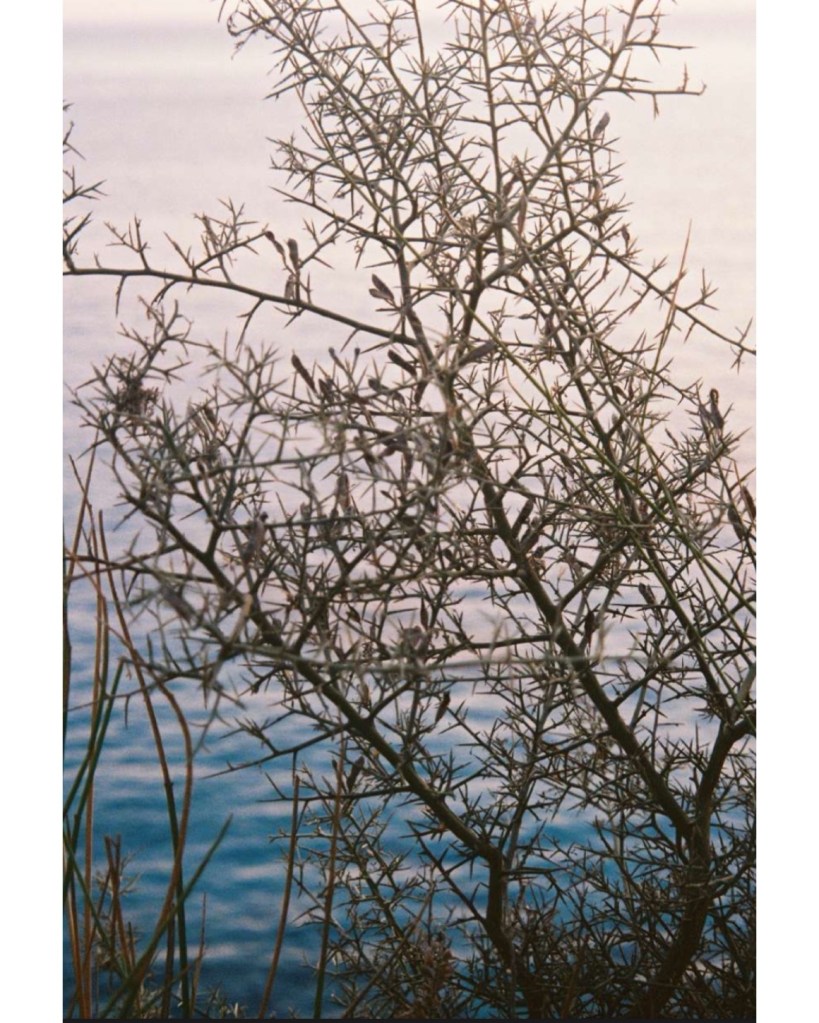
Rennt’s work, even in this more intimate form, remains a testament to Berlin’s nightlife and its ongoing transformation. Unlike the images in his third book, Corporale, shot between 2017 and 2018, Intertwined depicts a post-COVID Berlin where nightlife has adapted, moving from open, public spaces into more secluded environments. Postures, dance moves, and curated, sexy outfits may recall the energy of the club scene, but they now play out in the intimate settings of private apartments and gatherings, surrounded by close friends and extended circles rather than anonymous crowds. In most cases, Rennt’s images are intentionally anonymous—he often shoots when his subjects’ faces are obscured or turned away, drawing attention away from individuals and focusing instead on their interactions. Yet, at times, he introduces us to a few remarkable figures of Berlin’s night, often chosen among his close friends, through striking portraits that capture both their charisma and their unique style.
Unlike Nan Goldin, another observer of intimacy and nightlife, Rennt’s work feels less tragic, carrying instead a bittersweet, preemptive nostalgia for an enchantment that may soon fade—a feeling further enhanced by the aged aesthetic of the book’s paper. Rennt has repeatedly expressed his belief that this scene is likely to fade in the coming years, stifled by the hyper-commercialization of a once fiercely anti-capitalist city, the decline of historic clubs, and possibly the pressures of a hostile, repressive political climate. Hopefully, his fears will prove exaggerated, as history often shows that nightlife flourishes during hard times. Meanwhile, Rennt’s nostalgic gaze urges us to cherish what we have—a quiet plea to notice the evanescent magic that warms our hearts before it slips away.
By Michele Fossi, November 2024

 Michele Fossi