By Michele Fossi
This article is dedicated to O’Shae Sibley, a 28-year-old professional dancer who was tragically stabbed to death at a gas station in Brooklyn, New York, on July 30, 2023, while voguing with friends to a Beyoncé song. May we always remember the importance of safe spaces and honour the courage of those who boldly express their true selves.
In the smoky ambience of a Harlem ballroom, a palpable sense of anticipation hangs in the air. Suddenly, the lights fade and a spotlight illuminates the figure of Dorian Corey, a drag queen and a ballroom icon. Adorned in a striking black and white gown and a voluminous beehive, she exudes glamour, witty arrogance and sophistication. Assuming a stance of assured confidence, Dorian begins her vogueing performance, channelling the luxurious appeal of high fashion editorials through her theatrical poses. The crowd erupts into cheers, wholly engrossed in her fierce dance—a vibrant celebration of uniqueness and the desire for to embody absolute fabulousness.
This memorable scene springs from “Paris is Burning,” the cult documentary by Jennie Livingston, universally celebrated for introducing voguing and the associated ballroom subculture to a wider audience. The film, which premiered at festivals in 1990 and saw its broad U.S. release on 9 August 1991, played a pivotal role in shaping perceptions globally about this unusually captivating and intricate and fierce dance style. Born from Harlem marginalised communities, this form of self-expression provided them with a platform for self-expression and empowerment, and standing, like no other, as a testament toof their strength resilience in the face of life’s adversities and aggressors.
When the film premiered, a global curiosity was already burgeoning about this new dance form. Just a few months before its release, Madonna’s hit Vogue, released on 27 March 1990, had already projected voguing onto the world stage. The song, bolstered by its iconic black- and- white video which spotlighteding voguing choreography, became an instantly a cultural phenomenon. For millions of people all around the world, particularly those outside the U.S.,Vogue served as their very first introduction to this unapologetically fierce dance style.
Madonna’s worldwide popularisation of voguing was met with considerable debate and backlash, in what will go down in history as one of the first global discussions about cultural appropriation. Critics contended that her five-minute pop song version diluted the profound cultural richness of the dance, which was rooted in the complexities of self-affirmation, resistance, and identity deeply rooted in the lived experiences of Black and Latinx communities in New York. Rapper LL Cool J labelled Madonna a “cultural imperialist” for exploiting Black traditions, while Spike Lee likened her music video to a “minstrel show,” underscoring its potential for performative exploitation.
Voguing, Madonna’s critics argued, was much more than a trendy dance, but rather. It was a profound expression of identity and belonging, deeply connected to the Harlem ballroom subculture’s vital role as a safe space for marginalised groups. The heart of this community, predominantly composed of People of Colour and Black and Latino LGBTQ+ individuals, found refuge in the balls, away from the pervasive prejudices of the outside world. Many of these individuals were entangled in a complex web of discrimination, facing racism due to their heritage while also confronting homophobia or transphobia from both their families and society at large due to their sexual or gender identities. Moreover, the peak of Harlem’s ballroom culture in the 1980s and 1990s also coincided with the AIDS epidemic, disproportionately affecting the LGBTQ+ community and subjecting them to not only severe health challenges but also intense societal stigma. In the face of these adversities, balls became sanctuaries of support, empathy, and collective resilience—a queer family, as some today would refer to it, often serving as the sole family for many participants of in the ballroom community.
In response to the prevalent void of familial support, the concept of houses became fundamental to ballroom culture. Structured as replicas of traditional familial network frameworks, each house was normally often guided by a ‘mother’ or ‘father,’ with the designations being far from symbolic. These designations were far from symbolic; they truly mirrored the caring and nurturing roles these leaders assumed. “Houses acted as surrogate families, primarily for those ostracised by their biological relatives, explains Rico West, a well-known member of Berlin’s voguing scene. “Providing emotional, communal, and occasionally financial assistance, they stood as the cornerstone of the ballroom community. Voguing competitions, intense in their rivalry, served as celebrations of house pride, camaraderie, and solidarity”, explains Rico West, a well-known member of Berlin’s voguing scene.

But what of the origins of ballroom houses?? By the 1960s, Black drag queens were increasingly expected to whiten their faces and downplay their distinctive features if they hoped to clinch a title at competitions. “The watershed moment arrived in 1967 during a prominent beauty contest, Miss All-America Camp Beauty Pageant,” West goes on, “a competition held in New York City Town Hall. When a white contestant, Miss Philadelphia Rachel Harlow, secured the top prize, Crystal LaBeija, a renowned Black drag queen, outspokenly criticised the racially biased judging criteria and chose to dissociate from such mainstream contest”, West goes on. “With the encouragement of her friend Lotti, they decided to host their own event, the House of LaBeija, with Crystal donning the role of the house mother. The very first ballroom house was born.” In the following years, this trailblazing move by Crystal paved the way for establishing other iconic houses, such as the Houses of Xtravaganza, Ninja, and Pendavis, each becoming a pillar in the flourishing ballroom culture.
Many frequently mistaken Voguing as the primary expression of ballroom culture; however, it is crucial to understand that the art of vogueing hasit always coexisted with other competition categories such as Realness, Face, Runway, and fashion-focused events like Best Dressed or Labels, each offering unique opportunities for participants to celebrate and express their diverse identities”, West emphasises.
“Voguing, with its dramatic poses inspired by the glossy fashion spreads of Vogue magazine (hence the name), set itself apart from other dance categories with its powerful visual impact and storytelling, conquering over time a prominent position.
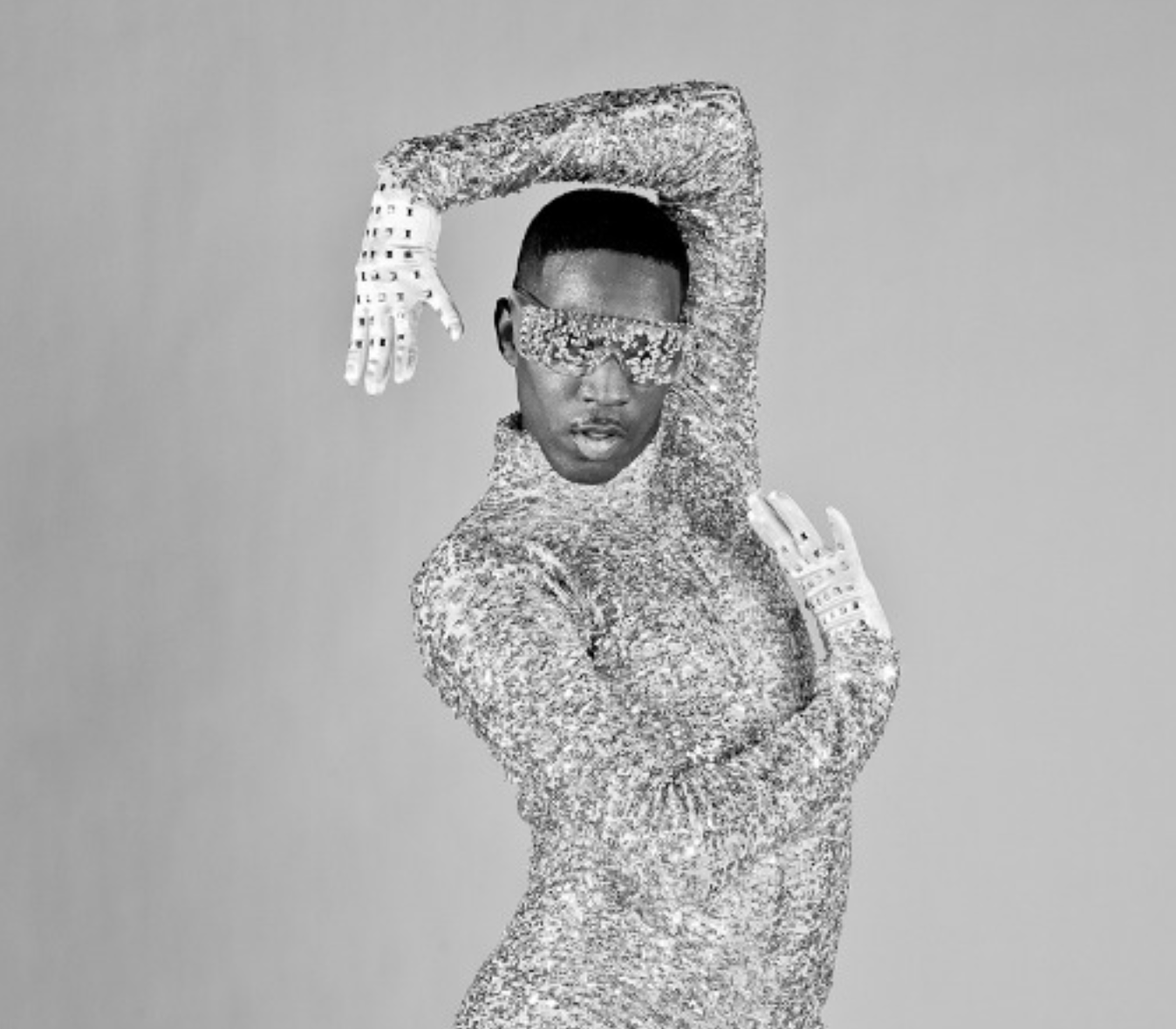
“At its core, Voguing is about narrating a tale”, explains Adonis Vais, one of the protagonists of Athens’ relatively young voguing scene, known in the ballroom as Adonis Telfar. “Dancers use their bodies to weave stories of emotions, victories, battles, and even throw ‘shade’, a playful mockery or challenge, toward their rivals. The dance’s distinct elements breathe life into these narratives”. For instance, the Catwalk, reminiscent of the poised strides of runway models, exudes confidence and style, while the Duck Walk, with its squatting posture and vivacious footwork, encapsulates both audacity and exuberance. Intertwined with these are Floor Performances, which involve dynamic movements and choreography on the ground, a metaphor for life’s highs and lows, as well as elaborate Hand Movements. “Their intricate gestures, reminiscent of sign language, communicate a spectrum of emotions, from yearning to ecstasy, becoming de facto the dancer’s voice”.
Since its inception, voguing has undergone numerous style evolutions. Originally known as “presentation” and later “performance”, the Old Way style of voguing was characterised by dancers emulating fashion models with precise and angular movements, sharp poses, and symmetrical shapes, often incorporating elements of martial arts into the choreography. The 1990s saw vogueing further evolve and diversify, and new styles emerge: while the New Way was characterised by faster, intricate and rigid arm movements, joint contortions, and influence from classical and modern dance, Vogue Fem, introduced by black trans women, developed as a softer, more fluid style with exaggerated feminine movements, including subsets like Soft and Cunt (more graceful) and Dramatics (incorporating stunts and dips). In the following decade, Voguing started gaining traction outside the U.S., with ballroom scenes emerging in Europe, Asia, and other regions. Video platforms such as YouTube have significantly facilitated the spread of this dance form, enabling dancers from around the world to learn, innovate, and share their interpretations.
In recent years, voguing has experienced a remarkable resurgence on the global stage, driven by several influential factors and megastar endorsements. Contemporary music icons like Beyoncé, Rihanna, and Ariana Grande have paid homage to the dance form by incorporating voguing elements into their music videos and live performances, contributing to voguing’s discovery by a younger crowd. The series Pose,” created by Ryan Murphy, Brad Falchuk, and Steven Canals in 2018, delved into the 1980s and 90s New York ballroom scene, further popularising voguing through its captivating sequences and competitions. The digital realm has played a pivotal role in this revival, too, with social networks like Instagram and, notably, TikTok transforming into contemporary “virtual ballrooms.” Here, voguers, both seasoned and newcomers, showcase their skills to a global audience, carving out for themselves a significant niche in the digital dance universe through challenges, tutorials, and collaborations.
The renewed passion for voguing found fertile ground in today’s sensibility, resonating with the themes of identity, self-expression, and resilience that lie at the centre of today’s cultural discourse. The ballroom culture’s commitment to challenging conventional gender norms strongly aligns with Generation Z’s gender-fluid ethos. Its contemporary significance is further amplified by the global push for LGBTQ+ rights and the enriched dialogues, bolstered by the Black Lives Matter movement, surrounding issues of race, privilege, and identity. As voguing gains global popularity, there are, however, concerns about commercialisation and commodification potentially diluting its core essence. “While voguing expands worldwide, it’s essential to respect its origins and history, distinguishing between authentic representation and unintended appropriation within the ballroom community”, Vais points out. “We must continue to honour its Harlem roots lest our community degenerate into a soulless copy of itself.”
And with a solemn homage to the dance’s origins in Harlem, began, on October 24th, The Aftermath Ball, a gathering uniting more than a hundred voguers and performers from all over Germany representing a wide array of categories. “The members of that community faced countless difficulties, their lives were in danger”, Legendary Leo Saint Laurent, a prominent figure in Germany’s ballroom community endowed with the title of “German Trailblazer”, reminds the crowd before initiating the dances. ”Celebrating life in the ballroom was their way of proclaiming, ‘We are beautiful, we will survive”. As the music fills the room, an explosion of energy ignites the atmosphere. The transformation of Berlin’s Theater des Westen, traditionally associated with the stiff exclusivity of West Berlin’s white bourgeoisie, into a space that warmly embraces the vibrant diversity and unrestrained energy of the predominantly BIPOC ballroom community, is a heartwarming and empowering spectacle for the eyes. What’s equally reassuring is that even three decades after the debut of ‘Paris is Burning,’ the ballroom scene’s vitality remains undiminished: chanting repetitive slogans in support of the houses such as “Gorgeous, Gucci, what’s up?” and “Move! Makaveli, get back b*tch, Move”, the audience enthusiastically joins the performers on the catwalk, actively engaging in the performances. Within the ballroom, the usual distinctions between performers and the audience dissolve, akin to a colossal organism that shares a collective heartbeat, breathing vibrancy into every corner of the room.
“Beyond having preserved their legendary energy, Ballrooms continue today to fulfil their essential role as a chosen, adoptive family for countless of their members, myself included,” underscores Black Pearl de Almeida Lima, winner of the EU Runway category championship at the Aftermath ball. “As a black trans woman living alone in Germany for over a decade, surrounded by predominantly white theatres and institutions, I struggled with a sense of disconnection. But my chosen family, the Iconic House of Saint Laurent, both within and beyond the ballroom, has always provided me with care, empathy, and solidarity. Together, we create unforgettable and fabulous moments, loving and learning from each other, and celebrating our authentic selves”.
On the very day the author of this article was looking for inspiration for a fitting ending, Madonna came to the rescue by unveiling her Celebration Tour in London. As the iconic beats of “Vogue” resonated in the air, the stage of the O2 Arena transformed into a lively ballroom, with Madonna and her daughter Lourdes holding score panels and judging the voguers, including Madonna’s 11-year-old Esther, performing before them. Is this the Queen of Pop’s attempt at closure, 33 years later, with past cultural appropriation controversies? That her explicit homage to ballroom culture only came to fruition in 2023, despite the inclusion of Vogue in six of her previous tours, is hardly coincidental, hinting once more at the profound evolution in society’s appreciation of ballroom culture since the song first made waves. As Voguing wins over audiences worldwide among the Gen Z, the once-optional nod to its Harlem DNA now feels non-negotiable – and that’s a welcome change.
Published in The Travel Almanac 24
 Michele Fossi